Author: P F

  • Thank You!

    Thank You!

    Thanks for the kind words and well wishes everybody..

    I had a relaxing morning, walking the dog and hanging out with Dawn in the hood. Of course, I was disappointed not to break onto council, but thanks to so much support from so many of you: we elected an unprecedented number of Greens, and Adriane Carr topped the votes for any councillor.

    I feel great. I spent the election day campaigning on the Drive and gotta whole lotta love and validation. I know I topped the polls in most of my immediate East Van ridings, and polled high in most of the urban ridings — if we had a ward system, maybe things would have worked out differently.

    I knew going into this that we were underdogs, with limited resources going up against well-greased big money campaign machines with robocallers, paid canvassers and million-dollar ad budgets. But even without those resources, we put up a great fight, raised the bar, and made some awesome gains.

    I’m humbled by confidence that 46,500 Vancouver voters had in me.

    Down but not out — I’m just gonna dust myself off and get right back into the ring!

  • Michael Geller: Housing, density and activist architects

    Michael Geller: Housing, density and activist architects

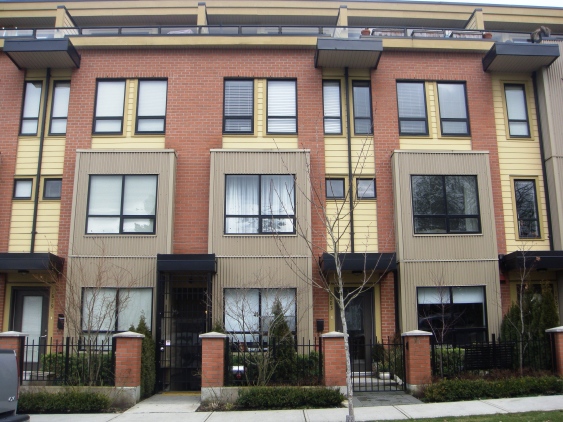
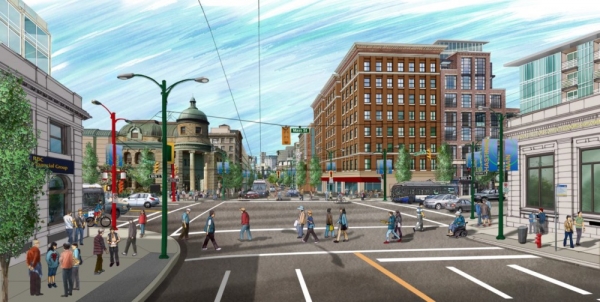
    Green Party city council candidate Pete Fry, spoke eloquently about how citizens are often given little opportunity to provide their input into community plans, both in terms of density and height.

    He urged the architects in the room to join the citizen activists as architect activists, and help communities to understand density and how best to plan their neighbourhoods.

    – See more at: http://www.vancourier.com/opinion/columnists/opinion-housing-density-and…

  • Vancouver city council prepares to hear from public on Downtown Eastside plan

    Vancouver city council prepares to hear from public on Downtown Eastside plan

    by YOLANDE COLE on MAR 11, 2014 at 12:45 PM

    A LONG-TERM PLAN for the Downtown Eastside that has been in the works for two years is set to draw dozens of speakers to Vancouver City Hall this week.

    And as city council prepares to debate the local area plan for the neighbourhood, some members of the committee that helped to develop the strategy say it still lacks crucial details.

    Ray Spaxman, one of the co-chairs of the local area planning committee and a former City of Vancouver planner, said the over 200-page report is “full of very good principles and ideas that have come from two years [of] intense work between the local government and the people of the area”.

    But in his view, “the plan isn’t ready yet to be called a plan”.

    “It’s so big and so full, and yet it hasn’t produced enough evidence to justify many of the suggestions that are made there, nor are some of the suggestions carried far enough for people to have confidence in them,” he told the Straight by phone.

    Spaxman pointed to a number of elements that he said “need to be filled out before you could say this was a complete plan, a plan that could be adopted”.

    “We are concluding that it would be appropriate for the council to at least approve the plan as a draft plan, but they should go on to undertake these other studies that we’re recommending,” stated Spaxman, who represented the Building Community Society on the planning committee.

    Some of those areas that Spaxman said committee members are hoping to see further details on include the housing proposals for the community.

    “Housing is a major issue, in that while the city’s done quite a lot of work in developing new strategies, they haven’t gone far enough to give us confidence that the strategies they’ve defined will be successful in achieving the results that have led the local area planning program,” he said.

    “We are particularly interested in discovering who is affected by what policy in the Downtown Eastside—what numbers and types of people are affected, and how will those numbers and different types of people be accommodated in the proposals set out in the plan,” he added. “And that’s still very ambiguous and difficult to follow, and yet the course is crucial to the future of the people living in the Downtown [Eastside], of which something like 60 percent are low-income.”

    Some of the housing proposals outlined in the plan include 30-year objectives such as creating 4,400 new social-housing units in the Downtown Eastside, in addition to 3,350 units of social housing or rent subsidies outside of the neighbourhood.

    Other long-term targets include requesting provincial rent subsidies for 1,650 Downtown Eastside residents, and encouraging upgrades to 2,200 single-room occupancy hotel rooms. Non-social housing goals include creating 3,000 new units of “secured market rental housing” over 30 years, and accommodating an estimated 8,850 new “affordable homeownership units”.

    Targets for the first 10 years of the plan include 1,400 new social-housing units in the Downtown Eastside, upgrades to 1,900 SRO rooms, 1,650 new secured market rental housing units, and 1,650 new units of affordable market rental housing.

    Vision Vancouver councillor Andrea Reimer, who sat on the local area planning committee as a city council liaison, said the plan needs to work for everyone in the community.

    “I think the single largest challenge is that in order to make the plan work for the middle-income folks and the homeowners, we need the plan first and foremost to work for the low-income community,” she said in a phone interview.

    Reimer noted there are over 18,000 people living in the Downtown Eastside.

    “It stretches from Richards all the way to Clark,” she stated. “They’re everything from children to their mother and fathers, they’re grandparents, there’s one of the highest populations of seniors in the city is in the Downtown Eastside community.

    “When somebody hears Downtown Eastside, I can’t judge what pops into their mind, but I’m hoping that through this process, what pops into their mind is exactly the same vibrant, diverse community that they live in,” she added. “The live question is how do you make that a healthy, sustainable, affordable, safe community for all of those people, from now into the future, and that’s what this plan is proposing.”

    Housing plans outlined in the document also include a policy for the Downtown Eastside Oppenheimer District (DEOD), which surrounds the Main and Hastings intersection, to allow additional density for projects that contain 60 percent social housing and 40 percent secured market rental.

    Pete Fry, the chair of the Strathcona Residents’ Association, described the “no-condo zone” proposed for the DEOD as “a bit of a red herring”. He noted that the 60 percent social-housing requirement consists of a 20 percent target for people paying the welfare shelter rate—a goal that he sees as underperforming.

    “That said we need to do better city-wide,” he said in a phone interview. “The fact that we have such a lack of inclusionary zoning across the rest of the city puts a great deal of pressure on this neighbourhood, which is obviously subject to a great deal of development pressure because we’re downtown Vancouver.”

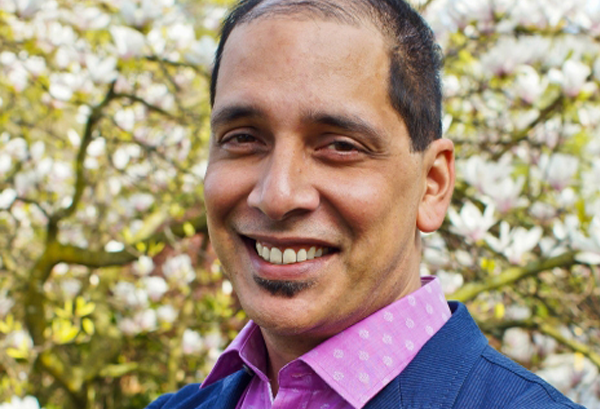
    Other elements of the plan receiving criticism include the definition of social housing. Jean Swanson, coordinator of the Carnegie Community Action Project, noted page 94 of the plan outlines a “target for affordability” of new social housing in the Downtown Eastside that would consist of one third of units at the welfare shelter rate.

    “We’re definitely afraid that it’s a target that’s designed to be missed,” she said. “So there’s no guarantee that any of the social housing in the Downtown Eastside is going to be affordable to the current residents who desperately need it—that’s the problem.”

    Scott Clark, the executive director of the Aboriginal Life in Vancouver Enhancement Society, said he supports the Healthy City Strategy principles that the local area plan will fall under.

    “A Healthy City For All is really how do we build healthy, vibrant, inclusive, reflective and engaging communities throughout all of Vancouver’s 24 communities,” he told the Straight by phone.

    “Gentrification’s a real issue in the Downtown Eastside, but so is NIMBY-ism in Vancouver’s other 23 communities,” he added. “And we need to be collectively as one challenging the NIMBY-ism so people have real choice where they live, especially the aging population of the Downtown Eastside, and the vulnerable children and families who call this place home.”

    Other proposals detailed in the Downtown Eastside plan include drawing local-serving retail such as at least two affordable grocers, converting under-used areas into mini-parks or plazas, enhancing the streetscape and sidewalks along commercial streets, and exploring potential new walking and cycling routes on roads such as Keefer, Prior, Water and Cambie streets and Gore Avenue.

    Quick-start actions also include working with the Vancouver Economic Commission and local BIAs to attract “suitable new enterprise”, supporting “emerging enterprise clusters and hubs”, and supporting a permanent location for the Downtown Eastside Street Market.

    The local area plan will go to city council on Wednesday (March 12).

    http://www.straight.com/news/604286/vancouver-city-council-prepares-hear…

  • Pete McMartin: Portland’s micro approach to housing the homeless

    Pete McMartin: Portland’s micro approach to housing the homeless

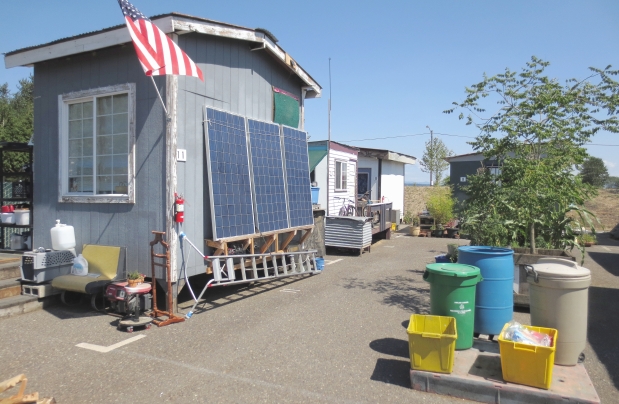
    Pete Fry rode the train down to Portland in August to take a look at what that city was doing in the way of tackling its homelessness problem. Fry, a Green Party candidate for Vancouver city council, took his bike with him to get around.

    See more at:
    http://www.vancouversun.com/life/Pete+McMartin+Portland+micro+approach+h…

  • The Straight Slate for the 2014 Municipal Election: Suggestions for your vote

    The Straight Slate for the 2014 Municipal Election: Suggestions for your vote

    Fry, son of veteran Liberal MP Hedy Fry, is one of the most transparent politicians running for office.

    He posted his answers to the Vancouver & District Labour Council’s candidates survey on his website, where you can also read his blunt views on housing affordability and development. As chair of the Strathcona Residents’ Association, he was deeply involved in the debate over the future of the Georgia and Dunsmuir viaducts, arguing that their removal is a good idea but saying not enough consideration is being given to residents east of Gore Avenue. He played a role in the creation of the Coalition of Vancouver Neighbourhoods, which aims to enhance the accountability and fairness of the planning process.

    Read more: http://www.straight.com/news/769716/straight-slate-2014-municipal-electi…