Tag: transit

  • Progressive forward-thinking transit oriented development.
    Progressive forward-thinking transit oriented development.
    Here in Greater Vancouver, transit oriented development is not seen as a driver of building of affordable housing, in fact it’s been quite the opposite: In Burnaby we are seeing wholesale demovictions of communities with affordable housing bulldozed to make room for new less affordable towers, In Vancouver, where T.O.D has been employed (Marine Drive and Oakridge) proposed developments offer an abysmal portion of affordable housing, but tremendous condo sales and presales.

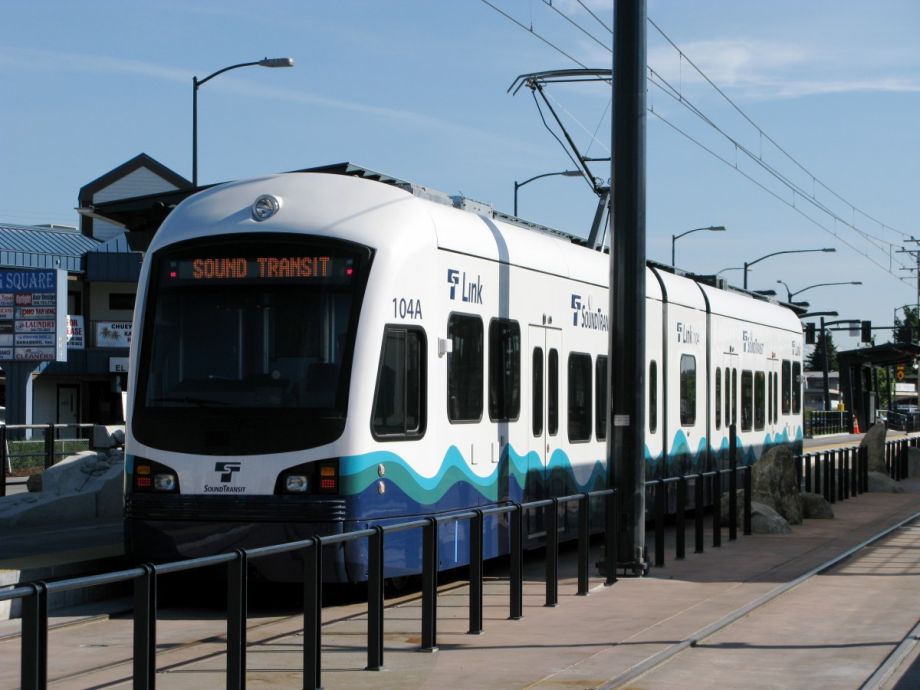
    Recognizing that lower incomed residents are most likely to benefit from access to rapid transit, Seattle is taking a different approach to T.O.D.: the Regional Equitable Development Initiative (REDI) Fund, providing low cost early financing to “pre-buy” lots in areas of proposed T.O.D., before the developers swarm in to build luxury. Here, of course this could be applied proactively to the Broadway corridor and Jericho Lands (though it is probably too late for Boradway/Commercial) — however, it would really require some zoning will on the part of the city. In the Seattle example any properties acquired using REDI funds will be required to provide minimum 25% housing for people below 50% of the median income as well as other targets.

    Of course, Seattle has a ward system, and strict campaign finance limits: so the influence of big developer money is not ingrained as it is here. There may not be the political will, and in our case may require some amending of the Vancouver Charter, but it’s something that should happen here.

    Original Article: https://nextcity.org/daily/entry/seattle-equitable-transit-oriented-development-loan-fund

  • Broadway Subway and Public Transit

    Broadway Subway and Public Transit

    Vancouver is a growing city with worsening congestion, affordability challenges, and a finite amount of developable land — investing in good transit now is an absolute necessity if we want to keep our local economy robust and our region livable.

    The Broadway Subway to Arbutus is largely a done deal. At this point it’s not a question of “if” or “where” as much as a question of “when” and “who’s going to pay for what?”.

    The BC Liberal candidate has made a great show in this by-election about his support for building a Broadway Subway. His support, of course, belies the fact that his party have so thoroughly failed the people of Greater Vancouver on public transit.

    The premier’s decision to defer the question of transit spending to public referendum was an absolute abdication of leadership, and certainly not a sign of “support” for transit infrastructure. The BC Liberals have absolutely zero credibility as advocates for public transit, and their candidate’s support for the subway now is the worst kind of political hypocrisy.

    Quality public transit is a critical underpinning of our economy, livability, and greenhouse gas reduction efforts. While one of the most egregious examples of our transit needs can be exemplified by the Broadway B-Line waits, we need better transit system-wide.

    Let’s not make a Broadway Subway our only ask for better transit.

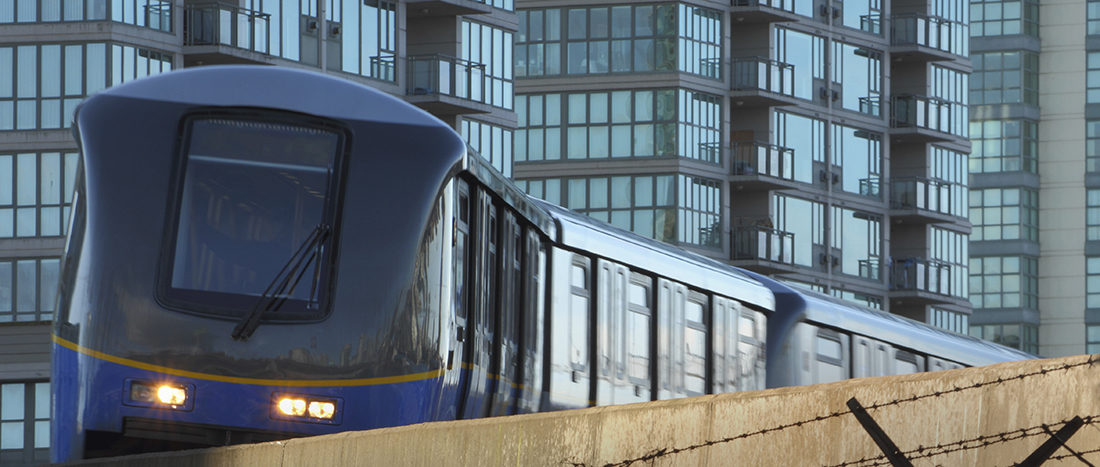
    Having said that the Broadway Subway is a done deal, my concern is how the deal is done. With the Canada Line, we have seen that a lot of (planner-speak) transit-oriented development has come at the expense of housing affordability and led to extreme property speculation, even in advance of actual city re-zonings. It is critical that the Broadway Subway development is not a trigger for massive displacement, and that transit-oriented development is concurrent with senior government investments in publicly owned housing stock.

  • Thoughts on transit referendum

    Thoughts on transit referendum

    Thoughts on transit referendum: 

    Firstly, it never should have happened — an absolute abdication of leadership—doomed to failure from the start. We elect leaders to make the tough decisions, not pass the buck; and that is precisely what Christy Clark’s government did by putting our transit infrastructure investments to plebiscite. 

    There is plenty of blame to go around, though: I think the mayors’ plan lacked the credibility of real public consult (a high speed articulated bus line in tandem with intensified transit oriented development on the Drive.. seriously?), and the nagging suspicions of developer industry influence in civic politics clearly weighed heavily on the minds of many I spoke to. The mayors were equally culpable in politicizing the referendum and the reluctance to endorse their plan with a “yes” vote was the ensuing result for many voters (I note that more votes were cast for the Transit Referendum than in the civic election). 

    Jordan Bateman and his anti-taxxers did a good job of owning the opposition view — but while I personally feel that a consumption tax mightn’t have been our best option for funding (unless supplemented with generous rebates for low incomes), Bateman et al were disingenuous by not actually detailing the true costs of NOT investing in better transit (ie. GHGs, and literally slowing our economy with congestion). 

    And then of course, there is Translink — clearly an organization that requires more transparency and accountability. Let’s hope that at the very least, today’s NO vote will be taken as a signal that the governance of Translink desperately needs reform. 

    The blame game is moot though, first and foremost we never should have had a transit referendum(b) and for that I blame Christy Clark and her BC Liberals. 

    Read full BC Green Party media release below: 

    * *  

    [MEDIA RELEASE] B.C. Greens: Lack of leadership from B.C. Liberals in their Transit Plebiscite halts needed transportation investments
     For immediate releaseJuly 2, 2015 Victoria, B.C. – Matt Toner, B.C. Green Party Finance critic, says the B.C. Liberal government has displayed a lack of leadership in the Lower Mainland when it comes to critically important investments in public transportation. “If we want to create a sustainable society, we need to grapple with this region’s very real public transit problems,” said Toner. “The BC Liberals have passed the buck twice now: first, by referring a funding question to a regional plebiscite and then, once that failed to pass, kicking the responsibility to solve the problem down to municipalities.  Ducking hard decisions is not what we need from our elected representatives, but it seems to be the preferred strategy for this government.” After months of voting and ballot-counting, Elections BC today released the results of the B.C. Liberal Transportation and Transit Plebiscite. With 61.68% voting No and 38.32% voting Yes, the citizens of the Lower Mainland have overwhelmingly voted against a 0.5% increase in PST to pay for the Mayors’ Transportation and Transit Plan. Despite a number of new funding mechanisms advanced by the Mayors’ Council, the B.C. Liberal government unilaterally restricted the options to a regional PST increase. In a B.C. Liberal email that went out shortly before the vote count was released, the party’s Executive Director tried to pass responsibility on to the mayors, ignoring the heavy-handed role the provincial government has played so far and the clear provincial role in transportation financing. “This entire plebiscite process was designed to provide cover for the B.C. Liberals so that they didn’t have to make a tough decision,” said Pete Fry, the BC Green Party candidate in the forthcoming Vancouver–Mount Pleasant by-election. “Most people I’ve spoken with agree on the critical need for transit improvements in Metro Vancouver, but this process was needlessly politicized and opaque. Going forward it is clear that more authentic collaboration is needed between governments and the citizens they represent.  This should start with responding to the calls for governance reform in Translink.” “Alternative solutions exist, ” says Andrew Weaver, MLA for Oak Bay-Gordon Head and Deputy Leader of the B.C. Green Party. “I’ve already talked about the option of increasing the carbon levy and directing the increased revenue to municipalities to fund crucial transit and infrastructure needs. It also seems clear to me that this turned out to be a referendum on Translink, not transit. Ultimately, a solution to the Translink problem might be to give back the autonomy that the mayors used to have when Translink was first created or roll Translink back into BC transit.” Vancouver is the most congested city in Canada, and the third most congested city in North America. Metro Vancouver is expecting an additional 1 million residents over the next 30 years.