Tag: VANRE

  • Mayor a day late and a dollar short on issue of pre-sales

    Mayor a day late and a dollar short on issue of pre-sales

    Summer 2017, and the mayor is only now hearing concerns about overseas pre-sales & insider trading of #VanRE condos?

    We (Vancouver Greens) called out this issue in 2014, the BC Greens called for taxing pre-sales in the BC Election earlier this year, VanRE pundits have been flagging this issue for YEARS.. and all the while, former BC Housing board executive, patron of Vision and BCLiberal parties, holder of $25,000/plate luncheons for the mayor and condo king Bob Rennie has built an empire off the business of pre-sales.

    This, despite the mayor’s council support for re-zonings targeting overseas pre-sales as recently as last week (Westbank) and historic unwillingness to mandate re-zoning covenants that might limit this sort of egregious speculation.

    Amidst a full blown housing crisis, that the mayor only now recognizes there might be some sort of problem with pre-sales worthy of seeking provincial regulation says either incompetence or indifference.

    Postscript: 

    I’m just going to leave this here.
    * note date, November 2016. Authored by a journalist known to be well respected and well read by the mayor’s office, quoting significant patrons of the mayor’s Vision Vancouver party.
    https://www.theglobeandmail.com/news/british-columbia/vancouver-presale-…

  • How and for who does the city define public benefits?

    How and for who does the city define public benefits?

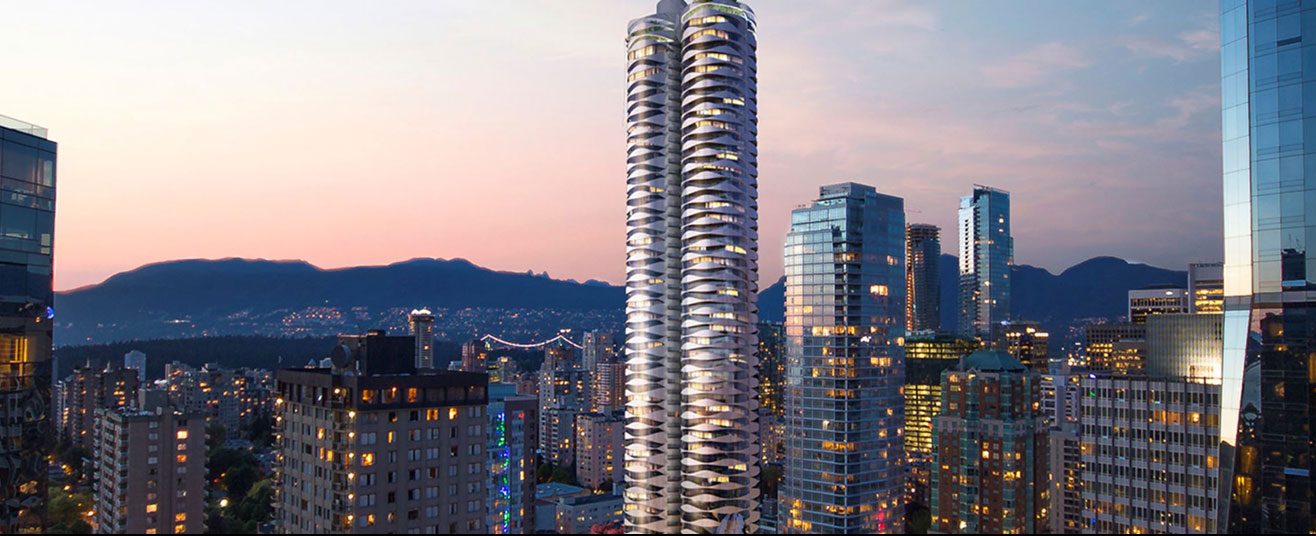
    A massive development rezoning, estimated worth over a billion dollars in market value. The luxury tower project being proposed by a well-connected and influential developer will reportedly deliver close to $90 million in public benefits spread out over several years.

    But the process by which those benefits are calculated and negotiated are not subject to public scrutiny. Staff reports indicate that the developer’s negotiated public benefit contributions are based on some questionably low valuations. Plus, existing city policy states that cash benefits on re-zonings are to be paid up front, not spread out over years.

    A group of West End residents reached out to me, concerned about the luxury tower proposed for Nelson off Burrard by a well-connected developer. The residents weren’t anti development per se, or even anti-tower — many of them actually lived in nearby towers themselves — but they were concerned about: the building’s massive size and bulk; parking and traffic; the apparent unwillingness of the developer to accommodate reasonable concerns around setbacks and livability; and questionable public benefits from a project pandering to luxury buyers.

    The issues of scale, views, and setbacks (the development rivals the Trump Tower at over 556 feet tall) are understandable and have been well articulated to the media. But it was the issue of public benefits that really struck me, the project is rumoured to be record-setting in the amount of benefits it will provide.

    Public benefits negotiated on spot rezonings are called Community Amenity Contributions (CACs for short). These CACs are density bonus contributions of amenities, infrastructure, or cash-in-lieu. CACs are considered voluntary, and they are negotiated based on developer profitability projections called a pro forma. The pro forma is closely guarded and the process is highly secretive, so the public have no idea if we are getting good value out of tradeoffs. It‘s an insider favouring opaque process that UBC urban design chair Patrick Condon referred to as the “soft corruption“. [1]

    What are we trading off in exchange for CACs?

    In the West End specifically, new luxury development and the zoning that accommodates it poses a direct threat to tens of thousands of renting Vancouverites.

    Luxury rezonings especially can have a ripple effect on neighbouring properties, through increased land value and an exploitive loophole known as “geographic rent increase” [2]; whereby landlords and developers can charge rents significantly higher than rent control laws allow, just by virtue of higher rents charged in neighbouring properties.

    In the case of the 57-floor luxury tower at Nelson and Burrard, the CAC benefits include heritage revitalization and preservation of the venerable First Baptist Church, expanded services, and a modest offering of below market rental housing.

    The CAC also includes over $60 million in cash payments to the city over several years, but per existing city policy CAC payments in-lieu (in cash) are payable prior to rezoning enactment – not after the fact stretched over years. [3]

    So is it a good deal for the city?

    Item 14 of the Urban Design section of the staff report [4] presented to council for this rezoning suggests that the building’s unique architectural design and resulting low efficiency floor layout (69%) reduces the potential sellable area. The building design includes large open air bridge and garden spaces between the two towers, which while technically reducing sellable floorspace still improves the premium value and profitability of the properties for sale.

    Are we leaving money on the table? Are we extracting public benefit from the opulent use of private empty space in this project? Why is this particular development getting a pass on item 1.3 of the City’s cash-up-front CAC policy?

    We won’t know the answers to these questions because the public don’t have access to the development pro formas, and staff are subjected to non-disclosure to protect developer interests. Furthermore, despite a motion by Green city councillor Adriane Carr earlier this year (still under review) staff are not afforded whistle-blower protection.

    The developer in this case is Westbank, an influential and well-connected corporation responsible for some of Vancouver’s more controversial and eyebrow raising extreme luxury developments.

    With sales offices in Hong Kong, Beijing, and Shanghai, [5] Westbank was recently called out for allegedly favouring overseas investors ahead of local families during presales for their development project Joyce [6].

    Last year, the provincial utilities watchdog overruled a city council move to grant Westbank CEO and founder Ian Gillespie a monopoly on heating [7] supply for all future condo developments on the land to be freed up by the viaducts removal.

    Gillespie is also a noted supporter and financial patron of the mayor and ruling Vision Vancouver party.

    Public Hearing on the project is tonight, July 25.

    [1] https://thetyee.ca/Opinion/2014/07/14/Vancouver-Stop-Zoning/

    [2] http://www.cbc.ca/news/canada/british-columbia/legal-precedent-west-end-renters-1.4022930

    [3] http://vancouver.ca/files/cov/community-amenity-contributions-through-rezonings.pdf

    [4] http://council.vancouver.ca/20170718/documents/phea3-SummaryandRecommendation.pdf

    [5] http://westbankcorp.com/projects?international-sales

    [6] http://www.news1130.com/2017/06/06/developer-intend-give-overseas-buyers-first-shot-vancouver-project/

    [7] https://www.biv.com/article/2016/9/utilities-commission-nixes-creative-energy-plan-ag/

  • License to Shill: Why aren’t there restrictions on licensing of realtors in Vancouver?

    License to Shill: Why aren’t there restrictions on licensing of realtors in Vancouver?

    The litany of lost opportunities to meaningfully address the housing crisis in our city is depressingly long, and given the role that the real estate industry can play in that equation — you might be surprised to learn that the City of Vancouver have absolutely no rules or regulations to govern the licensing of realtors doing business in the City of Vancouver.

    Wednesday morning (July 13) the Independent Advisory Group on Real Estate Licensee Conduct, in a presentation to City Hall reported on Conduct and Practices in the Real Estate Industry in British Columbia. The Advisory Group, mandated by the Real Estate Council of BC was there ostensibly to reassure City Councillors that something was being done on a provincial level about corruption and conduct in that industry.

    The practices of certain bad player realtors in our city have come under increasing scrutiny in recent months: from shady practices like shadow flipping and double ending, to serious allegations about ethics, transparency and discipline within the Real Estate Board of Greater Vancouver and even some realtors failing to comply with federal (FINTRAC) money laundering rules — but so far, City Council hasn’t taken any action.

    Three term Vision Vancouver Councillor Kerry Jang even had the temerity / lack of self-awareness to ask “what took you so long?” of the industry regulators’ failure to address the housing crisis, jokingly asking if they “were having too good a time making too much money” (I think somewhere in the audience I heard the echo of a sad trombone).

    Some might argue that the licensing of realtors is already mandated and regulated by the provincial government, and that’s true. In the wake of reports of egregious and unfettered realtor practices, the provincial government recently acted decisively (if not belatedly) to end the controversial practice of real estate industry self regulation. But the recently streamlined process for acquiring a license to do business in the City of Vancouver doesn’t now, nor has it ever placed any restrictions or regulation on realtors operating in our city.

    Provincial and federal legislation and jurisdictional overlaps aren’t otherwise precluded from existing City of Vancouver licensing though. In fact, the City has a number of business licensing bylaws that overlap with pre-existent senior government legislation, addressing specific industry sectors under a mandate that includes “protecting vulnerable populations”. It’s not a stretch to suggest the housing crisis in our city has created a significantly vulnerable population — so why is the city failing to enact suitable protection methods?

    A review of City’s License Bylaw (4450), details a number of definitions, conditions, prescriptions, and restrictions to getting a business license. Want to open a cheque-cashing business? Despite robust federal legislation and industry self-regulation, there’s a bylaw for that. Want to open a business that serves alcohol? Despite readily enforcable provincial laws, there are dozens of conditions outlined in the bylaw including “responsible serving practices… [per] provincial operating regulations”. Open a compassion club? There are over thirty different articulated conditions, despite pre-existing federal law and industry self-regulation.

    Contractors, recyclers, bowling alleys, dating services, pet stores, bike couriers, vapour-lounges: each have conditions and restrictions on doing business in our city — but there is nothing for realtors. At Wednesday’s presentation a number of city councillors expressed concerns about residents, seniors in particular being duped by unsolicited high pressure realtor sales tactics — while city business licensing bylaws prohibit contractors and peddlers from such practices, there is no bylaw for realtors.

    The realtor business is booming: the Real Estate Board of Greater Vancouver reports an all time high with 12,200 registered realtors. Licensing couldn’t be easier: $1300 and an online course is all it takes, companies like New Coast Realty will generously offer pre-training and a bursary to cover the cost. It should be noted that New Coast are also notorious for ethically dubious training, along with a lack of FINTRAC compliance, double-ending and shadow flipping.

    Given the impact of housing unaffordability, it is not enough that the city rely on industry self-regulation, toothless legislation, and as yet undelivered provincial oversight. Under their mandate to regulate the licensing of business, trade, professions, and other occupations with the City of Vancouver – licensing should at the very least be regulating the practices of realtors in our city, it’s shamefully long overdue.