Author: P F

  • Pete Fry: A better city together — One community at a time and with a little help from our neighbours to the south

    Pete Fry: A better city together — One community at a time and with a little help from our neighbours to the south

    What is community engagement? Let’s start with what it is not. It’s not random selections of citizens taking direction from the top; it’s not sticky notes and roundtables to record and ignore. Community engagement is an opportunity to involve citizens meaningfully in the decisions that affect their lives.

    See more at:
    http://www.straight.com/news/761236/pete-fry-better-city-together

  • Vancouver Housing Bubble Trouble Needs Thoughtful Regulation

    Vancouver Housing Bubble Trouble Needs Thoughtful Regulation

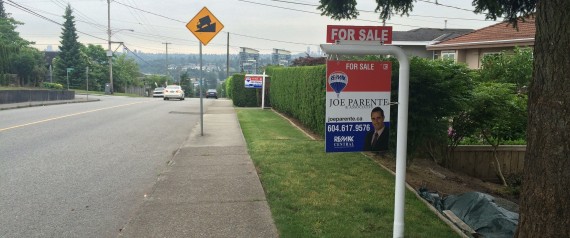
    I was cautiously optimistic to hear the premier’s May 30 announcement that the B.C. Liberal government has begun researching the options for taking action on the issue of unaffordable housing prices.

    Housing affordabilty in Vancouver isn’t really news, of course. Since the federal government stopped funding new social housing in 1993, we’ve seen increasing pressure on low income Vancouverites. Today, after fifteen years of low interest rates and steadily increasing housing prices in Vancouver, what was once a social justice issue for this city’s most vulnerable and their allies, is increasingly taking its toll on middle-income owners — and the politicians and pundits are taking notice.

    In the days leading up to May 24’s #DontHave1Million rally, both Vancouver Mayor Gregor Robertson and condo marketer Bob Rennie called on the province tointroduce a speculator tax. A petition calling for restrictions on foreign investment has reached almost 25,000 signatures.

    The business and financial community are warning that housing affordability in Vancouver is quickly cascading into a crisis with long term negative repercussions. Last year, the B.C. Chamber of Commerce clearly identified the region’s attraction for global and speculative investment necessitated property tax reform. Just two weeks ago, Vancity credit union offered a warning that housing affordability risks cascading into a labour crisis putting public services and the region’s future economic development at risk.

    A recent New Yorker article explored the phenomenon of “high rent blight” where increasing rents and decreasing affordable housing are creating high priced districts devoid of local retail — and it’s not hard to imagine a similar fate befalling Vancouver.

    These are the canaries in the coal mine — the indicators are all around us, this crisis shows absolutely no sign of abating, and while calls for speculation tax are helpful, as uncomfortable as it may be, we need to have the conversation about the influence of non-local capital.

    Critics warn that the foreign investment discussion is inherently racist, as much of that capital — some of it illegally transferred “hot money” — is from China. It’s important to be resolute against xenophobia and racism, but it would be irresponsible of us not to take an honest and realistic look at foreign investment, regardless of where it is coming from.

    As I argued in my campaign for city council last year, and most recently in myGeorgia Straight commentary, foreign investment alone is not the source of our affordability crisis but it certainly is a factor.

    While there is a lack of comprehensive data, there is compelling enough information — from Canada Mortgage and Housing Corp.’s assertion that 5.8 per cent of downtown housing units are foreign owned, to revelations that over 35 per cent of the “hotly anticipated” Vancouver House development has been sold to foreign buyers.

    In his 2014 annual Vancouver developer industry luncheon speech, Bob Rennie famously mused of Vancouver real estate that “the top 20 per cent that have nothing to do with local incomes. They are for rich guys and foreign money.”

    By that notion, those top 20 per cent have everything to do with local housing affordability. West-side prices are driving higher income earners to East Vancouver, who are in turn driving up housing values. It’s a concept that UBC Geography professor David Ley describes as the “trickle-down effect” — where the introduction of external capital is driving a market that has disconnected from local incomes.

    Prime property investment cities like ours — the kind global real estate consultants Knight Frank describe as safe havens for wealth preservation in real estate — are increasingly seeking government intervention to preserve housing for local residents. Hong Kong, Singapore, China, Australia, and (as of May 17) New Zealand have all enacted measures to control speculation, foreign investment, and reign in runaway housing prices.

    Here in B.C., Finance Minister Mike de Jong warned that regulating or depressing prices could backfire and mean a reduction in equity for BC homeowners.

    I checked with Matt Toner, a former economist for the Bank of Canada and B.C. Green Party critic for finance and new economy. Matt emphasized that responsible regulation is very much the role of government: “It is crucial to distinguish between popping a speculative bubble (which can and likely will happen strictly due to market forces) and slowing/flattening the rate of growth of the bubble. Policy should be active and aimed at heading off the possible collapse of this real estate bubble.

    “Heaven help us all if government does nothing and this real estate bubble pops because of off-shore factors,” he said. “This inaction would make for a real made-in-B.C. recession, the effects of which the entire economy would be feeling for years.”Postscript: 

    Originally published in the Huffington Post

  • Tackling the roots of Vancouver’s housing affordability crisis

    Tackling the roots of Vancouver’s housing affordability crisis

    The affordability crisis in Vancouver certainly isn’t news—it was a central theme of our most recent civic election, and the two preceding it—but in recent weeks, calls for senior government intervention have landed on the premier’s desk in the form of a petition seeking restrictions on foreign ownership of property.

    Readers might be confused by Premier Christy Clark’s warning that implementing taxes on foreign real estate investors would cause housing prices to drop, while Housing Minister Rich Coleman insists the provincial government has no intention of even collecting data on foreign ownership, nor has it come up as an issue for his ministry.

    Are the growing number of Vancouverites’ concerns warranted? Is the unfettered flow of global capital into our local market affecting our housing affordability? It would be hard to argue that it does not.

    To describe the notion of external capital affecting a local market, I need look no farther than my own backyard. Over the last decade and a half in my Strathcona neighbourhood, long-time family homes would turnover as the elderly tenants would pass on, or could no longer afford the upkeep. One notable speculator, the scion of a wealthy B.C. industrialist family, began amassing a real estate portfolio by buying these homes as they came on the market, in cash, and with no conditions. Of the estimated 340 detached single family homes in Strathcona, the Point Grey speculator may have snatched up a dozen, less than five percent of the available stock, but enough to change the market economics. The result was that many local residents—neighbours of more modest means—could not afford to buy into their community, and that house prices rose incrementally with each bidding-war for the limited stock available.

    What this tells us of course is that speculator investors certainly aren’t all foreign, but that externalities like non-local capital can price locals out of the market and inflate the median market value. Today, the median home price in the city of Vancouver is more than 11 times the median income. Even with the conservative estimate of five percent foreign investment, the premier is correct in her assertion that foreign capital buoys our domestic real estate market to the benefit of resident and non-resident speculators alike.

    While no level of government has yet to amass real data on speculation, there’s been no shortage of musing on the subject. South China Morning Post’s Ian Young has written extensively on the subject of foreign capital; urban planner and researcher Andy Yan has compiled records of utility usage to develop data on empty condos; the website Beautiful Empty Homes of Vancouver has itemized scores of empty million-dollar houses; in their 2008 campaign platform, Vision Vancouver called for “unlocking vacant condo units as rental housing”.

    Real estate and development professionals caution against demand side intervention as they may yield unintended consequences and risk cooling off Vancouver’s white hot real estate market. At the same time, the world’s top money manager is advising global investors to “Forget gold, buy a Vancouver condo if you want to stash your wealth”.

    For many, life in Vancouver—the most livable city in the world in the best place on Earth—is a gilded cage. Almost half of Vancouverites pay more than 30 percent of their income on rent, and half of that number pay more than 50 percent. According to the 2011 National Household Survey, over 50 percent of Vancouverites are renters, in my riding of Vancouver-Mount Pleasant that number is closer to 75 percent, in the DTES it’s 90 percent.

    When we talk about foreign investment—there is an important distinction which often gets lost in this conversation—foreign investors are by definition not immigrants or necessarily even residents: by law they cannot spend more than six month a year in Canada, and by circumstance, they do not pay into our “social contract” by way of income tax, nor do they pay capital gains tax on the sale of their property.

    Real estate investors do pay the same property tax that all Vancouverites (either directly or indirectly) pay, which helps cover costs of things like road maintenance, schools, and garbage. As senior governments play less and less of a role in providing housing, city governments are bearing the brunt of the affordability crisis, with developer cost levies—used to fund things like public amenities and community centres—increasingly being used to provide social housing but at a rate that can’t keep up with the market growth.

    There’s a sad irony in the notion that a “yes” for the transit-plebiscite proposed increase in sales tax will result in transit-oriented development that could create investment vehicles for people who might never pay sales tax at all (that said, I personally think the sales tax increase is money well spent for improved transit infrastructure).

    China, Hong Kong, Australia, and the U.K. all apply special taxes on foreign investors. Closer to home, Alberta, Saskatchewan, and Prince Edward Island restrict foreign ownership of real estate—ditto resort destinations like Mexico. Last year the B.C. Chamber of Commerce released a report calling for the provincial government to address foreign investment and asserting that affordable housing is good for our economy. With one million new residents projected for Metro Vancouver over the next 30 years, we can expect the demand to remain buoyant.

    Over the last five years, Hong Kong in particular has successfully reduced property speculation and simultaneously redirected dividends to the provide public benefit through a three-tiered stamp duty. Hong Kong’s “3D” taxation scheme effectively targets corporate and non-resident buyers, quick resales (or “flippers”), and luxury property buyers; providing billions of dollars worth of social housing investment and cooling the market all without any long-term damage to housing values.

    Foreign investment is good for B.C.—ultimately it creates jobs and benefits for our economy—and it certainly is not the only cause of our affordability crisis, but to deny its role is irresponsible. Let’s look to solutions like a non-resident tax premium that could be remitted back to the municipalities to encourage more foreign investment or build social housing as local demand dictates. Let’s look to solutions like fixing our homeowners’ grant so that it recognizes the importance of investor-owned rental properties, rewarding “good” landlords and discouraging empty apartments. Let’s look at ways of closing corporate tax loopholes that allow bare trust holdings to avoid paying the property transfer tax. Let’s look at ways to use the property transfer tax to discourage speculative flipping for quick profit.

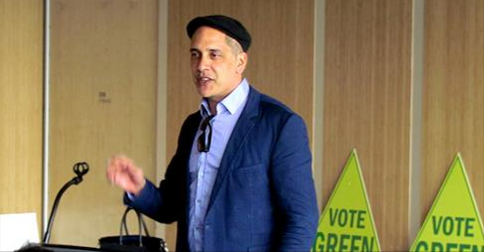
    Affordability will remain in focus on Friday (May 22) with Bob Rennie addressing the Urban Development Institute, where he’s expected to advocate for more supply; while the #DontHave1Million rally will see middle-income Millenials calling for senior government intervention; and I’ll be at the B.C. Green Party AGM to discuss this very issue.

    The time is now. It wasn’t too long ago that climate change deniers were refusing to act until they were presented with conclusive, definitive proof of anthropogenic change—and as a result we wasted valuable time. By that same notion, we cannot continue to ignore the roots of our affordability crisis and our obligation to act on it for the benefit of all British Columbians.Postscript: Originally published on the Georgia Straight’s Straight.com

  • Pete Fry wins B.C. Green Party nomination for Vancouver-Mount Pleasant

    Pete Fry wins B.C. Green Party nomination for Vancouver-Mount Pleasant

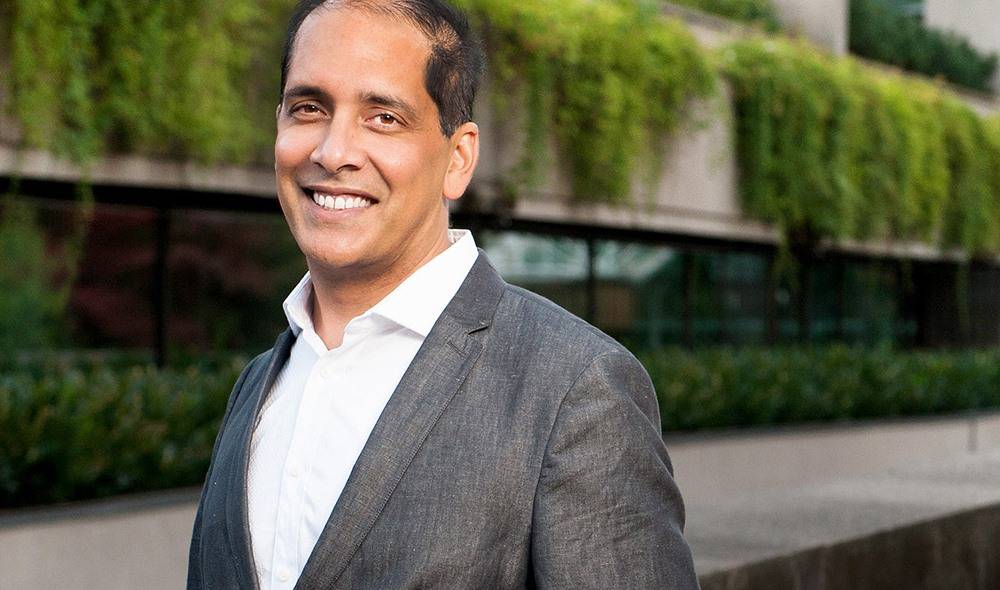
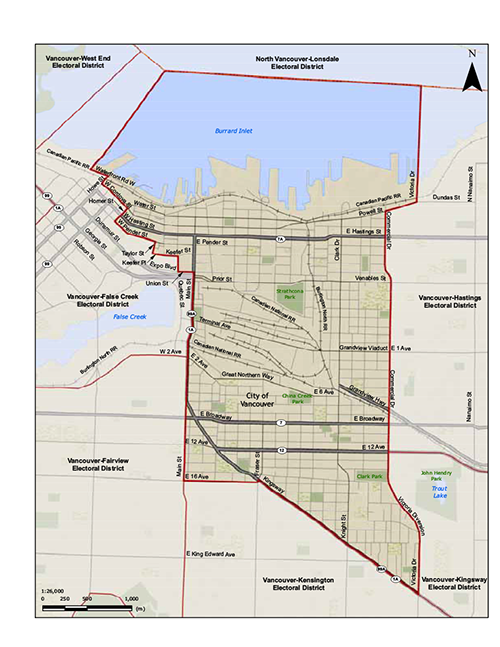
    VICTORIA B.C. – Pete Fry was confirmed as the B.C. Green Party candidate for an anticipated Vancouver-Mount Pleasant by-election at a nomination meeting held on Saturday April 25, 2015. Fry was a candidate for Vancouver City Council with the Green Party of Vancouver in the 2014 local government elections. He received 46,522 votes, topping polls in Strathcona, Mount Pleasant and Commercial Drive, which are located in the provincial riding of Vancouver-Mount Pleasant.

    “I’m really excited and motivated to bring a new voice for our community, and this incredibly diverse and irrepressible riding,” Fry said. “This by-election is a real opportunity for East Vancouverites to vote for something that they believe in, rather than vote against something they do not. I look forward to sharing our Green Party vision of progressive values, climate leadership, and community advocacy.

    “We’ve got a great team, and a lot of work ahead of us —but this surge in Green support that we saw in the civic election and we are seeing on a federal level is a real indication to me that British Columbians are coming around to a new and better way of doing politics, one that puts people ahead of partisan politics.”

    “Pete and the Green Party will give East Vancouverites a powerful choice in this by-election,” Interim-Leader Adam Olsen added. “Our party has become a viable and effective force for change in communities across B.C. and Pete will be an excellent advocate for his community. I’m very excited that he is representing the Green Party in this by-election.”

    Current MLA Jenny Kwan won the federal NDP nomination for Vancouver East on March 22, but has not yet resigned her provincial seat. Premier Christy Clark will have six months to call a by-election once Kwan has resigned.

    – 30 –

  • Seeking the Nomination to represent the Greens in Vancouver Mt-Pleasant

    Seeking the Nomination to represent the Greens in Vancouver Mt-Pleasant

    It seems like only yesterday I was out trying to hustle votes in the municpal election—but recent changes in East Van politics will see a by-election and no incumbent here in the East End… So I’ve decided to take the plunge, but I need your help!

    I’ve put my name forward to seek the BC Green Party’s nomination for the upcoming Vancouver-Mount Pleasant provincial by-election. The seat is currently held by Jenny Kwan, but will soon be vacated, as she’s resigning to run for federal politics.

    During the November 2014 Vancouver municipal election,in my first run for office I collected just over 46,500 votes, and was one of the top vote-getters at the polls in and around Vancouver-Mount Pleasant.

    I ran for City Council in November because of my commitment to my community, the Vancouver-Mount Pleasant riding, I’ve lived, worked and volunteered in this district for over 25 years. We are a strong, resilient and caring inner-city riding, but we are not without our challenges: the ongoing privatization of BC Housing, unreasonably low welfare rates, poverty and affordability, gentrification, social justice, reconciliation, and the legacy of colonialism. 

    We need to provide opportunities for immigrants and underemployed; balance regional growth strategies and transit-oriented development with land value and speculation; as well as ensure healthy, safe urban neighbourhoods that respect our physical, cultural and socio-economic heritage. These are all real challenges for our community and provincial government.

    I’ve been a local community activist for a number of years and served as chair of the Strathcona Residents Association. I helped lead the community’s response to the City’s proposed viaduct removal, redevelopment and traffic management scheme; and sat on the City of Vancouver’s DTES Local Area Planning process. 

    I’ve been committed to East Van for several decades. I’ve learnt the importance of strong, clear advocacy that can speak with and for the community, and how to reach across the barriers.

    As a self-employed designer, web-developer, and communications specialist, I’ve worked with hundreds of local small businesses, non-profits, entrepreneurs and artists—and am passionate about the value and importance of a strong local economy. 

    As a Green, I support a moratorium on fracking, thoughtful regulations and controls on liquefied natural gas (LNG), and no expansion of pipelines and tankers in Burrard Inlet—ideas I think resonate with the voters of the riding, but aren’t reflected in the BC NDP or BC Liberal policies.

    On the move from municipal to provincial politics—A lot of the issues I campaigned on in the civic election are directly influenced by provincial policies: there are the obvious issues such as raising the welfare rates, preserving social housing, and health and safety issues—but there are other considerations, such as campaign finance reform and changes to the Vancouver Charter, that require provincial approval before changes can be made here in Vancouver.

    It’s no secret why Jenny Kwan managed to hold this riding for almost twenty years, despite her faults, Jenny knew the issues, and was a champion for this riding. Moving forward, I would like to be that champion.

    A provincial by-election for the Vancouver-Mount Pleasant riding is expected in the coming months.

    If you would like to support my nomination to be the Green Party of BC candidate in Vancouver-Mt Pleasant you must  must acquire a party membership by Saturday, April 11. Membership can be purchased online at greenparty.bc.ca/membership

    The nomination meeting will be held on April 25. Postscript: 

    The deadline to sign-up and become a voting member of the BC Greens in Vancouver-Mt Pleasant is this Saturday – so if you would like to support my nomination, please acquire a membership here: greenparty.bc.ca/membership, or if you would prefer an offline option, you can sign up at Floral and Hardy Edible Plants, 688 E. Hastings