Tag: CHINATOWN

  • Will the winds of political change bring a breath of fresh air for Chinatown?

    Will the winds of political change bring a breath of fresh air for Chinatown?

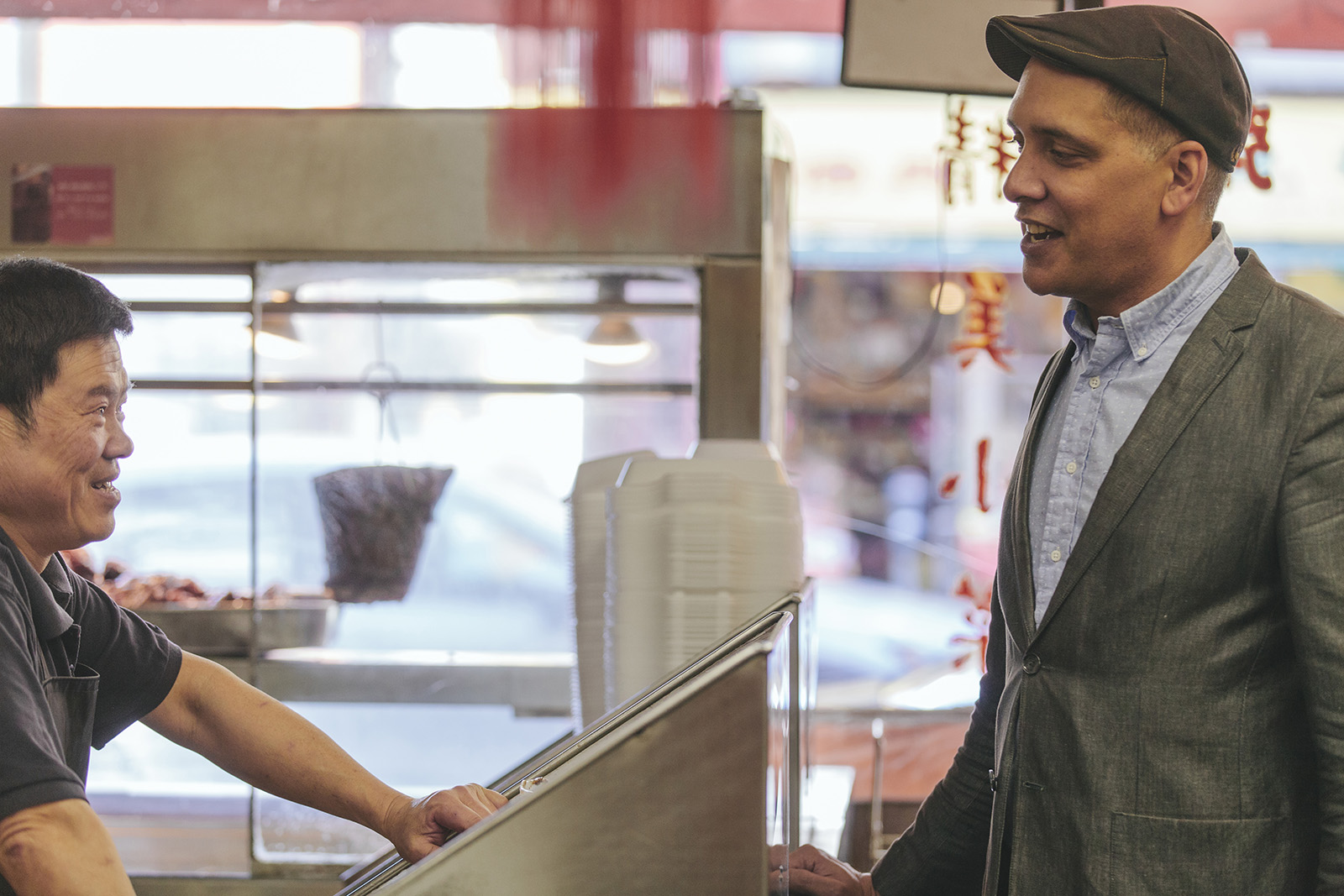
    As news broke Monday of the historic NDP-Green deal to form a progressive government for our province, I was waiting at City Hall, one of hundreds of speakers over four days testifying before city council in defense of Chinatown.

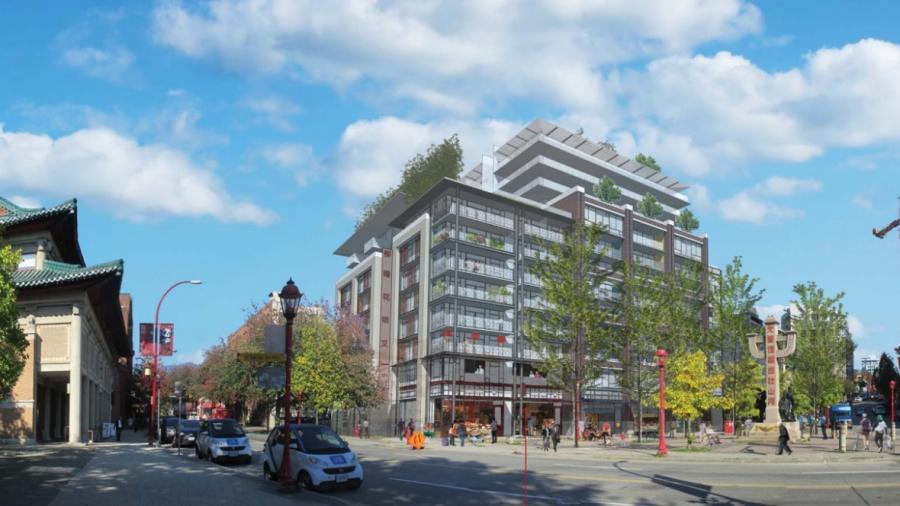
    I had managed to steal away from work to attend and speak on the final day of public hearings over the proposed 12 story, 150′ frontage Beedie condo development at 105 Keefer. I’m glad I attended in person, the mood was electrifying and inspiring; the gallery and chambers packed with advocates and activists.

    At issue: the re-zoning proposal for a new large scale condo development in the fragile heritage neighbourhood. This latest in a series of rejected applications by Beedie Developments for the block next to the Chinese Classical Gardens and Cultural Centre has been met by resistance every step of the way.

    Chinatown advocates are right to be concerned; after years of neglect, recent big block condo developments in the name of renewal have radically transformed the neighbourhood.

    So far, similar large scale new developments may have succeeded in bringing new businesses, residents, and short term vacation rentals to the area, but at a cost: the displacement of low income seniors, affordable residences and businesses, and the continued erosion of Chinatown’s character and heritage.

    On day one of the public hearings, respected neighbourhood activist Shirley Chan lamented that over the last several years, the development decisions by council were not –as purported– saving Chinatown, but in fact they were replacing Chinatown.

    There is a real irony then, that those same development decisions replacing Chinatown may have succeeded in saving Chinatown after all. Opposition to the project has succeeded in rekindling that most intangible aspect of heritage: it has built real community.

    A Chinatown Renaissance

    The opposition to this development proposal has managed to bring together young people, old people; heritage advocates and housing activists; small businesses and historic clan associations; multi-generational Canadians with deep roots and recent immigrants contextualizing their own sense of belonging in our city. The opposition to this project has brought about something of Chinatown renaissance, and ignited a passion to save the neighbourhood.

    A new generation of bright, articulate, and inspired Chinese-Canadian youth and allies have taken up the mantle of the 1970’s freeway fighters: organizing and advocating, working with Chinatown seniors and quite literally breathing new life into the neighbourhood. The same neighbourhood that the city council majority and real estate interests had decided was in need of replacement, underperforming and moribund.

    If there were any grounds of justification for council to still approve this rezoning it wouldn’t be for revitalization, but for public benefits. The provision of truly affordable housing as a public benefit condition of the various recent big block condo developments in Chinatown so far has been pretty minimal: in the low double digits as far as actual numbers of units.

    This most recent application for rezoning to accommodate the Beedie Group’s new 12 story condo building at 105 Keefer offered little by way of public benefits: 25 units of senior’s rental housing; only 8 of which would be at pension rate, and paid for by BC taxpayers. The proposal was also to include a cultural amenity space at “below market rate” (which by definition is not necessarily affordable or accessible).

    As most of the opponents agreed, the public benefits fell well short of what the community needs; and the building came at a significant cost to the neighbourhood, it’s too big, and in the wrong place.

    Big Commitments, Big Changes

    On Monday, as we waited to speak before council, the breaking news that a Green-NDP deal had been struck just moments earlier presented a literal last minute game-changer. Among other things, both parties have committed to increase the supply of affordable housing.

    That new provincial mandate will likely mean that begging for developers’ table scraps will no longer be the only route to securing housing for our society’s most vulnerable. Selling out Chinatown in exchange for barely-there public benefits would be tough to justify especially for city councillors going into a 2018 municipal election, and especially those who might be reliant on campaign financing from big developers.

    Thanks to the NDP-Green commitment to ban big money political contributions, the premise of developer donor influence will likely have waned by the next municipal election. As critics have pointed out: over the 11 months of the 2014 civic election reporting period, Beedie Group and their VP Rafii Houta are listed at having contributed at least $65,000 to council majority Vision Vancouver. A number of the proponents who spoke in favor of this development were also high profile Vision donors and fundraisers.

    City Council will make a decision on the 105 Keefer on June 13. Those extraordinary record-breaking four days of public hearings have bought councillors a little extra time to see not only the extent of public opposition to this project in support of Chinatown, but also how the political landscape is changing.
  • Last Call for Chinatown

    Last Call for Chinatown

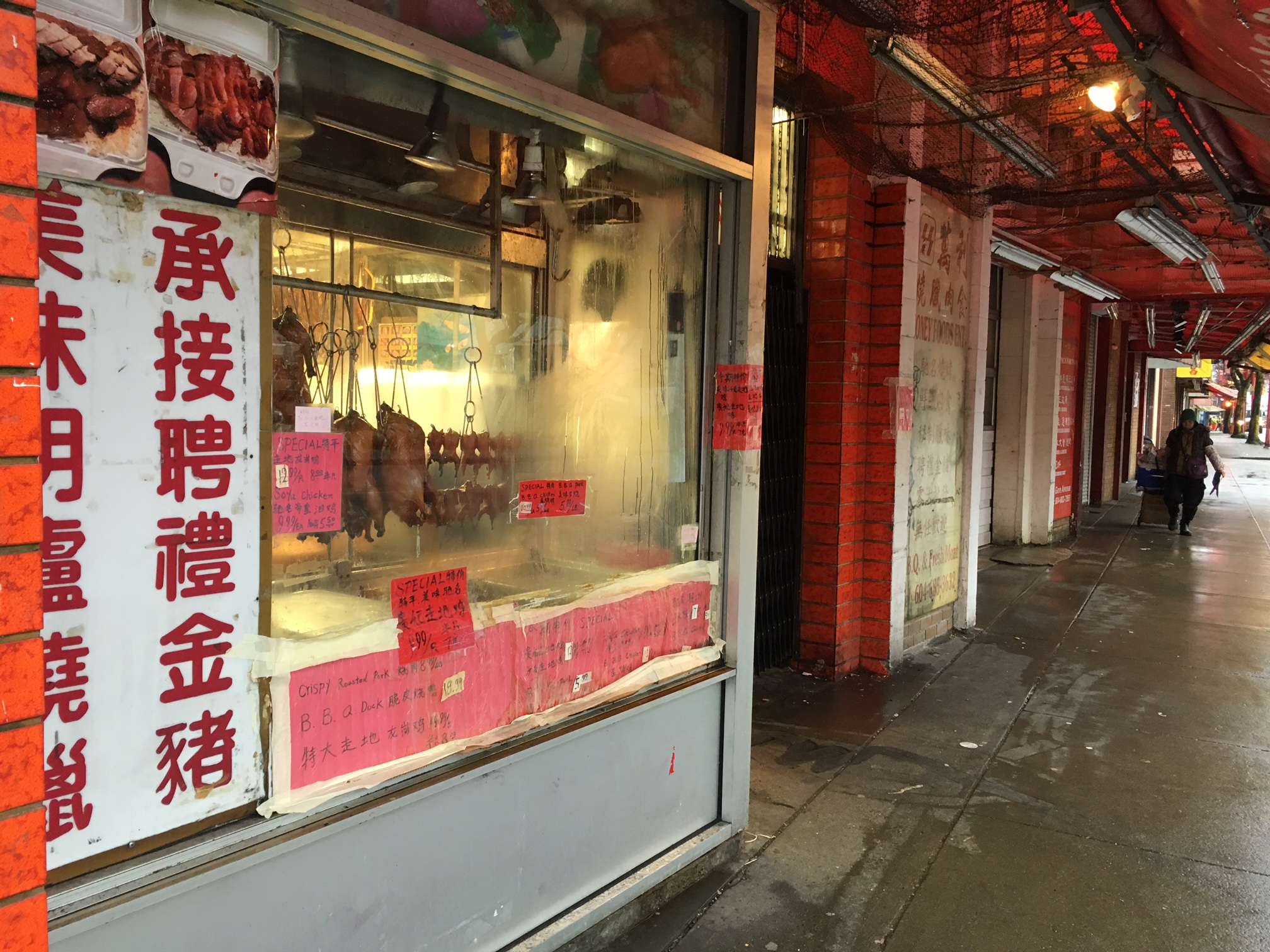
    Tomorrow, Friday March 31st is the public’s last opportunity to provide feedback on the City of Vancouver’s disastrous new planning policy for Chinatown before the proposal goes to City Council. The Chinatown Economic Revitalization Update and Development Policies being proposed by the planning department favour big developers and development in the fragile heritage neighbourhood and will cause permanent and irreversible damage to historic Chinatown.

    There are a lot of concerns with the new planning policy, but the literal and figurative big one is large lot assembly. Typical Chinatown lot sizes are 25 feet wide, the new plan would allow assemblies of up to eight lots, for 200 foot frontages.

    Vision Vancouver councillors defend this plan as a tool to deliver social housing although the targets and definition don’t address the actual need for affordable housing (in fact by the city’s own definition, “social housing” is not tied to any specific income, but rather refers to housing operated by a non-profit agency). Vision councillor Louie further defends the new policy by suggesting that fears of big developments and store frontages displacing small business are unfounded — despite evidence to the contrary like the decidedly small frontage Starbucks across the street from the new big frontage banks and high end grocery that populate the ground level of developer (and Vision donor) Ian Gillespie’s block busting condo behemoth spanning Main from Keefer to Georgia.

    Since the plan was first presented in Fall of 2016, there has been strong opposition from a wide variety of citizens: professional planners, historians, cultural advocates, poverty activists, businesses, residents and even some developers. If Chinatown matters to you, let the city know what you think of their proposed development policies — your opinion is important! Find the feedback form here.

    Here are my own comments I submitted earlier.

    Thank you for the opportunity to comment on the proposed development policies. I have attended a number of open houses and followed the changes in Chinatown with keen interest. I have lived in and around the immediate area for the better part of thirty years, some of my earliest childhood memories are of Chinatown. I choose to live where I live because of its proximity to Chinatown, and my deep appreciation for the culture, the context, the people, the presence, and that intangible urban fabric that defines the neighbourhood.

    I appreciate some of the direction in this policy document: improving public spaces, activating laneways, investing in cultural intitiatives, and protection for HA-1 streetscape. However, on a whole I reject this policy document.

    I do not think “Exploring designating Chinatown as a Heritage Conservation Area” is much of a commitment. Clarity around conservation and heritage protection needs to be a starting point for any conversation around new development policies, not an afterthought. We need a strong and meaningful commitment to preserving Chinatown as a heritage area. The notion that Chinatown is a racist anachronism rendered unnecessary by civil rights, equality, and Richmond shopping malls does a disservice to the legacy and the history of the Chinese pioneers who helped to build this province.

    While the idea of commercial mezzanines are charming and whimsically Chinatown, I think that their requirement creates a defacto “premium” retail space, and exacerbates retail gentrification, that is to say the pricing out of traditional and locally serving businesses — certainly mezzanine retail space is not suitable or appropriate for grocers or butchers (for example).

    I would like to see policies that recognize and incentivize local serving affordable retail as a public benefit.

    I think that the 50′ retail frontages being proposed in HA-1 should be conditional, not outright.

    Proposed 75′ site frontages for the rest of Chinatown are also too big. If the city is serious when they claim they will encourage traditional small lot development – then 75 should be conditional, not outright.

    Of course, the most egrigious of this proposal is the 200′ frontages in exchange for inclusionary zoning. These proposed big box developments have no place in such a small and fragile historic neighbourhood. This proposal serves developer interests, not public interests.

    As a matter of principal, inclusionary zoning should be an outright requirement for all new residential developments and should meaningfully identify an affordability benchmark.

    For the most part, I do not think the proposed policies will thwart speculation; rather, the opposite as lot assemblies and adjacent land use will and are contributing to more speculation, not less.

    Overall, I am quite disappointed that this policy document fails to meaningfully priortize housing affordability, urban form and fabric, retail gentrification, impacts and development pressure of new St Pauls and viaducts removal, and cultural and heritage preservation.

  • Remembering Joe Wai: Architect, Activist, and Placemaker

    Remembering Joe Wai: Architect, Activist, and Placemaker

    Very sad news to note yesterday, the passing of Joe Wai.

    Many in Strathcona might only know of Joe Wai as the nickname for the ubiquitous stuccoed and bay-windowed duplexes and triplexes throughout the neighbourhood, as the 1970’s BC Housing built and Joe Wai designed structures came to be colloquially known. Those then-new structures quite sensitively complimented the Victorian venacular of Strathcona, which at the time was literally falling apart, blighted as a result of deliberate city policies that sought to “renew” Strathcona with bulldozers, housing projects, and highways. Joe, and his photographer brother Hayne were young neighbourhood advocates and activists, who joined forces with the Strathcona Owners and Tenants Association (SPOTA) to fight the expropriation and destruction of Chinatown and Strathcona. Those efforts are the only reason our neighbourhood exists today.

    Joe went on to design some of our city’s best loved Chinatown places, including the Dr. Sun Yat-Sen Classical Chinese Gardens, the Chinese Cultural Centre, Skwachàys Healing Lodge, and the Millennium Gate. Along the way he was a driving force behind the preservation of Chinatown and renewing it’s many heritage buildings and facades, and he led the campaign to see Chinatown designated as a National Historic Site. One of his as-yet incomplete projects —on he specifically sought and received SRA support for— is the Villa Cathay renewal, which will see improved and expanded seniors’ housing for Chinese elders in our community.

    Last year at 75, Joe was given an Architectural Institute of B.C. lifetime achievement award. He will be dearly missed even as his legacy lives on.

    Read the recent Vancouver Sun story on the occasion of Joe’s lifetime achievement award
    Nice little piece on the ubiquitous “Joe Wai’s” of Strathcona
    Joe’s obituary in the Sun

    Postscript: 

    I wrote this piece for the local Strathcona Residents’ Association newsletter; almost as soon as I’d heard the news, I poured myself a stiff drink and thought about Joe’s influence on the city, our neighborhood, and me.

    I met Joe and his brother Hayne around the same time. Hayne, an accomplished photographer and historian had a magnificent collection of under appreciated photographs from the SPOTA days; when that grassroots organization rallied to save our Strathcona neighbourhood from the wrecking ball. Joe, of course was already the stuff of legend, and (nick)namesake of the charming style of dense and well designed housing throughout the ‘hood including next-door to me, a cheerful triplex where Jim Green was living at that time.

    Joe later came to me when I was chair of the Resident’s Association with a big renovation proposal, to replace a dated and worn-out seniors housing facility —Villa Cathay on Union Street— with a new modern facility, more amenities, more and better housing, and an 11 story tower. Of course, towers are generally pretty much an anathema to residents associations everywhere; especially when plonked down in the middle of a low rise neighbourhood, and in the context of an overly developer-friendly city government. But the irony was not lost on me —that Joe and many of those very seniors he sought to house had helped to save our neighbourhood in the first place; and that as the specter of big development was threatening to destroy Chinatown and displace it’s residents, they would need someplace to go. I’m proud to say that the SRA went on to unanimously support the Villa Cathay rezoning in February 2013.

    Of course, those fears for Chinatown and displacement proved to be well-founded, and I had the occasion to talk with Joe many times about how we might protect it, and I watched as Joe in turn inspired a new generation of activists. As I went on to write on my personal Facebook page; I never felt so honoured as when Joe graciously offered me his endorsement for my political endeavours – it’s a trust and a legacy that I will carry with me always.

  • Naming the new school: Crosstown vs Cumyow

    Naming the new school: Crosstown vs Cumyow

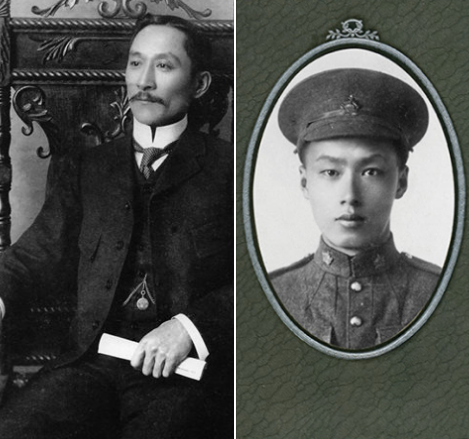
    With the naming of the new elementary school in North East False Creek, it seems the debate is still raging and petitions are being circulated after the interim appointed Vancouver School Board decided to go with Crosstown rather than honouring Chinese Vancouver pioneer Won Alexander Cumyow (pictured).

    With all due respect to his legacy, I appreciate that most of the concerns stem from naming a school “Cumyow” and how that might be too ribald-sounding for elementary schoolkids.

    I also agree that “Crosstown” is an incredibly bland name and lost opportunity to recognize, redress, and reconcile Chinese Canadian History. Of course (unsurprisingly) there’s also a whiff of partisan politics driving the debate too.

    But why is this choice between one of only two names? Are we getting hung up on this one name when there might be other opportunities to honour our histories, without being the butt of juvenile school yard jokes?

    Why not riff off some of the old Chinese names for the region like Fusang, Gam Sann (Gold Mountain) or Saltwater City? Or how about other Chinese Canadian pioneers: David Lam already has a park of course — but what about Yip San, or Lee Chong, or Wong Soon King, or Douglas Jung?

    One of my personal favourites is this guy: Wee Hong Louie (pictured)…
    Louie, born in 1889 was living near Shushwap when he enlisted in 1917 to fight in the First World War. Returning as a decorated veteran, he faced systemic racism and finally was denied a business license because he was Chinese. In protest, he packed up his uniform and medals and sent them off to then Prime Minister Mackenzie King, who apologized and directly intervened to grant Louie a business license. Mackenzie King, who has a conflicting history regarding race issues, was PM during some especially troubled and xenophobic times in our nation, but nonetheless went on to repeal the Chinese Immigration Act, and grant franchisement to Chinese Canadians and honour to Chinese Canadian veterans of WWI and WWII.

    http://www.ccmms.ca/veteran-stories/army/wee-hong-louie/

    http://vancouversun.com/news/local-news/international-village-school-in-…

  • Chinatown

    Chinatown

    I’ve lived in Vancouver-Mount Pleasant for close to thirty years, and in Strathcona/Chinatown for most of that time. It’s my home, and an area I’m very fond of —of course, a lot of Vancouverites and visitors are fond of Chinatown, and it represents an important aspect of our city’s history. Forged among the bitter memories of institutional racism and head tax, Chinatown represents the fortitude and perseverance of the pioneers who helped build our city and province.

    Of course, Chinatown is also a great place for food, shopping, and sightseeing for tourists and locals alike!

    In recent years, since Vancouver City Council passed the the Historic Area Heights review, new developments threaten the physical and cultural character of Chinatown. Inconsistent with the narrow frontages that once defined the urban form of the neighbourhood, new large footprint buildings are contributing to rising land values and the displacement of both residents and retail.

    We must act decisively if we are to preserve the character of the Chinatown. In light of two recently approved large development re-zonings, the impending removal of the viaducts, and relocation of St. Paul’s Hospital — significant new changes are coming to the neighbourhood.

    I’m proud to support my neighbours and a new generation of young Chinese Canadians who are leading the efforts to revitalize and protect Chinatown through advocacy, engagement and social connectivity.

    As MLA, I will pledge to work with provincial and federal government to protect Chinatown, and to build new housing for the nearly 1,000 elders who call the neighbourhood home. I will push for further provincial heritage legacy funding to preserve this cultural treasure.