
Tag: dogs

  • Conservation, Wildlife, and Animal Welfare

    Conservation, Wildlife, and Animal Welfare

    As Greens, how we treat our planet and its inhabitants reflect our fundamental values. 
    As a Green MLA, I will fight to push those values into provincial decisions and lend my voice to those who have none.

    An Endangered Species Act for B.C.
    Currently, our conservation efforts here in B.C. are woefully inadequate, and reflect a last-century mindset towards resource extraction and the environment. Our current provincial Wildlife Act is too weak — B.C. has the greatest biodiversity in the country, yet we have no stand-alone law to protect endangered wildlife. Along with Alberta, B.C. stands alone as the only province without an Endangered Species Act. Limited federal protection applies to only 210 of the approximately 1900 species of flora and fauna at risk in our province. As MLA I will join biologists, ecologists, and environmentalists in calling for an Endangered Species Act for B.C.

    In our province, interference from industry has weakened protection for species at risk, while habitat destruction and irresponsible resource extraction has led us to the point that we are struggling to protect critically threatened populations like the Southern Selkirk caribou herd.

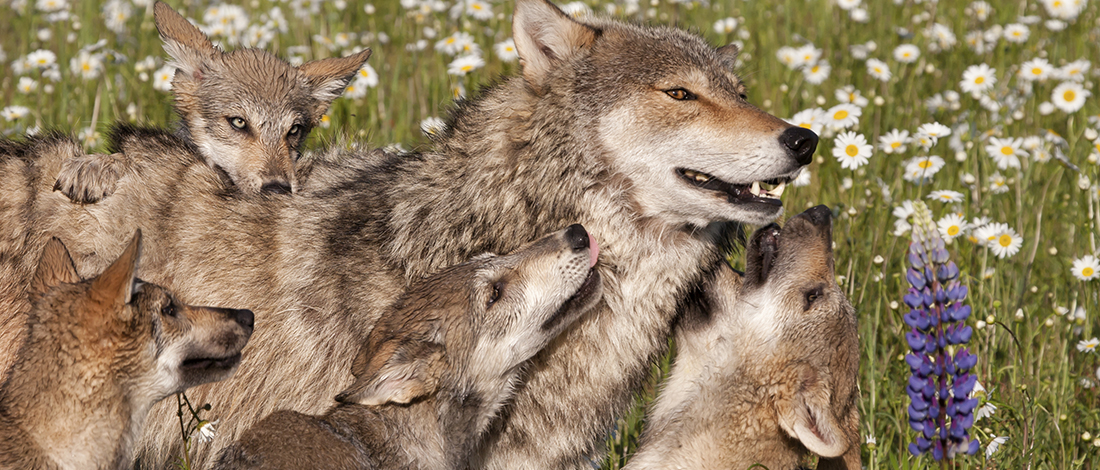
    The price for our mismanagement of the South Selkirk? Wolf packs in the area will be slaughtered by aerial gunning, neck snares and poison. The caribou survival is far from guaranteed though, as their herbivorous diet destroyed by logging won’t recover anytime soon. A failure on all counts, that deserves a more proactive method of wildlife management and environmental stewardship.

    Compassionate Conservation
    As MLA, I will champion the emerging school of wildlife and habitat management known as Compassionate Conservation — ostensibly a program that offers less cruelty and more protection to wildlife than our practices currently afford. Compassionate Conservation recognizes the value of animals beyond just resources to exploit or control, as well as our own role in climate change and habitat destruction.

    In British Columbia, eco-tourism has far greater revenue generating potential than trophy hunting, yet the latter continues in the form of the annual grizzly bear hunt despite its relatively negligible economic benefits. There exists a reasonable economic argument to support enhancing our conservation efforts in support of the billion-dollar eco-tourism. Rather than our current direction of decreasing the number of conservation officers, an updated conservation service could provide good opportunities for stewardship employment, particularly in First Nations communities.

    Environmental protection must include wildlife
    British Columbians might be shocked to learn that when we talk about “made-in-BC-solutions” and “world class spill response” in the context of proposed pipelines, oiled wildlife aren’t considered. In fact, there is no clearly defined legal fiscal responsibility for oiled wildlife response in British Columbia. Furthermore, we don’t have the response capacity, funding or facilities. Any oiled wildlife rescue would be completely downloaded to private rehabilitators. Resource extractors must consider wildlife in any official disaster response planning.

    Mounting evidence is pointing to the indiscriminate use of pesticides in agriculture as the cause for massive bee colony collapse. I believe that B.C. needs to follow Ontario’s example and take a much more proactive approach to the issue of neonicotinoids impact on wild bee and pollinator populations.

    The Five Freedoms
    British Columbia has done a reasonably good job of updating its Animal Cruelty legislation in recent years (The Prevention of Cruelty to Animals Act) — we still have a ways to go, and these things do take time. As MLA I will offer support to industry and animal welfare advocates in continuing to update and improve the National Farm Animal Care Council codes.

    Concerning animal welfare, I fundamentally support the “Five Freedoms” as a foundation for care of animals under human control.

    1. Freedom from hunger and thirst
    2. Freedom from pain, injury, and disease
    3. Freedom from distress
    4. Freedom from discomfort
    5. Freedom to express behaviours that promote well-being.

  • On Dog Waste, Yellow Journalism and What to Doo About It.

    On Dog Waste, Yellow Journalism and What to Doo About It.

    Drinking my morning coffee, I listened to the CBC radio follow up on their recently posted story about the scourge of uncollected dog feces throughout Vancouver. According to the CBC, the problem is so widespread that it is set to break the City’s records for the most amount of complaints received in any single year. Of course, no one likes to step in dog shit, and the rant-line messages re-enforce that reality as a second day’s worth of angry callers launch into tirades about horrible dog owners.

    A record breaking number of complaints, I think to myself, that must be a lot of dog doo. I watch the CBC report with interest: that record breaking number of complaints? Forty-five. That’s right, 45 complaints – possibly set to break last year’s record of (wait for it) forty-eight complaints.

    I’ll readily admit that dog shit in our parks and on our sidewalks in unacceptable, and an understandably infuriating and disgusting problem for anyone who steps in or has to clean it up – presumably even more so if you don’t actually own a dog. It’s an issue the media loves to capitalize on because it elicits such emotional reactions. But really, forty-five complaints in 11 months, that’s news? To my mind, stories like this are the worst kind of Yellow Journalism, a cheap ploy to engage the audience by way of exaggeration and sensationalism. The problem with this kind of sloppy and inflammatory reporting of course, is that it polarizes the issue and pillories all dog owners, tarring them with one generalized brush stroke of antisocial irresponsibility.

    But let’s take a look at the numbers – by the City’s own estimates there are 140,000 dogs in Vancouver (with only 30,000 of them licensed, but that’s another story). For argument’s sake: let’s assume that the city is wildly off base with their estimate and there are only 50,000 dogs in the city. Let’s make another big assumption and say that half of those dogs never leave their home or yard and effectively only 25,000 dogs are walked on our city street and parks. Of those 25,000 dogs let’s pretend that they only make one bowel movement a day. Twenty-five thousand dogs multiplied by 365 days – that’s over nine MILLION dog turds per year! If dog owners were overwhelmingly irresponsible – this city would be literally swimming in dog shit. Even if 5% of our low-balled urban dog population were irresponsible and failed to collect after their dog, that’d be half a million turds per year about 4,000 per square kilometre.

    It becomes abundantly clear when you look at the numbers then, that owners not picking up after their pets is an anomaly, not the rule. The kind of people that don’t pick up are probably the same kind of people that litter, or run red lights or bicycle on the sidewalk – they’re self-centred jerks.

    Now that we’ve identified the problem what do we do about it and what do we do with all the dog waste that IS dutifully collected and deposited in the garbage where it goes on to be entombed in a plastic baggie in a landfill?

    Even if a misanthropic 5% of the owners of our low-balled overall urban dog population were irresponsible and failed to collect after their dog every time they left a deposit, that’d be half a million turds per year or about 4,000 per square kilometre.

  • Vancouver Park Board and the Dog Strategy Task Force

    Vancouver Park Board and the Dog Strategy Task Force

    In September, 2006, the Vancouver Board of Parks and Recreation announced the formation of an all-volunteer task force, made up of citizens with proven expertise in specific areas of stakeholder interest and concern.

    Members were charged with the task of developing a strategy that would be a balanced compromise respecting and accommodating all sides of the issue, and all legitimate uses for the public lands.

    Through 2006 and 2007, I sat as one of the six members of that task force. I must confess to being something of a Pollyanna going into the process, I genuinely thought we would be crafting policies that would make things better for everyone – I had no idea the extent to which some Vancouverites had an intense dislike for dogs and their owners, to the extent that they wanted a complete moratorium on off leash areas.

    The task force ended rather acromoniously and the media branded it a failure, although I am happy to say that many of the recommendations we suggested then, have been adopted into official policy today.

    This blog will unpack some of the work we did and explore some options for improving the opportunities for dog owners and non dog owners alike to enjoy and share Vancouver’s Park System.

    Our 2007 report – the findings of the Task Force and the recommendations and action plans suggested by a majority of its members (with the help and input from literally hundreds of concerned and caring Vancouverites) – can be dowloaded and read here.

    Here’s what I wrote in my application to join the task force, back in 2006:

    My name is Pete Fry. I have lived in Vancouver my entire life, I am
    actively involved in my community, I’m a home owner, taxpayer, dog owner and park user.

    I have enjoyed the company and therapeutic benefits of dogs since I was

    a child. I do occasional volunteer work with the City of Vancouver

    Animal Shelter and own a shelter rescue dog, that I exercise regularly

    in Strathcona Park. As I am active and approachable in both my

    neighbourhood and the dog community, I have had the opportunity to

    glean a great deal of insight into the divergent views on urban dogs;

    from dog owners to park workers to street people to sports players to

    parents to new Canadians.

    I have more than a passing interest and insight into urban development and sustainability.

    I am well aware of the pressure on our urban parks, with a dwindling

    supply of land and growing population of both humans and dogs vying for

    a finite amount of green space. Like many urbanites, I do not own a car

    – and in that context appreciate the need for accessible amenities for

    all citizens to enjoy – be it for sports, play, dogs or just enjoying

    the fresh air and flowers.

    Over the years, and in conversation with other dog owners and park

    users, I have developed some of my own ideas and concepts towards

    mitigating some of the expressed concerns, and mollifying some of the

    escalating tension over our parks. This task force would seem to be the

    perfect forum to present some of these initiatives, which include:

    – specifically designed, designated and appropriately landscaped “dog

    toilet” areas.

    – specific collection and re-use of dog waste in an environmentally

    responsible manner.

    – public education about dogs and the basics of their behaviour, with

    specifically targeted programs for new Canadians, many of whom are not

    familiar with urban dogs as pets.

    – considering the specific needs of dogs in establishing off leash

    areas, with regard to proximity to playgrounds, sports fields,

    skateboard bowls, etc, and how more dog facilities might be established

    with less space.

    – developing a strategy that anticipates the growth in homeless

    population with dogs, and recognizes the therapeutic benefits dogs

    provide to marginalized people.

    In my professional capacity, I am a 37 year old self-employed graphic

    artist, and as such am used to committee work and consensus building,

    for both public sector and corporate clientele, on a variety of

    budgets. My work allows me to tailor my schedule as need be the case to

    facilitate involvement in your committee.

    I hope you consider me for involvement in your task force. In any

    event, though, I would love to present some of my ideas in more detail.

    If you would like more information about me or references, please don’t

    hesitate to contact me.

    – license system where obedience gets discount (or non-obd pay more)

    – dog toilets

    – dog waste compost

    – dog play facillites, adventure playground

    – lockable, gated dog ‘sub-parks’

    – public dog education

    – dogs in other parks during off-season