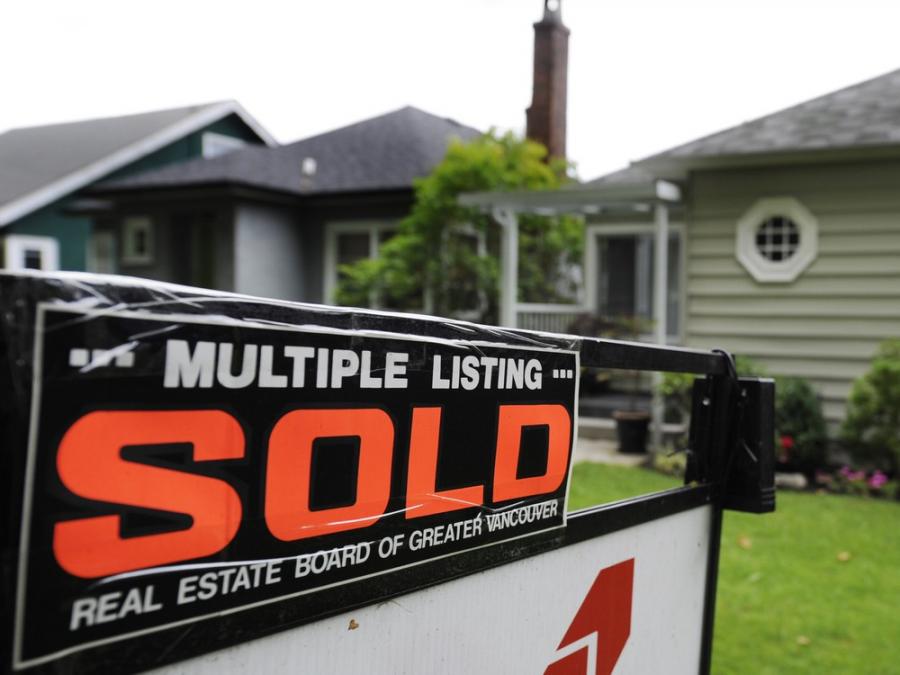
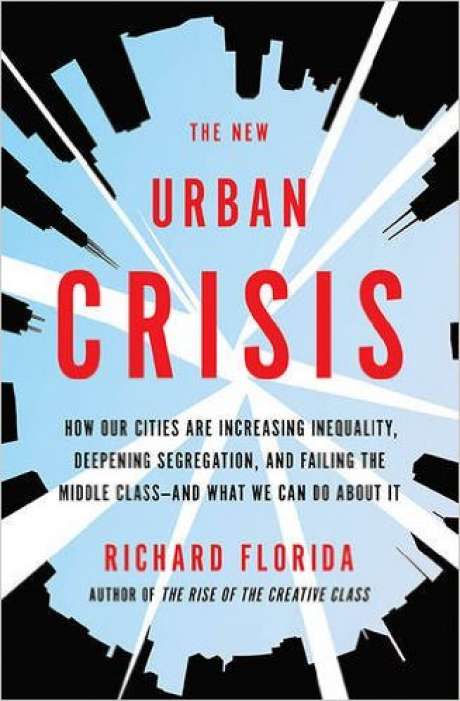
When people ask what went wrong, and how did Vancouver get to this crisis point of inequality and unaffordability — I’ve often pointed to the Richard Florida mantra of the creative class / creative cities: a school of urbanism that has dominated our city’s politics and planning for the last decade.
Florida’s premise: that economic and urban renewal could result from wooing the “creative class”, that things like hip coffee shops, bike infrastructure, and social engineering with a progressive veneer would fuel urban transformations.
Then, as now, critics pointed out that this revitalization would bring wider income disparity; and that in its desirability, the creative class city would quickly run dry of affordable housing. Well, it happened, and its happening: our city is reaping what the creative class thought leaders have sown.
That is why it’s so incredible, fifteen years on, to hear Florida now pull away from the very theory that made him a star in urbanist circles — and candidly admit that there is a very dark side to the urban creative revolution: inequality. The creative class divide.
His new theories now talk about “inclusive urbanism”, about investing in residents’ skills rather than yuppifying communities. It echoes a lot of the work I’m doing now, where urbanist and developer-speak about “placemaking” are countered with the need for place-based strategies: namely, urban revitalization that includes the people who are already here.
Florida also takes aim at: “the tribe of urban libertarians who advocate loosening development restrictions to boost housing construction and bring down prices, as if affordability were simply a matter of supply and demand”
So for once, I’m actually looking forward to the hearing something Richard Florida has to say. The book is expected next spring.
See this despicable cartoon attached to my post? I didn’t scrape it off some bottom-of-the-internet hate site, this was on the progressive World Social Forum which was happening in Montreal this last weekend.
Those particular workshops were condemned of course, and later cancelled and pulled from the website— but I think it is important to call out that kind of hate where and when we see it. The fact that it was approved as a committee/workshop and allowed to fester on a progressive website as long as it did? Nobody should be ok with this kind of thing, least of all progressives advocating for human rights.
I wanted to give context to one of the reasons why I didn’t support the BDS (Boycott, Divest and Sanction) of Israel policy resolution voted on at the Green Party of Canada’s biannual convention, which quite coincidentally also took place this last weekend, in Ottawa.
I’m not suggesting that the GPC members and BDS supporters behind this motion are racist, or wouldn’t be offended by the cartoon —but I won’t sugar coat the idea that there isn’t a growing, ugly undercurrent out there of manipulation, and racism, and intolerance. The rise in (((Anti-Semitism))) and Islamophobia even in progressive circles is a tone eerily similar to the type of xenophobic rhetoric we’re hearing from Trump supporters, European nationalists, Brexiters, and the like.
When as Greens we formalize support for a position that polarizes around an issue of race, ethnicity, and nationalism we are traveling a dangerous path.
I didn’t attend the convention, nor am I especially active in the Green Party of Canada, but as a member I voted online some weeks before.
As someone who has run for political office (twice) under “Green” banners —though not the GPC specifically— I feel I should be clear where I stand.
I support a two state solution.
I support a free, safe, just, and self-determined nation state for Palestine.
I support a free, safe, just, and self-determined nation state for Israel.
I support non-violence as a means to acheive those goals, as I do not support the status quo as it is now.
But I can’t support the motion passed at the GPC convention in support of BDS movement.
The GPC policy motion may couch support of BDS in language like: “targeted to those sectors of Israel’s economy and society which profit from the ongoing occupation” —but that language is entirely subjective and utterly meaningless in its lack of specifics, as well as being inconsistent with the stated goals of the BDS movement. While I don’t condone the actions of any belligerents in the Israel-Palestine conflict, I do not think that the BDS movement offers a realistic roadmap to a lasting peace and security in the region.
Screenshot from BDSmovement.net FAQ page
So I reject this GPC policy statement for a myriad of reasons: first and foremost because it is guided by the mandate of an outside political organization, and not the least of which because the motion is poorly written.
This policy statement lacks the balance and respect for diversity we expect as Greens. This policy statement lacks the context to acknowledge progressive Israeli and Palestinians working towards consensus and peace, or what any targeted boycotts might look like. This policy statement doesn’t explicitly acknowledge and distinguish between complex and nuanced issues of history, racial/religious identity and government. This policy statement lacks the sophistication to specifically consider Canada’s own direct role in Israel’s military-industrial-complex, the ultimate consequences of further squeezing Israel into a nationalist and defensive position and destabilizing a democracy in an already destabilized region, or the implications of abdicating party policy to an outside organization.
In my opinion, our objectives should be determined by the Green Party, not the BDS movement, and our methods to reach those goals should reflect that iteratively and clearly.
For the GPC to take policy directions from another political organization (the BDS movement) is as undemocratic as it is untenable, and clearly it is proving to be incredibly divisive.
I will suggest that as a party we are right to uphold progressive values of human and civil rights, equality, and social justice for everone —regardless of ethnic/religious identity, national origin, colour, gender identity, or sexual orientation. Those values can’t be ad hoc, they must be universal in their application, including right here in Canada.
That being said, I disagree with any efforts to legislate a prohibition of expressions of support for BDS — respect for opposing views and the conversation they spawn are the only way to fulsome discussion and consensus.
I regret that I didn’t post my thoughts on this earlier, but I didn’t actually think GPC members would pass this motion, nor did I think I would have to articulate or defend my own thoughts on the matter.
Postscript:
Once of the most meaningful and thoughtful opinions on resolving the conflict I’ve read comes from the The Parent’s Circle – A grassroots organization of bereaved Palestinian and Israeli families supporting Peace, Reconciliation and Tolerance.
“Although the PCFF has no stated position on the political solution of the conflict, most of its members agree that the solution must be based on free negotiations between the leadership of both sides to ensure basic human rights, the establishment of two states for two peoples, and the signing of a peace treaty.” — www.theparentscircle.com
Post Postscript
The BDS policy was revisited at a subsequent GPC convention and overturned.
At long last, the City of Vancouver has hired a Chief Planner, Mr. Gil Kelley.
Kelley comes with a solid background of West Coast urban planning experience: two years as head planner in San Francisco, fourteen years as director of planning for Berkley, and ten years as the lead in Portland. I’ll admit, as a Portland-o-phile that last bit piqued my curiosity, I’ve long admired the PDX approach to community involvement, human scale density, multi-modal transportation, sustainability, and placemaking.
So can we expect Portlandia-style planning in Vancouver’s future?
Of late, the City of Vancouver has been notoriously secretive about its hiring process, as such it’s anybody’s guess what the specific hiring criteria might have been: but former Director of Planning, Brent Toderian outlined five big fixes the new Chief Planner needs to achieve, (to wit: independence, good design, transparency, community engagement, and innovative leadership) all of which are noteworthy aspirations for the planning department. Ironically, Toderian was the last Director of Planning our city had — hired by the NPA, turfed by Vision Vancouver — the position of Director was re-engineered into two separate positions: Chief Planner and General Manager of Planning & Development (of eyebrow-raising note, those last two placements and the recent hire of City Manager earlier this year mean three of the most powerful five bureaucrats in our city are US citizens).
As far as Portland, we share a lot of similarities with our Cascadian sister city: Logging towns birthed in the crucible of railways, gold rush, and Western expansion; ugly histories (and legacies) of racism and displacement; former backwaters thrust into the limelight of desirability and imagination in the Pacific age. Both cities are experiencing rapid growth in population and housing costs. Portland’s rate of growth far surpasses our own, though not nearly the rate of housing unaffordability. Sadly Portland and Vancouver both share similar levels of street homelessness, though arguably Portland has shown willingness to look at more innovative community-based solutions like Dignity Village.
Like Vancouver, Portland’s urban fabric was ultimately defined by their resistance to the 1970’s urban freeway push. Unlike Vancouver though, Portland’s freeway resistance gave rise to a robust and institutionalized system to involve communities in the planning process: the Office of Neighbourhood Involvement. The ONI allocates city resources and staffing to ensure grassroots residents associations are representative and meaningful partners in local development and land use decisions. With close to 100 neighbourhood associations, all officially recognized and supported by the City of Portland, there is a distinct DIY attitude, where citizens commandeer public space to create pocket parks and intersection repairs, the ONI further engages them to take an active role in planning their communities.
Portland, unlike Vancouver has a lot more space — almost three times as much land area in the city proper and a similar population means Portland has a lot less density. The density distinction manifests in Portland as delightfully walkable and human scale environments, incubators of small business and neighbourhoods, connected by good transit and bike-friendly road network. On Portland’s periphery “East of the 205” any pretense of smart density makes way to sprawl, but in established neighbourhoods closer to the city centre, density takes the form of tiny houses and newer mid-rise woodframe style construction that integrate reasonably well with the existing urban fabric.
In looking at Mr. Kelley’s tenure as Portland Director of Planning – there are two noteworthy highlights: one good, one not-so-good.
The good, The Pearl: master planning with robust inclusionary zoning
The Pearl District is kind of Portland’s Yaletown, a former brownfield (railyard) site: with pleasant streets, interesting architecture mixing old and new, lots of public amenities and a decent mix of affordable housing that far surpass our own targets for inclusionary zoning. The 130+ acre Pearl site has targetted 35% affordable housing in its mix and currently sits at around 28%, where Portland defines affordable housing as 30 percent of gross household income for rent and utilities (Vancouver on the other hand barely ever meets the 20% inclusionary target and defines affordable housing as “something somebody can afford”).
Along with having “good bones” and historic context, the Pearl’s success in no small part can be ascribed to the culture of neighbourhood involvement. Residents articulated and pushed for livable communities, with affordable housing targets and good local serving transit.
The not-so good, Portland’s attempt at Vancouverism: The Portland South Waterfront.
I’ll admit that after speaking with architects, planners and community leaders about what worked and what didn’t in their city, and visiting Portland’s many interesting, inclusive, and vibrant neighbourhoods, I was aghast when I came across the South Waterfront. It reminded me of the worst of Vancouverism: point and podium architecture, glass curtainwalls and big frontage ground oriented retail, the only saving graces were pretty parks, and a nice riverwall — oh and good transit connections to get the hell out of there. What struck me the most was in comparison to the other vibrant neighbourhoods of Portland, the SW District was antiseptic, boring and devoid of vibrant street life. Perhaps unsurprisingly, like Vancouverism, the housing mix in that district falls well short of the Pearl, with units of affordable housing only in the double digits and far less robust inclusionary zoning targets.
Like the Pearl, the “SoWa” was a brownfield site, but what it lacked were the good bones and thoughtful engaged residents to breathe life into the area. Instead, the SW felt like it was a project guided by the hand of private developers. It should be noted the other extenuating circumstance with the SoWa, notably the large anchor tenant nearby in the Oregon Health and Science University and facilities and the role they played in the type of community built.
Urban Renewal and tax-increment financing
Both the Pearl and SoWa share a similarity in Portland’s funding model for big urban renewal projects. Portland, by way of its urban renewal commission the Portland Development Corporation is able to leverage the potential of these projects through bonds. The bonds in turn are paid off by tax increment financing: the expectation of future property tax revenues resulting from increased density will pay off the bonds over the course of decades. The TIF structure puts that city in the driver’s seat, where robust targets for public benefits and affordable housing can be mandated and prioritized. It’s a stark contrast to here in Vancouver, where developers carry the upfront cost and the city effectively plays a junior partner in negotiating affordable housing and public benefits. If the proof is in the pudding, it’s worth noting that Portland’s City Council was able to repsond to their own housing crisis by earmarking 45% of all urban renewal funding for affordable housing.
Unfortunately, the very idea of urban renewal and tax-increment financing are impossible under our antiquated Vancouver Charter. With the mandate of our new planner including big urban renewal projects like NE False Creek and densifying Broadway, the conversation shifts to how those will happen. So here is my own five big fixes the new chief planner needs to achieve.
Five big Portland-style fixes for Gil Kelly
1. Make the case for tax increment funded urban renewal. Bring strong leadership from the planning department to push for changes to the Vancouver Charter that will allow us to look toward wresting the control from developers into the hands of local government. With a provincial election coming, now is the time to do it.
2. Create an Office of Neighbourhood Involvement model for Vancouver. Redefine the relationship between communities and the city. Bring neighbourhoods in as partners in planning.
3. Make meaningful commitments to inclusionary zoning and affordable housing. Redefine what “affordable housing” means in the context of the people who actually live here, push for more robust inclusionary zoning in big projects.
4. Save cash, less flash when it comes to sustainability. Portland manages a great deal of cost-effective sustainable measures: simple solutions like bioswales in pedestrian bulges to manage stormwater and bike boulevard neighbourhood greenways, which prioritize cyclist safety while limiting cars to local vehicle traffic and calming neighbourhood streets for all users. Install more bike parking for locals. Encourage local DIY placemaking as a means to nurturing walkable communities. Grow back our tree canopy. Improve the process for small scale developments, residential infill and forms like row and permiter housing.
5. Be bold, but be transparent. Kelley will be taking on some big urban renewal projects, including the expectation to fund a new SkyTrain with transit-oriented development. I’d suggest the failure of the transit plebiscite was in no small part influenced by public distrust of Translink and the Mayor’s Council. Portland has done a good job of multimodal transit, prioritizing LRT and electric streetcars over expensive subways and diesel busses. A Broadway Subway to Arbutus may be a done deal, but let’s look at other options when it comes to improving our network to UBC and city-wide, and what other forms of transit oriented development might look like. And while he’s at it, show some boldness by breaking from that clichéd Vancouverism pastiche of new urbanism.
The litany of lost opportunities to meaningfully address the housing crisis in our city is depressingly long, and given the role that the real estate industry can play in that equation — you might be surprised to learn that the City of Vancouver have absolutely no rules or regulations to govern the licensing of realtors doing business in the City of Vancouver.
Wednesday morning (July 13) the Independent Advisory Group on Real Estate Licensee Conduct, in a presentation to City Hall reported on Conduct and Practices in the Real Estate Industry in British Columbia. The Advisory Group, mandated by the Real Estate Council of BC was there ostensibly to reassure City Councillors that something was being done on a provincial level about corruption and conduct in that industry.
The practices of certain bad player realtors in our city have come under increasing scrutiny in recent months: from shady practices like shadow flipping and double ending, to serious allegations about ethics, transparency and discipline within the Real Estate Board of Greater Vancouver and even some realtors failing to comply with federal (FINTRAC) money laundering rules — but so far, City Council hasn’t taken any action.
Three term Vision Vancouver Councillor Kerry Jang even had the temerity / lack of self-awareness to ask “what took you so long?” of the industry regulators’ failure to address the housing crisis, jokingly asking if they “were having too good a time making too much money” (I think somewhere in the audience I heard the echo of a sad trombone).
Some might argue that the licensing of realtors is already mandated and regulated by the provincial government, and that’s true. In the wake of reports of egregious and unfettered realtor practices, the provincial government recently acted decisively (if not belatedly) to end the controversial practice of real estate industry self regulation. But the recently streamlined process for acquiring a license to do business in the City of Vancouver doesn’t now, nor has it ever placed any restrictions or regulation on realtors operating in our city.
Provincial and federal legislation and jurisdictional overlaps aren’t otherwise precluded from existing City of Vancouver licensing though. In fact, the City has a number of business licensing bylaws that overlap with pre-existent senior government legislation, addressing specific industry sectors under a mandate that includes “protecting vulnerable populations”. It’s not a stretch to suggest the housing crisis in our city has created a significantly vulnerable population — so why is the city failing to enact suitable protection methods?
A review of City’s License Bylaw (4450), details a number of definitions, conditions, prescriptions, and restrictions to getting a business license. Want to open a cheque-cashing business? Despite robust federal legislation and industry self-regulation, there’s a bylaw for that. Want to open a business that serves alcohol? Despite readily enforcable provincial laws, there are dozens of conditions outlined in the bylaw including “responsible serving practices… [per] provincial operating regulations”. Open a compassion club? There are over thirty different articulated conditions, despite pre-existing federal law and industry self-regulation.
Contractors, recyclers, bowling alleys, dating services, pet stores, bike couriers, vapour-lounges: each have conditions and restrictions on doing business in our city — but there is nothing for realtors. At Wednesday’s presentation a number of city councillors expressed concerns about residents, seniors in particular being duped by unsolicited high pressure realtor sales tactics — while city business licensing bylaws prohibit contractors and peddlers from such practices, there is no bylaw for realtors.
The realtor business is booming: the Real Estate Board of Greater Vancouver reports an all time high with 12,200 registered realtors. Licensing couldn’t be easier: $1300 and an online course is all it takes, companies like New Coast Realty will generously offer pre-training and a bursary to cover the cost. It should be noted that New Coast are also notorious for ethically dubious training, along with a lack of FINTRAC compliance, double-ending and shadow flipping.
Given the impact of housing unaffordability, it is not enough that the city rely on industry self-regulation, toothless legislation, and as yet undelivered provincial oversight. Under their mandate to regulate the licensing of business, trade, professions, and other occupations with the City of Vancouver – licensing should at the very least be regulating the practices of realtors in our city, it’s shamefully long overdue.
Love ‘em or hate ‘em, Concord Pacific has had a pretty profound impact on our city. In just thirty years, the Li-Ka Shing founded company has gone on to develop large scale master planned communities across the country, but their (ongoing) development of the old Expo 86 site on north False Creek has been nothing short of transformative for our city and region.
That’s why the incredulity that greeted last week’s announcement that residential-build-focused Concord paid over three times the assessed value for the protected industrially-zoned Molson Brewery site at the southeast end of the Burrard Bridge needs a bit of circumspection. You don’t get to be one of BC’s largest new home developers by making cavalier and reckless business moves, so at the request of Vancouver Green councillor Adriane Carr, I looked a little deeper.
First, let’s get the idea of influence-for-donations out of the way. Yes, as Alan Garr reports Concord have donated a lot to the ruling Vision Vancouver council over successive elections (over $100,000 if you consider the donations of Concord Pacific and subsidiaries over the last two campaign periods). But Concord’s purchase is not predicated by some notion of nefarious influence peddling that will guarantee a rezoning, in fact their investment is quite sound, based on existing but obscure planning policies already on the books.
When Vision councillor Geoff Meggs suggests the Concord proposal “is a big hill to climb and I am skeptical that council will climb that hill with them.” I would counter that hill is the proverbial molehill not a mountain, though it likely won’t be a climb made during this term. Indeed, as councillor Meggs is still stickhandling the removal of the Viaducts and negotiations with residents and senior government to actualize the last of Concord’s vision for North East False Creek, I’m guessing the idea of a new big and potentially controversial Concord project would be as welcome as a root canal.
The notion that the Molson site is protected as industrial land references local zoning, but also Metro Vancouver’s 2013 Regional Context Statement. The Regional Context strategy aims to preserve Metro’s dwindling supply of industrial land, and would require a ⅔ vote of GVRD directors to amend, as most commentary on this deal have aleady alluded. Page 28 of the statement, item 6 specifically references the exclusion of residential development in industrial zones, but with ONE exception — a specific planning district, referenced in the City’s Burrard Slopes IC District Rezoning Policy (2010).
The Burrard Slopes District, unsurprisingly includes the Molson property and Seaforth Armory — it’s that area just east of Burrard and north of Fourth. The policy precludes stand-alone residential development or any residential within 25’ of the bridge ramps, but allows mixed use development including things like artist live-work and residential development on top of light industrial. Interestingly, the policy specifically precludes non-market housing as a requirement (though will offer bonus density for non-market development). The policy further mandates that floor space for residential use must equal industrial use.
The idea of building on top of industrial isn’t too far fetched, in fact it was one of 12 More Affordable Housing Ideas presented at a recent SFU lecture by planner/developer Michael Geller. Throughout North America, increased urbanization is seeing the confluence of mixed use residential-commercial-industrial development. Now, with high-tech as Vancouver’s fastest-growing industry, the city is grappling with the question of what industrial zoning is on a fundamental level. Light industry is increasingly the hum of the computers not the din of the factory floor, and manufacturing software or games is eclipsing the tool and die makers of yesterday.Referencing the 2015 City of Vancouver’s Zoning Map, we can see that Concord’s recent three hectare purchase is zoned for M-2 industrial (it might be helpful to understand the prefixes used: M- is industrial, and I-, IC- is light industrial). Most experts agree the reality is that no major M-2 zoned industrial operation would feasibly take over a site which no longer has access to the CPR rail line (recently sold to the City as part of the Arbutus Corridor deal) in a central-city site in a city plagued with housing affordability issues. The rezoning of the M- industrial site to a light industrial IC- site would be a Vancouver City Council decision and wouldn’t have to trigger a GVRD vote as it still falls within the Regional Context outlined permissions and protections for “a wide range of industrial uses (from light to heavy industrial) and associated accessory uses”.
The current lease agreement with Concord Pacific will see Molson continue operations on the site until 2018, so any decision on the future of the site likely won’t be presented before city council until after the next civic election. Concord have issued a statement indicating they are planning a mixed-use development and intend to work with the community, city and region on their plans for the site. There’s a tremendous opportunity with this particular site to build a vibrant and green mixed use community supportive of industry, the arts, and affordable housing — so let’s start thinking about what we want to see now, and ensure the conversation about that future is transparent and accurate.



 Logging towns birthed in the crucible of railways, gold rush, and Western expansion; ugly histories (and legacies) of racism and displacement; former backwaters thrust into the limelight of desirability and imagination in the Pacific age. Both cities are experiencing rapid growth in population and housing costs. Portland’s rate of growth far surpasses our own, though not nearly the rate of housing unaffordability. Sadly Portland and Vancouver both share similar levels of street homelessness, though arguably Portland has shown willingness to look at more innovative community-based solutions like