Author: Pete Fry

  • Illegal Rideshare in Vancouver

    Illegal Rideshare in Vancouver

    A Chinese language only ride hailing company called GoKabu.ca has been operating in our city for over a year. They claim to serve an average of 10,000 trips a month.

    All while governments have been hand-wringing and talking about talking about ride hailing outfits like Uber and Lyft.

    How has GoKabu gone unnoticed so far?
    Obviously they’re unregulated, and they aren’t commercially licensed. Are they paying taxes and declaring income?

    What other services are being offered in languages other than English? Short term rentals? Real estate contract assignments?

    If we are to be a multinational, multicultural city then we need multinational, multicultural regulations and an even playing field for ALL the people who call Vancouver home.

    – – – 

    When I first raised the issue it was in the context of local business licensing, (City of Vancouver licenses taxis in addition to provincial regulation) – I was challenging the city to take a upgrade their responsiveness to new technologies and languages other than English. Unfortunately, because it was during a by-election and certain political opponents tried to sideline the issue.

    Since that time, the number of illegal rideshares has exploded and expanded throughout the region. Of course, with the Provincial MLA rideshare committee currently taking place here in Vancouver interest in the story has been rekindled. 

    I’ve suggested to provincial counterparts and today on CKNW that under the BC Motor Vehicle Act Section 104.1 – peace officers can impound the vehicle of and unlicensed driver. Currently, operating a taxi or limo necessitates a class 4 commercial license. There are also laws and fines governing uninsured drivers: taxi/limo drivers are currently obliged to carry commercial liability insurance of $1m per passenger.

    Because the MVA is a provincial law – you can (and should) write your MLA and ask them to crack down on illegal rideshares. 

    To me the language issue is less important that public safety, fair competition, tax compliance and how our existing local laws regulations are enforced. I believe that particular tack would be federal jurisdiction, though not sure that stands up under Charter’s freedom of expression and language clauses respectively.

  • How and for who does the city define public benefits?

    How and for who does the city define public benefits?

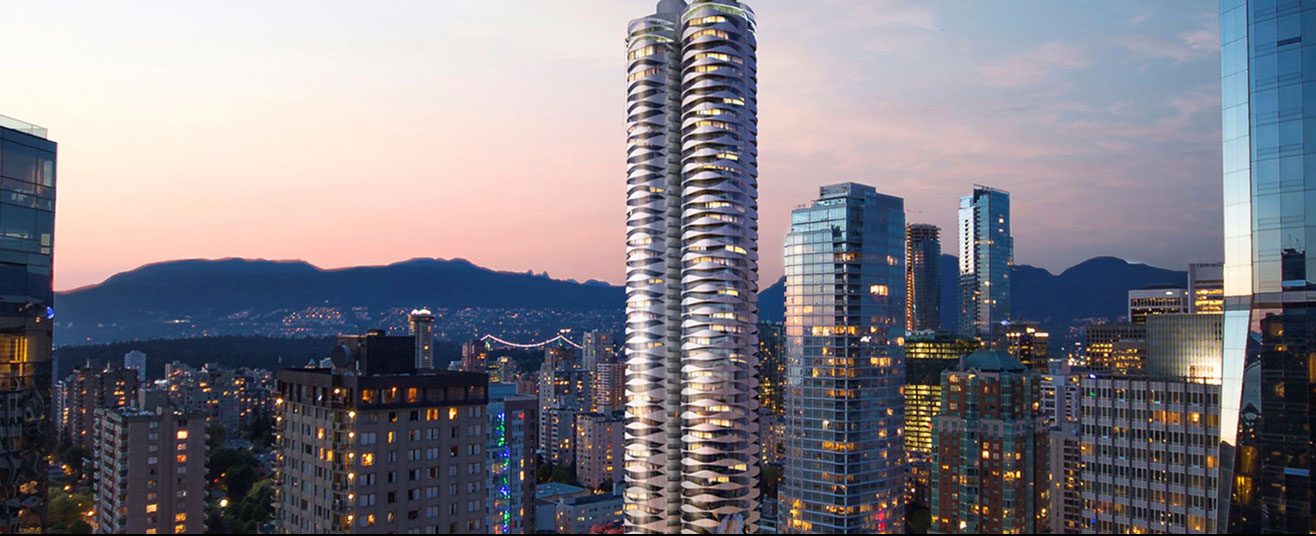
    A massive development rezoning, estimated worth over a billion dollars in market value. The luxury tower project being proposed by a well-connected and influential developer will reportedly deliver close to $90 million in public benefits spread out over several years.

    But the process by which those benefits are calculated and negotiated are not subject to public scrutiny. Staff reports indicate that the developer’s negotiated public benefit contributions are based on some questionably low valuations. Plus, existing city policy states that cash benefits on re-zonings are to be paid up front, not spread out over years.

    A group of West End residents reached out to me, concerned about the luxury tower proposed for Nelson off Burrard by a well-connected developer. The residents weren’t anti development per se, or even anti-tower — many of them actually lived in nearby towers themselves — but they were concerned about: the building’s massive size and bulk; parking and traffic; the apparent unwillingness of the developer to accommodate reasonable concerns around setbacks and livability; and questionable public benefits from a project pandering to luxury buyers.

    The issues of scale, views, and setbacks (the development rivals the Trump Tower at over 556 feet tall) are understandable and have been well articulated to the media. But it was the issue of public benefits that really struck me, the project is rumoured to be record-setting in the amount of benefits it will provide.

    Public benefits negotiated on spot rezonings are called Community Amenity Contributions (CACs for short). These CACs are density bonus contributions of amenities, infrastructure, or cash-in-lieu. CACs are considered voluntary, and they are negotiated based on developer profitability projections called a pro forma. The pro forma is closely guarded and the process is highly secretive, so the public have no idea if we are getting good value out of tradeoffs. It‘s an insider favouring opaque process that UBC urban design chair Patrick Condon referred to as the “soft corruption“. [1]

    What are we trading off in exchange for CACs?

    In the West End specifically, new luxury development and the zoning that accommodates it poses a direct threat to tens of thousands of renting Vancouverites.

    Luxury rezonings especially can have a ripple effect on neighbouring properties, through increased land value and an exploitive loophole known as “geographic rent increase” [2]; whereby landlords and developers can charge rents significantly higher than rent control laws allow, just by virtue of higher rents charged in neighbouring properties.

    In the case of the 57-floor luxury tower at Nelson and Burrard, the CAC benefits include heritage revitalization and preservation of the venerable First Baptist Church, expanded services, and a modest offering of below market rental housing.

    The CAC also includes over $60 million in cash payments to the city over several years, but per existing city policy CAC payments in-lieu (in cash) are payable prior to rezoning enactment – not after the fact stretched over years. [3]

    So is it a good deal for the city?

    Item 14 of the Urban Design section of the staff report [4] presented to council for this rezoning suggests that the building’s unique architectural design and resulting low efficiency floor layout (69%) reduces the potential sellable area. The building design includes large open air bridge and garden spaces between the two towers, which while technically reducing sellable floorspace still improves the premium value and profitability of the properties for sale.

    Are we leaving money on the table? Are we extracting public benefit from the opulent use of private empty space in this project? Why is this particular development getting a pass on item 1.3 of the City’s cash-up-front CAC policy?

    We won’t know the answers to these questions because the public don’t have access to the development pro formas, and staff are subjected to non-disclosure to protect developer interests. Furthermore, despite a motion by Green city councillor Adriane Carr earlier this year (still under review) staff are not afforded whistle-blower protection.

    The developer in this case is Westbank, an influential and well-connected corporation responsible for some of Vancouver’s more controversial and eyebrow raising extreme luxury developments.

    With sales offices in Hong Kong, Beijing, and Shanghai, [5] Westbank was recently called out for allegedly favouring overseas investors ahead of local families during presales for their development project Joyce [6].

    Last year, the provincial utilities watchdog overruled a city council move to grant Westbank CEO and founder Ian Gillespie a monopoly on heating [7] supply for all future condo developments on the land to be freed up by the viaducts removal.

    Gillespie is also a noted supporter and financial patron of the mayor and ruling Vision Vancouver party.

    Public Hearing on the project is tonight, July 25.

    [1] https://thetyee.ca/Opinion/2014/07/14/Vancouver-Stop-Zoning/
    [2] http://www.cbc.ca/news/canada/british-columbia/legal-precedent-west-end-…
    [3] http://vancouver.ca/files/cov/community-amenity-contributions-through-re…
    [4] http://council.vancouver.ca/20170718/documents/phea3-SummaryandRecommend…
    [5] http://westbankcorp.com/projects?international-sales
    [6] http://www.news1130.com/2017/06/06/developer-intend-give-overseas-buyers…
    [7] https://www.biv.com/article/2016/9/utilities-commission-nixes-creative-e…

  • B.C. tenants are about to get hit with the largest rent increases allowed in five years

    B.C. tenants are about to get hit with the largest rent increases allowed in five years

    To be clear, these annual rent increases are a direct result of over a decade of inept housing policy by the former BC Liberal government. The failure to reign in a housing market increasingly disconnected from local incomes is 100% on the Clark government.

    That being said, I’d hope the new GreeNDP government makes housing affordability a priority when the House reconvenes in a few weeks. We haven’t heard much as far as commitments on this file, and I urge you to write your MLA and remind them that housing affordability needs to be THE priority for the new government.

    It is important to point out that Vancouver city council don’t have the power to outright legislate rent control, despite what some people are suggesting.

    What council can be (and should be) doing is:
    – through zoning, increase supply of the right kind of (affordable) new housing
    – through building and permits, reduce red tape and regulation that slows and costs housing supply
    – through building, permits, and zoning, protect existing rental supply
    – through zoning move to limit speculation

    There’s more, and of course, council should be advocating senior government to effect changes (like land tax reform and rent control) — but passing the buck to senior government is a poor excuse for ineffective local policy.

    Original story: https://www.straight.com/news/955601/bc-tenants-are-about-get-hit-larges…

  • Why I’m running for City Council

    Why I’m running for City Council

    The following was my speech to the Vancouver Greens, accepting my nomination to run in the October 14 by-election.

    Thanks everyone. Even though I’m being acclaimed tonight, I don’t take this nomination for granted. Thank you for your faith and confidence in me, and in the Green Party of Vancouver.

    I’m proud to stand alongside our Green city councillor Adriane Carr, and Green park board commissioners Stuart Mackinnon and Michael Wiebe, and of course, you the members of the Green Party of Vancouver. 

    When I first ran for city council with the Greens back in 2014, it was because I saw our city was heading in the wrong direction. 

    Vancouver was sacrificing community for commodity, our citizens were disengaged from the city building process, friends and family were simply giving up and leaving town. 

    The issues then: housing affordability, income disparity, the Downtown Eastside, homelessness, communities under threat, red tape and de-spirited micro-managed staff, short term rentals, bogus planning processes —and of course, that soft spot for corruption: the overt financial influence that the real estate industry has over the two big developer parties that run our city. 

    What are aspirations like “Greenest City” when homes are being lost to luxury property investments, and the people who work here are forced to commute from farther and farther afield?
     
    That was 2014, yet here we are today, with pretty much the exact same issues. 

    In fact, most of our problems here in Vancouver are worse today than they were in 2014.

    Vision Vancouver have been running our city like a clique. Talk to community advocates, city staff, and even developers and you’ll hear a common refrain: if you’re not in you’re out. Are we going to continue to allow a city where influence supersedes public engagement ?

    And it’s not like we’ll be any better off with the NPA. They are still beholden to the same developer interests and the same toxic partisanship.

    No, we can do better. In fact we (The Greens) are doing better. 

    Adriane Carr got the most votes of any council candidate in 2014 and has a reputation as the one councillor who actually takes the time to really listen to the citizens who take the time to speak before council. 

    Adriane has been alone on council pushing for resolutions on issues like whistle blower protection, social housing targets that are tied to actual income, transparency around public benefits and so much more. But she’s just one Green on council. 

    Adriane has been doing a great job on council, but she’s on her own. 
    There’s a lot she can do, a lot WE can do with one more Green on council. 

    She needs my help. She needs our help.  

    It’s time to send a message to Vision and the people who seek to commodify our city.
    It’s time for a new deal on housing.
    It’s time to make people our priority.
    It’s time for integrity and fairness and cleaning up city hall.
    It’s time for a city wide plan and a smart green city.
    It’s time to build a better city together, a fair and equitable city where everybody can thrive

    There’s plenty of work to be done over the next two months and we will need your help.

    With your help we can win this by-election, and with your help we can build real momentum for a winning campaign going into next year’s 2018 general election.

    Thank you 

  • On rental housing

    On rental housing

    Ever wonder why so much of our city’s (dwindling) affordable rental stock are of a 50’s-60’s-early 70s vintage?

    The City tries to incentivize rentals with density bonuses, the Province tries to support rentals with subsidies — what’s been missing is the Feds and the support for rentals with tax breaks and deductions.

    This is an excellent overview from someone who was in the field when federal tax policy favoured investment in building rental housing:

    “Market rental housing — as compared with most ‘subsidized’ and ‘affordable’ rental housing — is built by private investment. From 1946 to 1972, when the tax treatment for building new rentals was favourable, there was lots of rental housing built. In 1972, almost 50 per cent of new housing unit starts were rentals.”

    https://thetyee.ca/Opinion/2017/07/06/Tax-Changes-More-Rental-Housing/?u…