Category: VANCOUVER

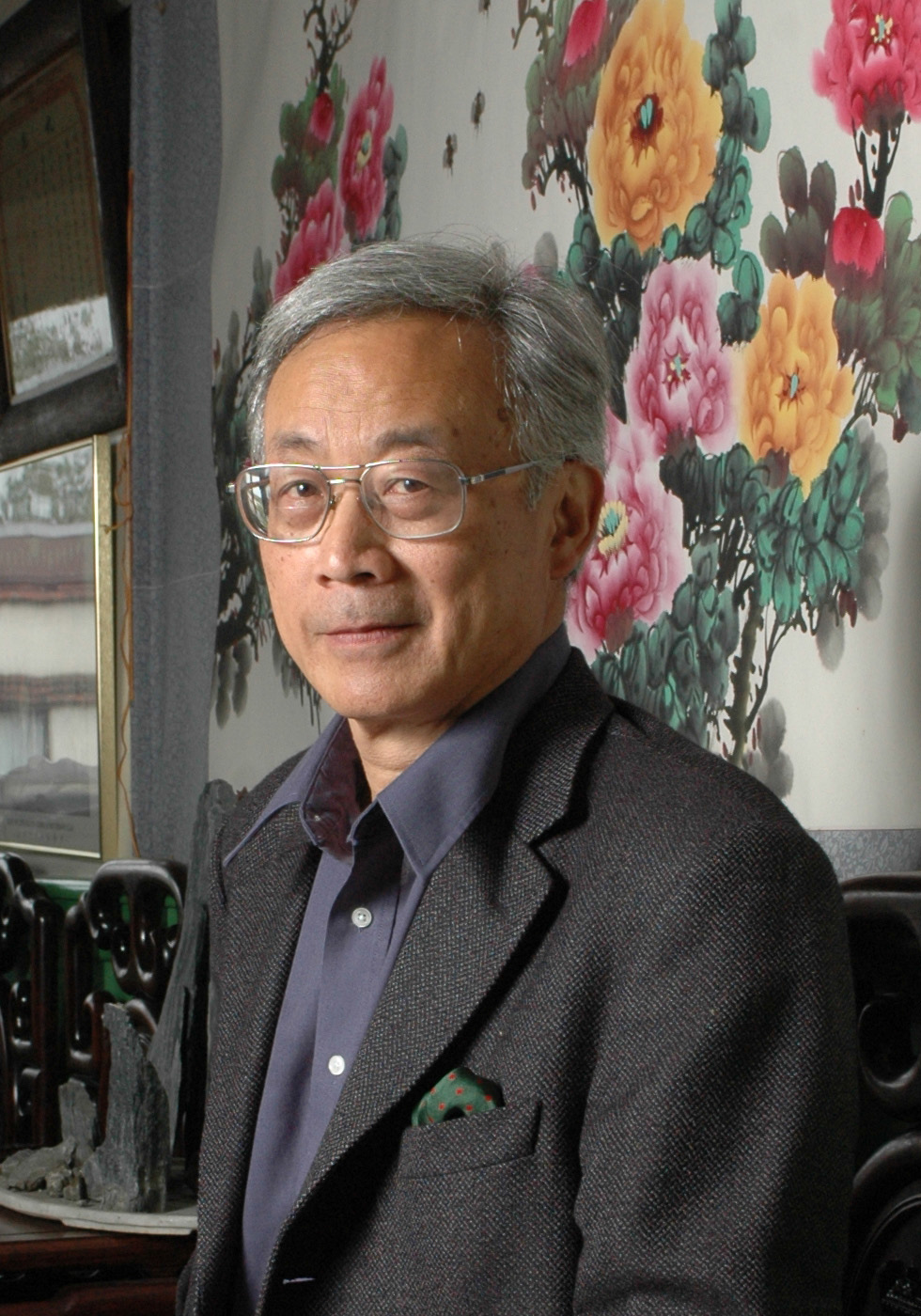
  • Remembering Joe Wai: Architect, Activist, and Placemaker

    Remembering Joe Wai: Architect, Activist, and Placemaker

    Very sad news to note yesterday, the passing of Joe Wai.

    Many in Strathcona might only know of Joe Wai as the nickname for the ubiquitous stuccoed and bay-windowed duplexes and triplexes throughout the neighbourhood, as the 1970’s BC Housing built and Joe Wai designed structures came to be colloquially known. Those then-new structures quite sensitively complimented the Victorian venacular of Strathcona, which at the time was literally falling apart, blighted as a result of deliberate city policies that sought to “renew” Strathcona with bulldozers, housing projects, and highways. Joe, and his photographer brother Hayne were young neighbourhood advocates and activists, who joined forces with the Strathcona Owners and Tenants Association (SPOTA) to fight the expropriation and destruction of Chinatown and Strathcona. Those efforts are the only reason our neighbourhood exists today.

    Joe went on to design some of our city’s best loved Chinatown places, including the Dr. Sun Yat-Sen Classical Chinese Gardens, the Chinese Cultural Centre, Skwachàys Healing Lodge, and the Millennium Gate. Along the way he was a driving force behind the preservation of Chinatown and renewing it’s many heritage buildings and facades, and he led the campaign to see Chinatown designated as a National Historic Site. One of his as-yet incomplete projects —on he specifically sought and received SRA support for— is the Villa Cathay renewal, which will see improved and expanded seniors’ housing for Chinese elders in our community.

    Last year at 75, Joe was given an Architectural Institute of B.C. lifetime achievement award. He will be dearly missed even as his legacy lives on.

    Read the recent Vancouver Sun story on the occasion of Joe’s lifetime achievement award
    Nice little piece on the ubiquitous “Joe Wai’s” of Strathcona
    Joe’s obituary in the Sun

    Postscript: 

    I wrote this piece for the local Strathcona Residents’ Association newsletter; almost as soon as I’d heard the news, I poured myself a stiff drink and thought about Joe’s influence on the city, our neighborhood, and me.

    I met Joe and his brother Hayne around the same time. Hayne, an accomplished photographer and historian had a magnificent collection of under appreciated photographs from the SPOTA days; when that grassroots organization rallied to save our Strathcona neighbourhood from the wrecking ball. Joe, of course was already the stuff of legend, and (nick)namesake of the charming style of dense and well designed housing throughout the ‘hood including next-door to me, a cheerful triplex where Jim Green was living at that time.

    Joe later came to me when I was chair of the Resident’s Association with a big renovation proposal, to replace a dated and worn-out seniors housing facility —Villa Cathay on Union Street— with a new modern facility, more amenities, more and better housing, and an 11 story tower. Of course, towers are generally pretty much an anathema to residents associations everywhere; especially when plonked down in the middle of a low rise neighbourhood, and in the context of an overly developer-friendly city government. But the irony was not lost on me —that Joe and many of those very seniors he sought to house had helped to save our neighbourhood in the first place; and that as the specter of big development was threatening to destroy Chinatown and displace it’s residents, they would need someplace to go. I’m proud to say that the SRA went on to unanimously support the Villa Cathay rezoning in February 2013.

    Of course, those fears for Chinatown and displacement proved to be well-founded, and I had the occasion to talk with Joe many times about how we might protect it, and I watched as Joe in turn inspired a new generation of activists. As I went on to write on my personal Facebook page; I never felt so honoured as when Joe graciously offered me his endorsement for my political endeavours – it’s a trust and a legacy that I will carry with me always.
  • Naming the new school: Crosstown vs Cumyow

    Naming the new school: Crosstown vs Cumyow

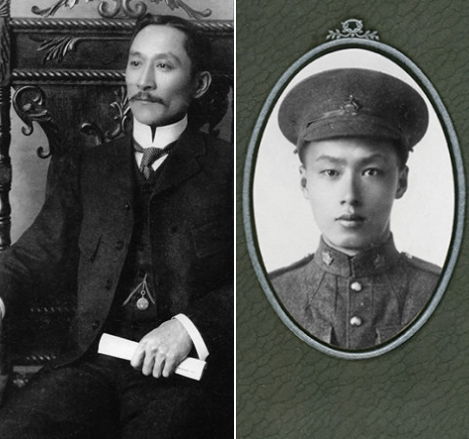
    With the naming of the new elementary school in North East False Creek, it seems the debate is still raging and petitions are being circulated after the interim appointed Vancouver School Board decided to go with Crosstown rather than honouring Chinese Vancouver pioneer Won Alexander Cumyow (pictured).

    With all due respect to his legacy, I appreciate that most of the concerns stem from naming a school “Cumyow” and how that might be too ribald-sounding for elementary schoolkids.

    I also agree that “Crosstown” is an incredibly bland name and lost opportunity to recognize, redress, and reconcile Chinese Canadian History. Of course (unsurprisingly) there’s also a whiff of partisan politics driving the debate too.

    But why is this choice between one of only two names? Are we getting hung up on this one name when there might be other opportunities to honour our histories, without being the butt of juvenile school yard jokes?

    Why not riff off some of the old Chinese names for the region like Fusang, Gam Sann (Gold Mountain) or Saltwater City? Or how about other Chinese Canadian pioneers: David Lam already has a park of course — but what about Yip San, or Lee Chong, or Wong Soon King, or Douglas Jung?

    One of my personal favourites is this guy: Wee Hong Louie (pictured)…
    Louie, born in 1889 was living near Shushwap when he enlisted in 1917 to fight in the First World War. Returning as a decorated veteran, he faced systemic racism and finally was denied a business license because he was Chinese. In protest, he packed up his uniform and medals and sent them off to then Prime Minister Mackenzie King, who apologized and directly intervened to grant Louie a business license. Mackenzie King, who has a conflicting history regarding race issues, was PM during some especially troubled and xenophobic times in our nation, but nonetheless went on to repeal the Chinese Immigration Act, and grant franchisement to Chinese Canadians and honour to Chinese Canadian veterans of WWI and WWII.

    http://www.ccmms.ca/veteran-stories/army/wee-hong-louie/

    http://vancouversun.com/news/local-news/international-village-school-in-…

  • CN to significantly increase train traffic through Strathcona between port and flats.

    CN to significantly increase train traffic through Strathcona between port and flats.

    Hey Strathcona, notice an increase in train whistles this morning?

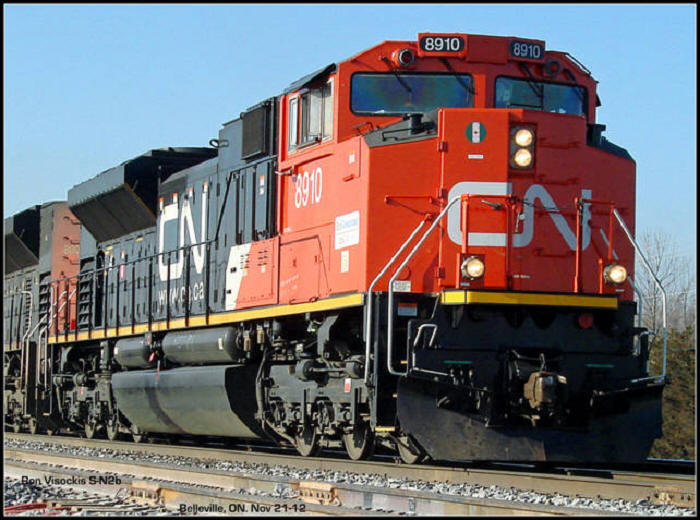
    CN just informed that as of yesterday, they’ve increased traffic on the (Raymur) Burred Inlet Line from zero to six scheduled trains a day.
    This means:

    • Disruption of the at grade crossings, meaning frustrated commuters will be more likely to rat-run through the neighbourhood, especially along Campbell Ave, putting more cyclists and pedestrians at risk
    • Potential traffic of more dangerous goods through community (think Lac Megantique, or even 2015’s chemical fire at the port and lacking public warning system/safety plan)
    • Lots more train horns


    Wednesday’s meeting of the Strathcona Residents Association will feature a presentation from City about plans for a new east-west connector and overpass, especially timely given this news

    WHAT CN IS SAYING:

    “CN is increasing freight train service via the two-mile-long Burrard Inlet (BI) spur line in urban Vancouver, that crosses Glen Drive, Venables, Union and Cordova beginning on January 2, 2017 to improve service to customers.

    The crossings are protected by lights and bells, and CN reminds motorists that all signals should be obeyed, for their own safety.

    A reminder to the public that freight trains operate seven days per week, 24 hours per day. CN expects to operate a minimum of six trains, of varying length, daily.

    Safety remains our top priority at CN, and we would like to remind the public that it is important to stay vigilant at crossings and that trespassing onto railroad tracks is illegal and highly dangerous.”

    — official statement from the Edmonton office of the Senior Manager of Government and Stakeholders at CN, released January 3, 2016

  • Year In Review: When you’re chewing on life’s gristle, don’t grumble, give a whistle!

    Year In Review: When you’re chewing on life’s gristle, don’t grumble, give a whistle!

    2016, what a stinker of a year —right?

    Trump, Brexit, Aleppo, record-breaking climate change and biodiversity depletion, geopolitical uncertainty and upheaval, bigotry and intolerance, fake news, an unstable and untenable local housing situation, growing economic disparity, close to 1,000 dead in the overdose crisis gripping our province, the pipeline, Site C — the list goes on!  

    And then there’s all those celebrity deaths: Bowie, Ali, Prince AND Prince Buster, Gordie Howe, Phife Dawg, Sharon Jones, Umberto Eco, Jack Davis, Harambe, Castro, Gwen Ifel, Alvin Toffler, Elie Wiesel, Zsa Zsa, George Michael, Princess Leia — ugh!  

    My own year read like a sad country song too: I ran and lost in a by-election, my cat died, my dog died, some friends died, I struggled through a few depressed and debt-ridden months and at times felt like my life was falling apart. 

    Yeah, 2016 was pretty rotten… BUT there are, and were bright spots… 

    If you’re reading this, then you’re alive —and hopefully of reasonably good health, as more of us increasingly are. In 2016 world hunger reached the lowest point in 25 years, a vaccine for Ebola was developed with the virus now virtually eliminated from West Africa. The World Health Organization introduced global protocols for self-testing of HIV (a big deal in countries where the stigma of HIV can be more life-threatening than the virus itself). Even as fake news and anti-vaxxers helped usher in the return of preventable diseases, 2016 saw the elimination of measles cases originating in the Americas, and a global health milestone in the fight to end polio with stepped down vaccination protocol as the type 2 poliovirus was eradicated this year. 

    Here in BC, we may have seen the approval of an expanded diluted tar pipeline to the Salish Sea, and the lumbering behemoth of Site C Dam poised to flood the Peace Valley — but we are also seeing a galvanized and renewed opposition that suggests we’ve only just begun to fight. 

    Meanwhile, thanks to reforestation and emissions reductions, global carbon dioxide outputs seem to be flattening. Clean energy has made massive strides this year with the ratification of the Paris Climate Accords, and record investments in renewables continue to outpace fossil fuels, even as our own governments cling to the dinosaur industry. China placed a moratoriumon any new coal mines, and Belgium shuttered its last coal fired powerplant, making now 25% of the EU nations coal-free. 

    The United States opened its first offshore wind power plant in Rhode Island this year, allowing local (Bock Island) residents to switch off their diesel-generated electrical grid and even provide surplus power to the mainland. In Europe, where offshore wind technology is more mature, 2016 saw a 22% reduction in the cost of wind-powered electricity, out-competing coal and gas-fired in some markets. For the first time, the UK now generates more than half its electricity from low-carbon sources. Solar power infrastructure became even more affordable in 2016, new installations reached a record high in the US and globally, while new investment is fueling advances in solar thermophotovoltaics and perovskite solar cells that will further improve efficiency. 

    In the US, DAPL protestors manage to stay the black snake pipeline through the Dakotas, and the US Government has halted any plans for oil and gas drilling in the Arctic and along the Atlantic Seaboard (for now). This year, the Trudeau government upheld a tanker moratorium on BC’s North Coast, and Shell Canada voluntarily relinquished nearly 8.5 thousand square kilometers of drilling rights to support “establishment of a national marine conservation area off the coast of Nunavut.” The BC Government formalized protection of the Great Bear Rainforest, one of the largest temperate rainforests in the world. 

    This year, even as we are losing biodiversity at alarming rates, a glimmer of hope that saw conservation and rehabilitation efforts move the Giant Panda and the West Indian Manatee from “endangered” species status to “vulnerable”, and the global Convention on International Trade in Endangered Species ratify the largest conservation agreement in history, establishing new protections for some of the planet’s most vulnerable creatures, everything from big cats to sharks to parrots to rhinos. Here at home, Health Canada make a bold move to outright ban bee-killing neonicotinoids.

    The Gambia and Myanmar both overthrew military dictatorships in democratic elections. In Colombia, the government and FARC rebels signed a peace accord, ending a decades old conflict. Italy, the last holdout of big European nations finally legalized same-sex marriage, Canada and Denmark both legislated significant new transgender rights, and as of this year the death penalty is now illegal in more than half of the world’s countries.  

    Even as we mourn the loss of great pop stars, thinkers, leaders and innovators — we are left with their legacies: the thoughts and works, music, films, and deeds that touched us in the first place. 

    Locally, the three levels of government are finally waking up to the housing affordability issue, particularly on the South Coast, with a series of overdue and somewhat clumsy efforts to mitigate the problem targeting everything from non-local capital and tax evasion, to vacant homes, to short-term vacation rentals, to help for first time buyers. It remains to be seen what if any of these measures will affect the local affordability crisis, but at least now it’s an election issue — and maybe we can yet see movement on things like a renters tax credit, raising the rates of income assistance, and the building of public social housing. 

    For me, while I was deeply saddened by the loss of my dog and desk-mate of the last 13 years: I can take comfort in knowing that both of our passed pets were rescued and shared happy lives with us. The losing by-election campaign gifted me the efforts of amazing volunteers and supporters, and the opportunity to work with and meet some fantastic people. We were able to push issues that mattered, and running a true grassroots campaign upset the conventional political narrative: showing Greens as a viable choice in a riding otherwise considered unassailable. In the process we grabbed one of the largest voter shares of any federal or provincial Green campaign between Vancouver Island and PEI.  

    So my toast, on this New Year’s Eve: let’s look for those silver linings in an otherwise dark cloud of a year, and as we pick ourselves up, dust ourselves off and get back into the fight, let some of those positives shine as we hope for a better year to come. To quote Monty Python, “Always Look on the Bright Side of Life: When you’re chewing on life’s gristle, Don’t grumble, give a whistle!” 

    Best wishes for a Happy New Year.

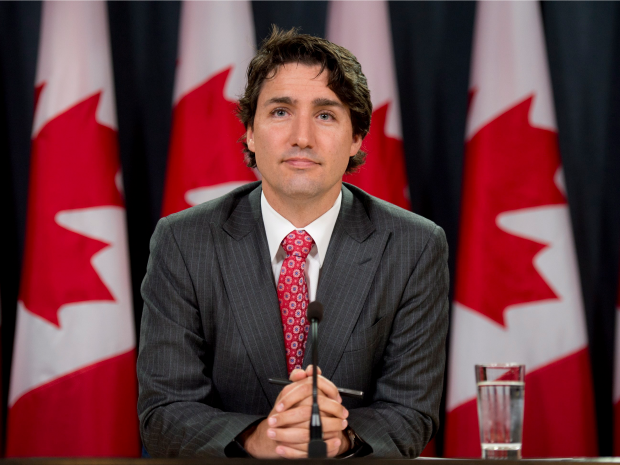
  • The Buck Stops with Trudeau

    The Buck Stops with Trudeau

    The buck stops with Trudeau.
    Shipping 900,000 barrels a day of tar thinned with solvent through the Salish Sea is NOT the kind of #RealChange Canadians voted for.

    I’m appalled that our government would backstop the laziest, cheapest and riskiest means of appeasing the fossil fuel industry.
    Sell out.
    Sell out of our coast, of our future.
    Sell out of the hopes and ideals of so many people who actually voted for some hackneyed disingenuous notion of #RealChange.

    Justin Trudeau, you don’t get to front about your BC roots anymore. You have betrayed this province, this Coast, the First Nations. You have betrayed science and evidence based decision making.