Category: VANCOUVER

  • New Seattle Tiny Home Project: affordable homelessness solutions?

    New Seattle Tiny Home Project: affordable homelessness solutions?

    I don’t want to knock the City of Vancouver’s recent work to build modular mobile housing for people at risk of homelessness — but this article illustrates how we might have missed the mark with that particular project.

    Vancouver’s units —proper mobile homes, prebuilt in the Okanagan— to be assembled at Main and Terminal and opened in a few months each cost $87,500 (40 units at $3.5m. In Seattle, these tiny house villages are being built at a cost of $2,200 each, employing volunteer labour and goodwill.

    Seattle’s is a model similar to Portland’s Dignity Village, which I visited in 2014 and advocated for as a possible solution here. Volunteer labour and faith based groups played a huge role in helping to build these temporary intentional communities, and the results were profound: once they had temporary housing, the average resident was able to find stable permanent housing within 6 months.

    I still feel strongly that this is a solution that we can make work here, we have the people and resources, and an amazing tiny house building community that could help steward such a process.

    Another great example from Seattle!

    http://www.capitolhillseattle.com/2016/12/as-seattle-plans-new-tiny-house-encampments-village-marks-first-year-in-the-central-district/

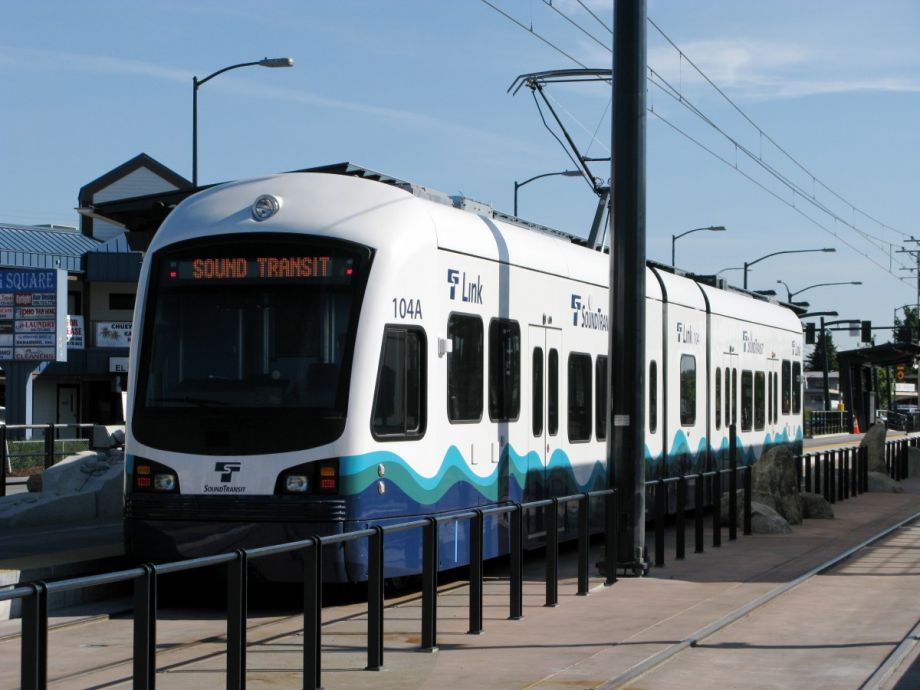
  • Progressive forward-thinking transit oriented development.

    Progressive forward-thinking transit oriented development.

    Here in Greater Vancouver, transit oriented development is not seen as a driver of building of affordable housing, in fact it’s been quite the opposite: In Burnaby we are seeing wholesale demovictions of communities with affordable housing bulldozed to make room for new less affordable towers, In Vancouver, where T.O.D has been employed (Marine Drive and Oakridge) proposed developments offer an abysmal portion of affordable housing, but tremendous condo sales and presales.

    Recognizing that lower incomed residents are most likely to benefit from access to rapid transit, Seattle is taking a different approach to T.O.D.: the Regional Equitable Development Initiative (REDI) Fund, providing low cost early financing to “pre-buy” lots in areas of proposed T.O.D., before the developers swarm in to build luxury. Here, of course this could be applied proactively to the Broadway corridor and Jericho Lands (though it is probably too late for Boradway/Commercial) — however, it would really require some zoning will on the part of the city. In the Seattle example any properties acquired using REDI funds will be required to provide minimum 25% housing for people below 50% of the median income as well as other targets.

    Of course, Seattle has a ward system, and strict campaign finance limits: so the influence of big developer money is not ingrained as it is here. There may not be the political will, and in our case may require some amending of the Vancouver Charter, but it’s something that should happen here.

    Original Article: https://nextcity.org/daily/entry/seattle-equitable-transit-oriented-development-loan-fund

  • The real budget emergency had nothing to do with fentanyl

    The real budget emergency had nothing to do with fentanyl

    As expected, the City of Vancouver’s 1.8 billion dollar capital and operating budget for 2017 passed yesterday. Also, as (cynically) expected, the people of Vancouver were distracted by a last-minute emergency property tax increase of 0.5% to deal with the ongoing fentanyl crisis.

    To be clear, the necessary additional funding for first responders isn’t optional. Emergency services are precisely what we pay taxes for and as we’ve been hearing for months now, our first responders —in particular our firefighters— need more resources to do the life saving work we expect of them.

    Of course, there are very valid criticisms that federal and provincial governments need to do more to meet their jurisdictional obligations like funding paramedic/ambulance services, harm reduction, and treatment —but in an emergency, we need all hands on deck.

    But when and why exactly did the fentanyl emergency become a last minute emergency budget item?

    The City’s 2017 budget was developed over August-September of this year and first reviewed by council in October. Last week, on December 7, the mayor unexpectedly announced the new special emergency fentanyl response tax. 

    Why such a hasty ad hoc measure just days before the budget vote? As far back as summer 2015, Vancouver firefighters were calling for more support at (DTES) Firehall #2; citing record-breaking call volume, overwhelmed staff, and stretched resources.

    Since 2013, Vancouver had seen a steadily increasing number of fentanyl related overdose deaths, for which frontline workers have been consistently sounding the alarm. Earlier this year, record-breaking numbers of overdose deaths were reported province-wide in January and March —prompting BC’s chief medical office to declare a public health emergency in April to which Vancouver’s mayor professed “grave concern” and promised the city would do everything we could. 

    The mayor and provincial health minister Terry Lake furthered this emergency narrative in August, when they appealed to the federal government to ease Harper-era supervised injection service restrictions in response to the crisis, around the same time concerned residents started pop-up safe injection sites in the DTES.

    So why then, in the wake of months and months of overwhelming and mounting signs of crisis did the city propose a special emergency budget amendment only last week?

    The answer might be found in the city’s budget document itself. According to city-commissioned Insights West polling, only 17% of residential property owners and 16% of business property owners were willing to accept a 4% tax increase — and that approval is even lower for renters. With a proposed 3.9% tax increase, might this hastily crafted emergency tax have been a “wag the dog” style distraction? 

    Vague on specifics as it may be, among the mostly sundry utilitarian expenses there are plenty of budget line items that might have otherwise lent some controversy: from a 16.6% increase in communications budget, upwards of $12 million for pedestrianizing Robson with plazas on either side of the downtown Art Gallery, $17 million in AAA bike lanes, another $17 million in Burrard Bridge bikelanes and suicide fencing, to upwards of $8 million increase in public works expenses “largely due to street use expenditure related to the Mobi public bike share system”.

    No doubt there must have been some concern at City Hall around how citizens would react to the budget, on the heels of concerns that the city might be playing fast and loose with tax dollars after the discovery of a $1.5 million break accidentally given to local developer in part on account of a “lack of appropriate oversight”.

    Vancouverites are already bracing for hefty tax increases (of which civic taxes make up only a portion) on news that BC Assessments arriving January 3 might see property values rise by as much as 50% which will impact everything from rents to the cost of goods and services.

    Judging by responses I’ve been hearing: the meagre .05% increase to finance a legitimate, just, and necessary response to the overdose emergency has become an unfortunate sideshow, predictably polarizing opinion, and eliciting some harsh and heartless judgement. In my opinion, those criticisms are wrong-headed at best, and at worst downright cruel. Moreover, they’ve completely derailed legitimate conversation about the rest of the budget. 

    This budget and the burden on local taxpayers deserved more scrutiny, not our response to the drug crisis
    — unless you are asking what took us so long in the first place.

  • Has Vancouver Lost Its Way? Tyee case to make YVR the Slowest City

    Has Vancouver Lost Its Way? Tyee case to make YVR the Slowest City

    Has Vancouver lost its way? Certainly, life isn’t necessarily getting better for many of us here: more homelssness, less affordability, more stress — if anything, the race toward “world class city” and other superlatives often feels like a race to the bottom.

    Condon & Beers offer a thoughtful suggestion for a reset:

    Tongues in cheek? Maybe.

    Worth a read? Definitely. 

    read it here: https://thetyee.ca/Opinion/2016/12/09/Vancouver-Slowest-City-Manifesto/

  • On the Coast on consultation, VCH and supervised injection services

    On the Coast on consultation, VCH and supervised injection services

    Yesterday I spoke to CBC On the Coast about the recent op-ed from the local BIA about lack of consultation with regard to two new supervised injection sites proposed in the Strathcona area.

    To be clear: I voiced support for these (and more) supervised injection sites, and making available free prescribed opiates (based on the harm reduction evidence established by both InSite and the NAOMI trials and the At Home/Chez Soi work). But politics being politics, some have twisted my comments to be anti harm reduction, which is NOT my position, and I pretty clearly articulate that on the audio link (below).

    For some background: the issue I was responding to and that the BIA was reacting to all result from a lack of meaningful engagement between Vancouver Coastal Health and the community at large. It’s a broken process. In the absence of facts and information, rumours and innuendo abound. Last month I attended the local residents’ association meeting to assuage some of those fears and having gone to a VCH open house, I was able to explain the clinical models that the two proposed sites are providing and hopefully gain community support. Of course, I shouldn’t have to be the one to dispel rumours, but because VCH did a poor job of community engagement there was a lot of misinformation out there. That is the nut of the issue: community engagement.

    VCH is a big player making big moves in the area. 

    The issue is not about the two new supervised injection site locations (which I support and advised the SRA to support and I understand the BIA supports). The issue is about how VCH operates in the community. Through a top down opaque process VCH chose to de-fund the long-standing community asset Gallery Gachet which provided positive peer support and art therapy to low income and otherwise marginalized people. Through a top down opaque process VCH’s Second Generation strategy was created completely independently and without working with the City-led citizen-engaged DTES Local Area Plan.

    The other issue – the elephant in the room – is that while new Westbank condos promise to “revitalize Blood Alley”, and revitalization is gentrifying the unit blocks of Hastings, services and the street-level drug market are moving east. That’s actually happening, and VCH is a big player in that migration.

    This isn’t to challenge health service delivery, but to have a conversation about the health of the entire community. We know that the street level drug scene is getting more violent and desperate. Talk to anyone who works down here, or check the recent VANDU (the drug users’ advocacy group) research work which confirms this (http://www.cbc.ca/…/downtown-eastside-drug-violence-1.37128…). We also know that more and more kids are using cheap fentanil-based street drugs, and we have a lot of vulnerable kids in the community. How do we manage these potential issues? We work together, we communicate, we separate facts from rumours, we opt for evidence over innuendo.

    So the real ask is for Vancouver Coastal Health to come to the table and work with the community. The hopeful outcome, a supportive collaboration with VCH, VANDU, local residents and businesses to discuss strategies around the overall health and long term vision for the community, inclusive of all its residents.

    I’m happy to say, as of this afternoon, that looks like it will happen: the City’s department of social policy just got in touch. They say it’s an overdue conversation and are happy to help organize it. Harm reduction advocates have reached out and agree that the process is broken, and through working together we can have better outcomes for everyone. BIA members are looking for Narcan training opportunities. So.. I’m tuning out the hacks and the haters and getting down to business.

    http://www.cbc.ca/listen/shows/on-the-coast/segment/10658436