Category: VANCOUVER

  • B.C. Greens will scrap unfair MSP Premiums

    B.C. Greens will scrap unfair MSP Premiums

    Vancouver, B.C.– Pete Fry, B.C. Green Party Candidate For Vancouver–Mount Pleasant, announced today that a B.C. Green Party government will eliminate the regressive monthly MSP premiums.

    Currently, MSP premiums are charged to anyone who lives in B.C. for six months or longer and requires them to pay monthly premiums for health care coverage. If you earn $30,000 a year in British Columbia, you are paying the same rate for MSP Premiums as someone who is earning $3,000,000 a year, making MSP premiums a regressive tax on British Columbians.

    “The issue of MSP premiums is symptomatic of a larger problem facing a growing number of B.C. households,” said Fry. “The growing unaffordability and inequality in our province is only getting worse — with almost one in five British Columbians living in poverty. Clearly politics as usual are not working.”

    Instead of charging MSP premiums, a B.C. Green government would introduce a progressive system in which rates are determined by one’s earnings. A net administrative savings to taxpayers would arise in rolling MSP premiums into the existing income tax system.

    “On the doorstep here in my riding of Vancouver–Mount Pleasant, I’m hearing from more and more regular working families who are truly struggling to get by,” said Fry. “The recent increase in property assessments, which has increased up to 30% for some households, has certainly magnified that anxiety. Eliminating MSP premiums in favour of a progressive income-based solution is an important step towards a much-needed poverty reduction strategy for B.C.”

    Back in 2000, the MSP premium for a single individual was $36/month. Today, that same individual pays more than twice as much, now up to $75/month. Since 2010 alone there has been a 40% increase. For a family of three, the new rate as of January 1st 2016 is $150/month, up from $142/month.

    The B.C. Green Party is pledging to follow the path taken by Ontario in 2004 when they introduced their version of medical service premiums, making them part of the progressive income tax system.

  • Chinatown

    Chinatown

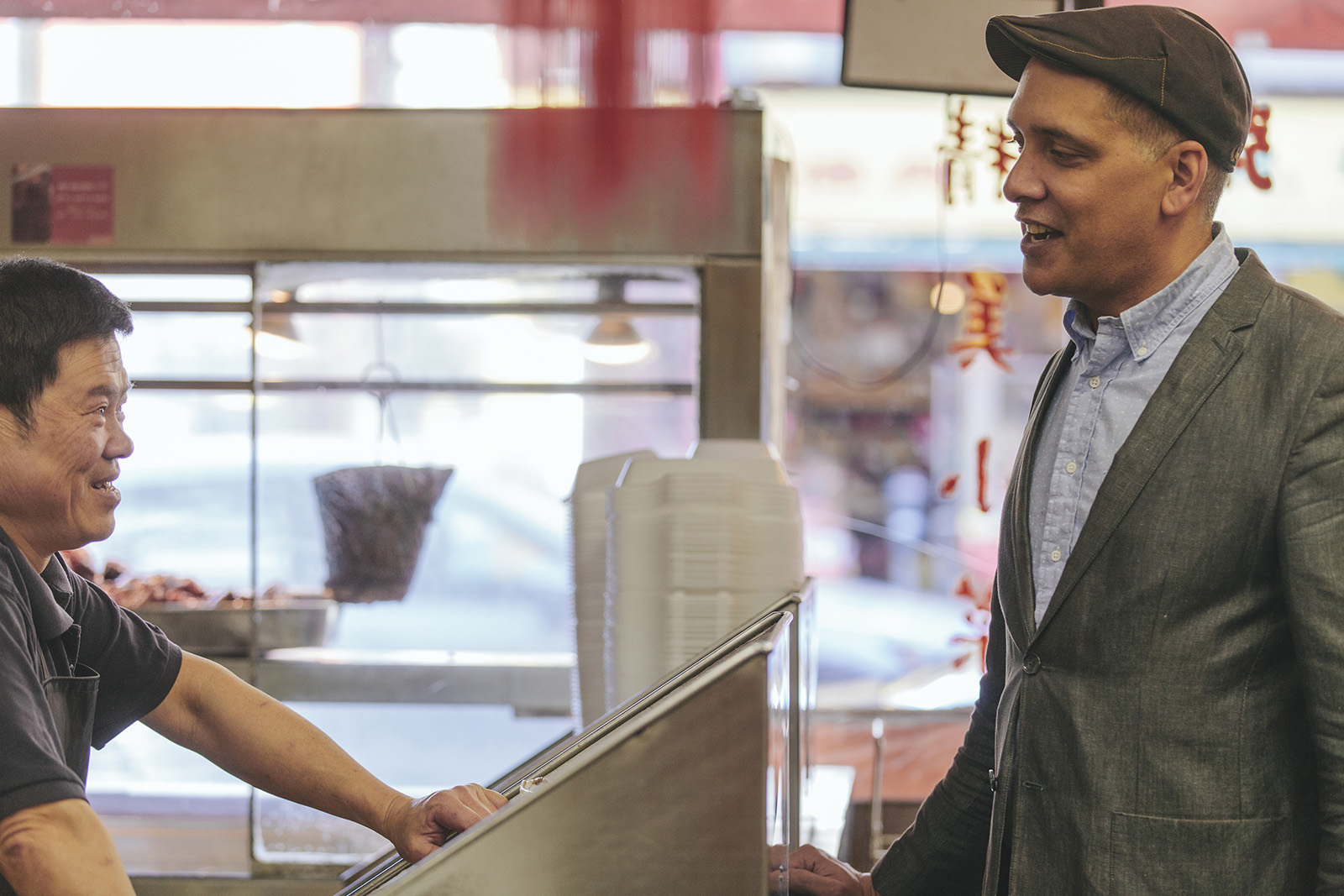
    I’ve lived in Vancouver-Mount Pleasant for close to thirty years, and in Strathcona/Chinatown for most of that time. It’s my home, and an area I’m very fond of —of course, a lot of Vancouverites and visitors are fond of Chinatown, and it represents an important aspect of our city’s history. Forged among the bitter memories of institutional racism and head tax, Chinatown represents the fortitude and perseverance of the pioneers who helped build our city and province.

    Of course, Chinatown is also a great place for food, shopping, and sightseeing for tourists and locals alike!

    In recent years, since Vancouver City Council passed the the Historic Area Heights review, new developments threaten the physical and cultural character of Chinatown. Inconsistent with the narrow frontages that once defined the urban form of the neighbourhood, new large footprint buildings are contributing to rising land values and the displacement of both residents and retail.

    We must act decisively if we are to preserve the character of the Chinatown. In light of two recently approved large development re-zonings, the impending removal of the viaducts, and relocation of St. Paul’s Hospital — significant new changes are coming to the neighbourhood.

    I’m proud to support my neighbours and a new generation of young Chinese Canadians who are leading the efforts to revitalize and protect Chinatown through advocacy, engagement and social connectivity.

    As MLA, I will pledge to work with provincial and federal government to protect Chinatown, and to build new housing for the nearly 1,000 elders who call the neighbourhood home. I will push for further provincial heritage legacy funding to preserve this cultural treasure.

  • Tis the season to shop local

    Tis the season to shop local

    The holiday season is well upon us, and this weekend marks “Super Saturday”—the busiest shopping day of the year and the last Saturday (December 19) before Christmas.

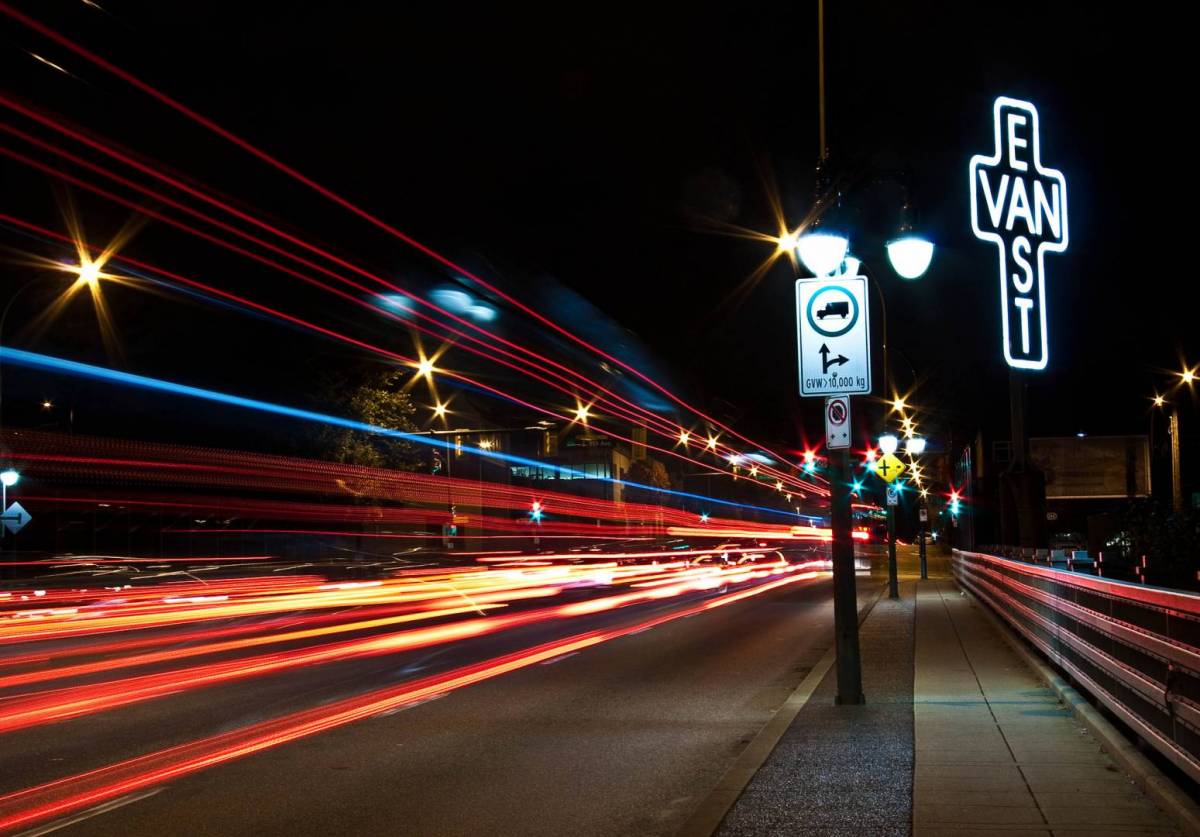
    If you’re like me and leave gift shopping to the last minute, the thought of a crowded mall on the weekend before Christmas is enough to make your skin crawl. Thankfully, I don’t even have to leave East Van, let alone venture into a mall (okay, maybe Kingsgate Mall), and my last-minute shopping is way more impactful because I buy local.

    The early shopping I did manage this year was thanks to a variety of art and craft markets; the East Side Culture Crawl, pop-up events at Britannia and Strathcona Community Centres, a craft market/pub at the Lido on Broadway, and the annual Western Front fundraiser and craft fair TOQUE.

    Even if you missed the fairs, here in the East End, we have an abundance of shopping high streets with bricks-and-mortar opportunities to put shop local into practice. Between Gastown, Chinatown, the Drive, and Mount Pleasant, you’re sure to find something for somebody at one of many locally owned independent businesses. Then there are the emerging micro-shopping districts along Fraser Street, Kingsway, and the 600-800 blocks of East Hastings anchored by the Heatley Block. With two brothers in town, I’ll no doubt be doing a lot of my shopping in our local “Yeast Van” brewery district. 

    Buying local is about more than just convenience and mall-o-phobia though. Small business in B.C. accounts for 33 percent of the province’s GDP, and we lead the nation in small businesses per capita. Province-wide, small businesses employ over one million British Columbians—more than half of all private-sector jobs.

    Best of all, buying local recirculates your money into the regional economy and helps to build strong communities. According to LOCO BC, every $100 you spend at a local business returns $46 to the local economy; more than two-and-a-half times the positive community impact as buying from a chain store.

    This holiday season, the average Canadian consumer will spend about $1,500 on food, alcohol, gifts, and travel—shifting even one percent of that purchasing power to local independent businesses multiplies community wealth and jobs. Big picture province-wide: a one percent increase in annual B.C. consumer spending would create 3,100 jobs and $94 million in annual wages. 

    That community economic development extends beyond the cash register as it often supports other local suppliers and businesses like legal, financial, and marketing services. (Full disclosure: I’m a local small business-owner, and for the better part of 30 years my bread and butter has been providing design and marketing services to local arts groups, non-profits, and businesses including some of East Van’s best-loved brands.)

    Local businesses are often incubators for innovation, as Vancouver’s many successful tech, retail, and food startups will attest. From catering and beer production to goods manufacturing to farmers’ markets, not only does your local purchase strengthen community through good jobs, support for local charities, and contributing to our tax base, but buying local also means reduced transportation costs, reducing our carbon footprint and helping Vancouver lead the way as the Greenest City.

    So this Christmas, I’ll be supporting my neighbours by buying local gifts and hopefully enjoying a little down time with a good B.C. book, and maybe an East Van distilled spirit with my locally roasted coffee. 

    Happy and safe holidays to all.

    Originally published in the Georgia Straight

  • International Day of Disabled Persons

    International Day of Disabled Persons

    Today, December 3rd marks the International Day of Disabled Persons (first declared by the United Nations in 1992). On that note – it seems appropriate to talk about disabilities and accessibility in B.C.

    It’s impossible to talk about accessibility barriers in this province without first talking about disability rates. There are two different qualifications: Persons With Disability (PWD) and Persons with Persistent and Multiple Barriers to employment (PPMB). PWD is a semi-permanent designation, and a single PWD can receive up to $906.42/month. A single PPMB can receive a maximum of $657.92 and must reapply every two years. There are potential additional supplements available for nutritional, diet, transportation, and crisis needs at the Ministry’s discretion. Both benefits are inclusive of a maximum shelter expenditure of $375/month.

    Of course, in Vancouver-Mount Pleasant, where the average rent for a bachelor apartment is $889/month, a $375 shelter maximum seems perversely inappropriate — and thus we find disability-collecting citizens living in slum hotels with no heat or hot water, or shut-in by broken elevators. Coupled with ongoing cuts to health services (I recently wrote about Vancouver Coastal Health laying off 89 home care workers for disabled and elderly) our province is condemning many of society’s most vulnerable to absolute misery.

    It’s clear that we must raise the rates of social assistance. Leading advocates in the field including Disability Alliance of BC’s Disability Without Poverty Network call for increasing the PWD benefit to $1200/month. There’s no indication that either the BC Government or Opposition seem interested in raising assistance rates though — the Liberals haven’t raised the basic welfare rate ($610) since 2007, and the NDP’s paltry $20/month increase proposed in their most recent platform indicate neither are listening to experts.

    Of course, not all disabled people collect assistance – indeed many are productively and well-employed, and they rightly deserve to be viewed as capable. But capability is predicated by accessibility, and accessibility in B.C. is not a constant or standardized notion. That’s why advocates are calling for a B.C. Persons with Disabilities Act.

    The Act would deliver a consolidated and planned approach to accessibility and inclusion, with a wider scope than the current collection of individual legislations. As Stephen, a blind constituent, explained to me, an act would help mitigate inconsistencies in standardization for visually impaired accessibility: everything from bank machines to prescription bottles to taxi meters. Such acts exist on a national level in the United States, and provincially in Ontario and Manitoba. The research and framework for a disabilities act exists, and we can learn from the successes and problems of other acts

    To their credit, the government have promised improvements by way of their Accessibilty 2024 program, but the timeline pushes the delivery beyond the timeframe of their legislative mandate and lacks the cohesiveness of an actual Disabilities Act.

    On the verge of the Trans Pacific Partnership Trade Agreement, one possible benefit of a provincial act would be to enshrine and protect accessibility (Canada has yet to enact a national act). Under the TPP’s Intellectual Property chapter, industry is seeking to monetize and ultimately diminish accessibility within recently-released, not-widely-understood, not-yet-ratified, 6,000 page agreement.

    I recently spoke to concerns about how the TPP might affect Vancouver in terms of land use, local procurement and the city’s green brand. Also present that day were local internet democracy advocates OpenMedia who described the TPP as a digital policy failure that would kill local tech and innovation. They cited one specific example with serious implications for accessibility, the prohibition on circumventing Digital Rights Management. This would undermine unauthorized “hacks” like closed captioning or increasing font legibility. You can read more about the UN’s Marrakesh Treaty for accessibility and how industry is using TPP to thwart those efforts at the Electronic Frontier Foundation.

    In speaking to the CNIB’s Rob Sleathe recently, we discussed what a remarkable age we live in, with so many technology-driven improvements to accessibility. We’ve come a long way as a society too, with advancements in providing equal rights for British Columbians of all abilities— but there is still much more to be done.

    Postscript: The graphic I selected for this post was one I came across a few years ago — it’s the wheelchair symbol used in New York City, and I think conveys a powerful message about how we view people with disabilities. From the article How A Guerrilla Art Project Gave Birth To NYC’s New Wheelchair Symbol “Maybe we need to start thinking about where our preconceived opinions of people with disabilities come from, and target that,” http://www.fastcodesign.com/1672754/how-a-guerrilla-art-project-gave-bir…

  • Vancouver and the TPP

    Vancouver and the TPP

    What might the Trans Pacific Partnership Trade Agreement mean here in the City of Vancouver? — with the notion of foreign investment already a hot-button issue in Vancouver real estate and unaffordability; what might the TPP and its extrajudicial Investor State Dispute Settlement process mean for local land use? What about the TransMountain pipeline and our aspiration to be the Greenest City. How about buy local programs? There is much we don’t know yet about the 6,000 page trade agreement released just three weeks ago — but already US cities like San Francisco, Seattle and New York have voiced their opposition to the deal. Should Vancouver follow their lead?

    [Today at Vancouver City Council, I spoke in support of Green councillor Adriane Carr’s motion “Opposition to the Trans Pacific Partnership Trade Agreement”. With unanimous cross-partisan support, the motion was referred to staff for study with instructions to report back before the item is ratified by the House of Commons. The following is a transcript of my presentation to council and staff]

    I’m here to speak in support of the motion to oppose the Trans Pacific Partnership Trade Agreement.

    My opposition to the TPP is not a blanket condemnation of the idea of trade agreements in general, and I recognize that the facilitation of trans Pacific trade through Port Metro Vancouver is significant economic engine for our City and region.  

    Further I want to acknowledge that the TPP may yield some larger benefits to environmental concerns if it leads to greenhouse gas and atmospheric pollution reductions particularly in developing nations like China, Indonesia, and Vietnam.

    HOWEVER

    I think there is much that we don’t know about the TPP, a global plan with potential significant local impact, impacts that may work against our own interests here in the City of Vancouver. Of course, I’m neither a lawyer nor an international trade expert — and I’m sure council and staff have reviewed the TPP and likely have their own concerns — but a few items I have flagged.

    Vancouver’s brand as Greenest city. 

    I attended a recent event where councillor [Andrea] Reimer described the notion of how the Kinder Morgan TransMountain pipeline expansion into Burrard inlet would not only undo our city’s greenhouse gas reductions in just a few days worth of exported product, but further, it would actually damage our brand value as “Greenest City” and the attendant worth that imparts as a place to visit and do business.

    We know categorically that the TPP will promote energy investment, and in particular in the Alberta oil sands. With Keystone XL and Northern Gateway effectively off the table — we are going to see enormous pressure to get Alberta diluted bitumen to Pacific tidewater, and quickly. Particularly as the United States are considering lifting their crude oil export ban and Australia’s growth as an oil shale energy exporter will mean a high stakes race to get to the Asian oil market.

    Of course, detailed in chapter 9 of the TPP : industry will be protected under “distinct, reasonable investment backed expectations.” and subjected to extrajudicial Investor State Dispute Settlement process. In the interest of strengthening our position in opposing the pipeline expansion into Burrard Inlet, we are compelled to oppose the TPP.

    Another issue of concern is Chapter 15, Government Procurement — wherein the idea of local procurement is effectively subjected to the trade deal and aforementioned investor dispute resolution process. 

    Local procurement is of course a significant factor in the Greenest City Action plan, local food security initiatives, and reducing our carbon footprint — not to mention its role in strengthening our local economy.

    Lastly, I’m extremely concerned about local land use. While there’s no consensus on the role of non-local and corporate investment in the Vancouver real estate market, I think all parties agree that there is a lack of data to make a conclusive study. We need that data, certainly as the TPP opens up our local market not only to increased investment — but subjects those transactions to the investor dispute resolution process. 

    This will likely tie our hands when it comes to the idea (supported by our mayor) of finessing our existing property transfer taxation system. TPP may make ideas like a speculation and/or luxury property tax legally untenable, and most certainly a non-local investor tax would be off the table. 

    Furthermore, how sure is the city that our system of Community Amenity Contributions* can withstand a legal challenge under the TPP? We know that voluntary CAC’s exist in something of a grey area, and have been subject to scrutiny and concern from the Provincial government. Considering the City’s reliance on CAC’s this seems very dangerous territory to me.

    And to that end I urge the city to exercise prudence and follow the example of other metropolitan areas is opposing the TPP, at the very least until a full comprehensive analysis of the risks and any mitigating considerations to protect the interests of Vancouverites.

    * [Community Amenity Contributions are a voluntary developer contribution toward public assets like parks and social housing as a condition of rezoning. CACs contributed about $350 million over the last four years and became the subject of Provincial Government review who singled the Vancouver model out as an unapproved method]