Category: VANCOUVER

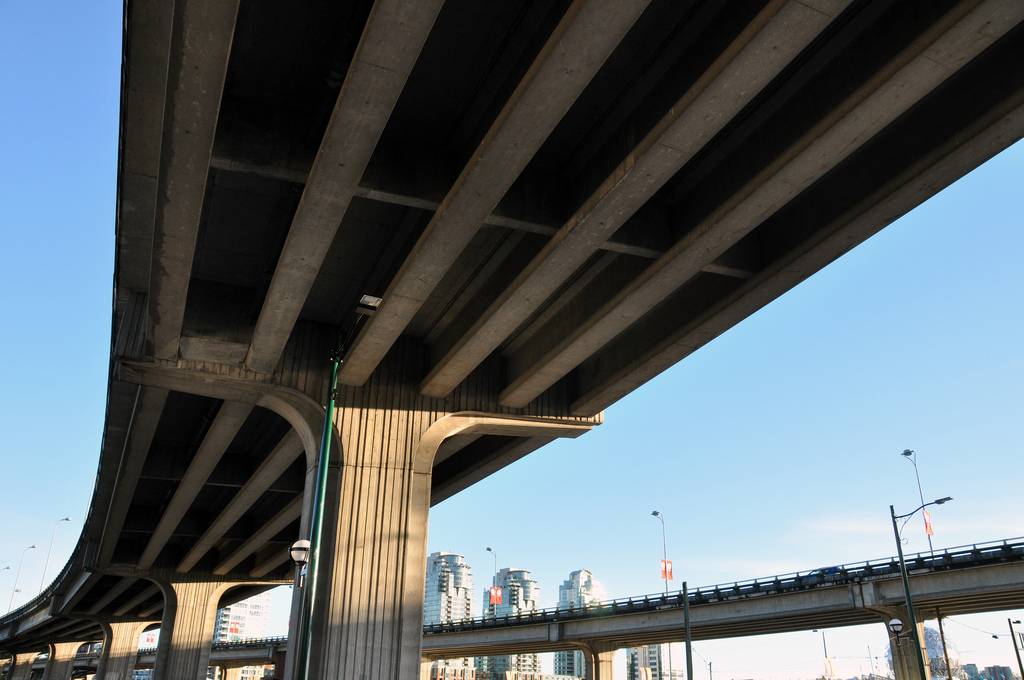
  • Viaducts removal and Vancouver’s eastern expansion

    Viaducts removal and Vancouver’s eastern expansion

    Thursday October 27, a milestone in a several year personal and community struggle was achieved.

    Vancouver City Council approved an amended staff report to remove the viaducts in principal, with the inclusion of a serious commitment to immediate downgrading of Prior Street and a new east-west arterial, as well as meaningfully honouring of Hogan’s Alley and the black community displaced from there. — Still there is more work to be done, in particular regarding development and affordable housing, delivery of Creekside Park and the management of traffic in NE False Creek.

    Earlier, I wrote the following op-ed:

    This week, Vancouver City Council is expected to vote on removing the Georgia and Dunsmuir viaducts—although as many City Hall watchers suggest: It is already a done deal. The proposal to remove the viaducts has been an ongoing issue for several years now; one that has piqued concern and activism in neighbouring communities.

    As many of us have been advocating for years: if we are going to remove the viaducts, let’s do it right.

    (*Full disclosure: my political genesis was viaducts removal. After losing a close friend and neighbour to unsafe Prior Street traffic conditions, I’ve been advocating for safety improvements east of Main to be included in the viaducts planning.)

    The removal of the viaducts is supposed to open up some 2.5 million square feet of residential and commercial development, provide new green space, and add thousands of new residents. More importantly, the development of Northeast False Creek is key to the eastward migration of Downtown Vancouver—an inevitability that urbanists and realtors have been describing for decades. 

    At his 2015 Urban Development Institute address, Vancouver’s pre-eminent real estate marketer Bob Rennie described “big game changers” that will trigger the movement of the city centre east. Bold moves like the relocation of St. Paul’s Hospital to the False Creek Flats, and the removal of the viaducts are two of those game changers. But in any game changer, there are winners and losers. 

    The winners, of course, will be the developers and landowners who stand to immediately benefit from viaducts removal. Concord Pacific who own and will develop much of that land; the Crown Corporation PavCo and the City itself have significant holdings that will open up; and Ian Gillespie’s district energy company has inked a deal with the City to provide heat for all new development in the area. 

    Optimistically, Vancouverites could be big winners if this project is done right—but the losers might well be the most vulnerable in our population, particularly as development puts the squeeze on housing affordability and new road networks bring more traffic.

    Here are some caveats I outlined before council at first reading of the city staff report on October 21.

    First, the City must commit to traffic management east of Main Street as part of the viaducts’ removal.

    One of the biggest concerns expressed by commuters and businesses is that viaducts removal will exacerbate congestion. According to the report, however, the proposed viaducts replacement road—a new at-grade “grand boulevard”—will accommodate viaducts and existing Pacific and Expo traffic streams, while actually increasing road capacity.

    The City’s report offers no commitment to address that traffic flow beyond Northeast False Creek, however. To the east: the communities of Strathcona, Grandview–Woodland, the Downtown Eastside, and Chinatown lack the road infrastructure to accommodate the traffic from the new post-viaducts street network and millions of square feet of new development. 

    As the plan currently outlines, the new Pacific Boulevard will connect to Prior Street. Prior, a narrow neighbourhood street without the setbacks and width expected of an arterial road, is the unfortunate legacy of the proposed freeway system that citizens managed to stop in the 1970s.

    An In-Service Road Safety Review of Prior and Venables (prepared for the City in September by Urban Systems and Morr Transportation Consulting) concedes: “the collisions occurring along Prior Street are involving a higher number of vulnerable road users than other comparable corridors and are potentially more severe.” 

    Of course, locals recognize the inherent danger for vulnerable road users outlined in the road safety review, and seemingly everyone knows someone who has been touched by reckless commuters racing through our neighbourhood. In Strathcona, parents won’t allow children to cross the busy street to the park as unsafe speeds and the running of red lights are all too common; in Grandview–Woodland, the same sort of situation manifests itself along Victoria Drive north of First.

    The report before council does acknowledge the need to secure a new east-west arterial route, but defers that to an indeterminate plan to be considered in 2016 and contingent on securing senior government funding. In the meantime, uncertainty over the how or where of a new arterial is cause for concern among residents and businesses. We ask that the wording of the report reflect that those details be established before the viaducts are removed. 

    Second, delivery of affordable and social housing must be guaranteed. 

    Proponents of viaducts removal point to this as a great opportunity to build affordable housing, and indeed it could be—but the delivery of social housing relies on a complicated shell game.

    Concord’s land development is contingent on former landowners (the province of B.C.) removing contaminated soil. In turn, if the City of Vancouver awards significant and sufficient densities to developers Concord, some degree of profit will be shared with the Province, which the City hopes will be directed to social housing.

    If you aren’t confused yet, consider that profits will have to factor in the Developer Cost Levies and Community Amenity Contributions (CACs); the latter, paid by the developers, is negotiated behind closed doors and will be expected to help cover the cost of viaducts removal, parks, seawall, and a new road network.

    At a recent SFU City Conversations on the subject, noted urban planner Lance Berelowitz questioned whether the math could work to deliver all the promises via CACs. One thing is for sure: if we are to extract maximum public benefit, these as-yet-to-happen negotiations need to be transparent.

    Among the parcels for redevelopment, city-owned land is being considered for sale in order to finance viaducts removal and housing. The city has previously shown leadership in advocating for a housing land trust—and these locations would be a wonderful opportunity to build leasehold public housing on city-owned land.

    On the blocks flanking Main Street in particular, the City could further honour the black community of Hogan’s Alley who were displaced to make way for the viaducts, by embracing the idea of retaining public ownership of the land rather than selling it to the highest bidder. 

    The future of the viaducts land, St. Paul’s Hospital, and the Flats, together with development in Chinatown and the Downtown Eastside, are putting extraordinary pressure on housing. We need to advocate at all three levels of government to ensure that we are protecting residents from displacement and be much more proactive in the building of affordable and social housing. 

    The city knows they cannot build this housing alone, and the staff report details the negotiations that must happen with senior governments. However, the City must ensure that their plan includes real and achievable targets in writing, along with a meaningful commitment to delivering affordable housing, lest we end up with more Olympic Village-style broken promises. 

    If we do it right: with comprehensive traffic management for the East End and a commitment to social and affordable housing; honouring the displacement of the black community at Hogan’s Alley and the diversity and struggle of the area’s low income community; and delivering existing residents their overdue and long-promised Creekside Park; viaducts removal could be a great opportunity for our City. 

    If we do it right.

    Originally published in the Georgia Straight

    Photo by Stephen Hui

  • Don’t penalize Vancouver seniors for government’s failure to curb runaway housing values

    Don’t penalize Vancouver seniors for government’s failure to curb runaway housing values

    Peter Ladner’s  Sept 14 opinion piece raises an interesting quandary about Vancouver housing prices, the dearth of detached homes, and the notion that taxpayers are subsidizing seniors to take up unused space.

    The idea of an octogenarian rattling around an underutilized, empty-bedroomed $3 million Dunbar bungalow while young families are forced out of the city makes for a convenient if not somewhat mean spirited scapegoat — but let’s take another look:

    Let’s imagine that an 80-year-old and her husband purchased their bungalow 40 years ago when the B.C. property tax deferment program was started. In 1985, interest rates were 13.25 per cent, purchase required a 25 per cent downpayment and the average price for a detached house in the city was $112,000. 

    In 1985, the Province of B.C. still collected data on foreign and corporate home purchases, so we would have thus known that our homeowners were tax-paying Canadian citizens and had purchased their first home for their growing family.

    In 1985, the housing market was just bouncing back from the crash of the early 1980’s, and Expo 86 hadn’t yet brought the world to our doorstep. Interest rates were cripplingly high, but our example family probably worked hard over the following decade, and maybe managed to save money to put their kids through university. 

    Perhaps fear of the past decade’s market crash had made the family risk adverse and reluctant to “trade up” as Vancouver’s housing market started along its steady exponential growth. Perhaps it was the scourge of leaky condos that had bankrupted many of their peers that left our couple skeptical about downsizing after the kids had left for college. Perhaps a reverse mortgage was secured to top up a meagre pension, or the comfort of familiarity helped mitigate the onset of senility.

    For whatever reason, our octogenarian has chosen to stay, be it in their Dunbar bungalow or two bedroom condo. It’s a stilted notion to suggest that they are staying in place because tax policies are subsidizing them to do so — they are able to stay in place because tax policies are protecting them from being forced out.

    The Property Tax Deferment Program exists to inure senior and/or disabled homeowners from market changes, when a fixed income likely means they wouldn’t be able to keep up with steadily increasing property assessment values and resultant property tax.

    These taxes aren’t being forgiven, they are being deferred to be paid on the ultimate sale of the home. 

    Should — as Ladner suggests — tax deferrals be means tested, consider residency history, and apply a more robust interest rate against the rebate at point of sale? Absolutely, but let’s be careful not to mischaracterize home-owning seniors as wealthy in the same breath as suggesting they are disadvantaging young families.

    Even without tax deferral, the market is squeezing young families out of the city. There is a certain irony that of all the other potential displacement factors: speculation, flipping, foreign investment and the luxury housing market — property tax deferment for seniors and disabled is the only one we are accurately tracking and monitoring. 

    It’s no secret that developers are running out of available land in Vancouver and that stagnant land is the antithesis of growth, so I’ll concede that there may be a very real business model to consider. If we want seniors to downsize and open up that market, let’s incentivize not penalize. And if we want to encourage housing affordability, let’s consider all the factors and enact sensible policies that will ensure housing for everyone in all stages of life.

    Originally published in Vancouver Courier

  • We must save Vancouver Community College and public adult education

    We must save Vancouver Community College and public adult education

    Like many Vancouverites, I owe a sincere debt of gratitude to VCC.

    I wrote my first lines of HTML code in a VCC classroom, allowing me to upgrade from print-focused graphics to remain successfully self-employed and engaged in newly emerging world of web design. During my lean years, the meat and baked goods shops at the downtown campus—serving deep discounted butchery and bakery student works—kept me well fed when I couldn’t afford much else. My wife successfully transitioned into a productive career thanks to the affordable and specialized skills upgrading she received at VCC almost twenty years ago.

    I have dozens, probably dozens of dozens of friends who have built careers and lives thanks to job-ready instruction in everything from auto mechanics to hair styling, culinary arts to music production, and health sciences to graphic design. Of course there are also the core, less specialized offerings: high school equivalency programs and English as a second language that have helped to integrate new Canadians, and prepare people for advanced training and schooling. For many years, the downtown VCC campus was one of the first points of contact for new Canadians struggling with language and poverty barriers in the DTES.

    With over one hundred degree, certificate, and diploma courses and some 22,000 students annually, VCC boasts an astonishing success rate: 93 percent of students are employed on graduation. For fifty years, VCC have been providing affordable services and education right here in East Vancouver and the Downtown Eastside.

    Despite the value VCC provides though, quietly the B.C. Liberal government have been laying off staff, making drastic cuts to core funding, replacing the board of governors, and removing 70 percent of VCC’s ESL seats. We’ve already lost the free ESL and adult upgrading courses that have allowed many of our city’s most vulnerable populations to improve their lives and employment prospects.

    It’s no secret that under our current provincial government, public education is under attack. Nowhere is that more apparent than here in East Van—where provincial ministry enrollment demands threaten to close primary and secondary schools, and a strangled budget has already led to clawbacks and closures of VSB adult education and ESL programs.

    Provincially-funded VCC is the only community college in East Vancouver and between its downtown and Broadway campuses, 25 percent of their students are upgrading their language skills to better integrate with our labour market. The majority of VCC students are new Canadians, and fully three quarters are women.

    At one point VCC ran the largest ESL program in Western Canada—so perhaps it’s no coincidence that the growth of the lucrative and under-regulated private language school market has coincided with the reduction in funding for these same yet considerably more affordable or formerly free programs at VCC.

    The bleeding of VCC over the last year has included staff lay-offs, cuts to the operating budget, review of programs with a mind to cuts or closure, a freeze in capital budget programs, and rumours of selling off and redevelopment the Downtown Eastside location. On September 16, the Save Our VCC coalition launched an off-campus community outreach to inform Vancouverites of exactly what’s at stake for affordable and public adult education in East Van: the quiet death of a thousand cuts.

    It is critical that we provide surety and confidence for present and future students of this vital and venerable institution. Let’s move the conversation out of the backrooms and have a full open and transparent conversation about the future of Vancouver Community College.

    — Originally Published in The Georgia Straight

  • Lower interest rates and housing affordability, more danger ahead?

    Lower interest rates and housing affordability, more danger ahead?

    This morning, as predicted, the Bank of Canada cut our interest rate by .05 per cent. Ostensibly, the move is to head off a recession — spurred mostly by slumping oil markets that have dampened Alberta’s economic outlook — lower interest rates mean Canadians will spend more.

    Lower interest rates also mean cheaper mortgage rates, which in turn will push up housing prices, particularly as investors look for safe places to park their money, like Vancouver.

    Canada isn’t the only large land mass nation faced with a recession though. China is experiencing an economic slowdown and an extremely volatile stock market, which will spur investors there to look for safe places to park their money, like Vancouver.

    While other Pacific Rim nations and states (Australia, New Zealand, Singapore, Hong Kong, China) have shored up their real estate markets with tax and duty programs to protect housing stock for locals — British Columbia remains mired in a do-nothing holding pattern, citing insufficient data, lack of evidence, and possible impacts on existing homeowner equity.

    Meanwhile our housing bubble continues to grow, unfettered and unrestrained, waiting — like all bubbles do — to inevitably burst.

    I hate to sound like a broken record on this — but we need provincial leadership on this issue. Now.

    Over $1billion in provincial property transfer taxes are directed to general revenue rather than to affordable housing in the jurisdictions that are generating that wealth. Let’s take the advice of the BC Chamber of Commerce and others and fix our property transfer taxes, track corporate and foreign investment

    http://www.bloomberg.com/news/articles/2015-07-13/china-may-tip-world-in…

    http://www.theguardian.com/business/2015/jul/08/china-stock-market-crisi…

    http://news.ubc.ca/2015/07/14/another-cut-to-canadas-interest-rate-could…

    https://www.biv.com/article/2015/7/vancouvers-housing-market-doesnt-need…

    http://www.straight.com/news/455161/pete-fry-tackling-roots-vancouvers-h…

    http://www.straight.com/news/478496/pete-fry-housing-crisis-failure-gove…

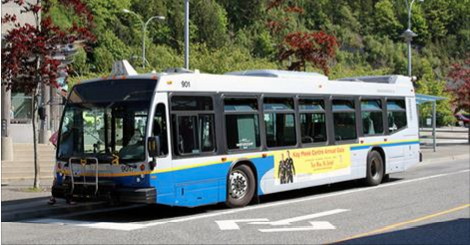
  • Thoughts on transit referendum

    Thoughts on transit referendum

    Thoughts on transit referendum: 

    Firstly, it never should have happened — an absolute abdication of leadership—doomed to failure from the start. We elect leaders to make the tough decisions, not pass the buck; and that is precisely what Christy Clark’s government did by putting our transit infrastructure investments to plebiscite. 

    There is plenty of blame to go around, though: I think the mayors’ plan lacked the credibility of real public consult (a high speed articulated bus line in tandem with intensified transit oriented development on the Drive.. seriously?), and the nagging suspicions of developer industry influence in civic politics clearly weighed heavily on the minds of many I spoke to. The mayors were equally culpable in politicizing the referendum and the reluctance to endorse their plan with a “yes” vote was the ensuing result for many voters (I note that more votes were cast for the Transit Referendum than in the civic election). 

    Jordan Bateman and his anti-taxxers did a good job of owning the opposition view — but while I personally feel that a consumption tax mightn’t have been our best option for funding (unless supplemented with generous rebates for low incomes), Bateman et al were disingenuous by not actually detailing the true costs of NOT investing in better transit (ie. GHGs, and literally slowing our economy with congestion). 

    And then of course, there is Translink — clearly an organization that requires more transparency and accountability. Let’s hope that at the very least, today’s NO vote will be taken as a signal that the governance of Translink desperately needs reform. 

    The blame game is moot though, first and foremost we never should have had a transit referendum(b) and for that I blame Christy Clark and her BC Liberals. 

    Read full BC Green Party media release below: 

    * *  

    [MEDIA RELEASE] B.C. Greens: Lack of leadership from B.C. Liberals in their Transit Plebiscite halts needed transportation investments
     For immediate releaseJuly 2, 2015 Victoria, B.C. – Matt Toner, B.C. Green Party Finance critic, says the B.C. Liberal government has displayed a lack of leadership in the Lower Mainland when it comes to critically important investments in public transportation. “If we want to create a sustainable society, we need to grapple with this region’s very real public transit problems,” said Toner. “The BC Liberals have passed the buck twice now: first, by referring a funding question to a regional plebiscite and then, once that failed to pass, kicking the responsibility to solve the problem down to municipalities.  Ducking hard decisions is not what we need from our elected representatives, but it seems to be the preferred strategy for this government.” After months of voting and ballot-counting, Elections BC today released the results of the B.C. Liberal Transportation and Transit Plebiscite. With 61.68% voting No and 38.32% voting Yes, the citizens of the Lower Mainland have overwhelmingly voted against a 0.5% increase in PST to pay for the Mayors’ Transportation and Transit Plan. Despite a number of new funding mechanisms advanced by the Mayors’ Council, the B.C. Liberal government unilaterally restricted the options to a regional PST increase. In a B.C. Liberal email that went out shortly before the vote count was released, the party’s Executive Director tried to pass responsibility on to the mayors, ignoring the heavy-handed role the provincial government has played so far and the clear provincial role in transportation financing. “This entire plebiscite process was designed to provide cover for the B.C. Liberals so that they didn’t have to make a tough decision,” said Pete Fry, the BC Green Party candidate in the forthcoming Vancouver–Mount Pleasant by-election. “Most people I’ve spoken with agree on the critical need for transit improvements in Metro Vancouver, but this process was needlessly politicized and opaque. Going forward it is clear that more authentic collaboration is needed between governments and the citizens they represent.  This should start with responding to the calls for governance reform in Translink.” “Alternative solutions exist, ” says Andrew Weaver, MLA for Oak Bay-Gordon Head and Deputy Leader of the B.C. Green Party. “I’ve already talked about the option of increasing the carbon levy and directing the increased revenue to municipalities to fund crucial transit and infrastructure needs. It also seems clear to me that this turned out to be a referendum on Translink, not transit. Ultimately, a solution to the Translink problem might be to give back the autonomy that the mayors used to have when Translink was first created or roll Translink back into BC transit.” Vancouver is the most congested city in Canada, and the third most congested city in North America. Metro Vancouver is expecting an additional 1 million residents over the next 30 years.