
Tag: affordability

  • In Vancouver, social housing probably doesn’t mean what you think it does

    In Vancouver, social housing probably doesn’t mean what you think it does

    As the city defines it, a building is considered 100 per cent social housing if it’s rental housing that includes a minimum of 30 per cent low-market rents.

    A fanciful promise to “make it easier to build social housing than mansions” failed to win support at Vancouver council last week.

    The campaign by Coun. Christine Boyle with support from the mayor suggested a simple solution to housing unaffordability, but instead resulted in misinformation and anxiety.

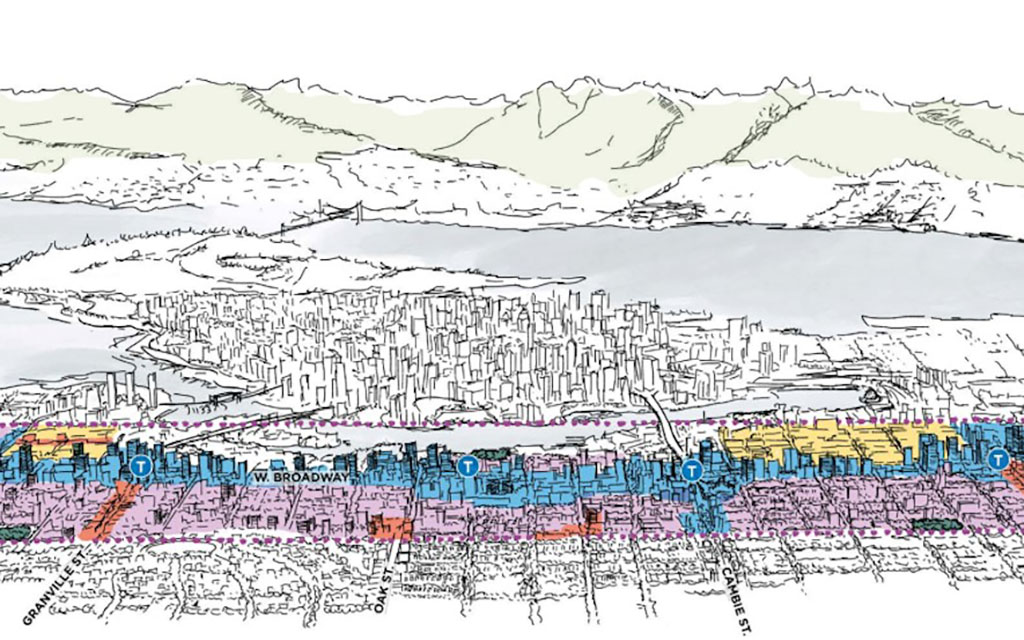
    On a superficial level, the slogan is compelling, but the proposal to skip rezoning and fast-track new developments of up to 12 storeys was for neighbourhoods populated not by mansions, but almost exclusively by older, affordable walk-up apartments — Kitsilano, Marpole, Mount Pleasant and Grandview-Woodland.

    It had the potential to do the opposite of the purported goals, leading to displacement and loss of affordable rental homes.

    In Vancouver, social housing probably doesn’t mean what you think it means.

    As the City of Vancouver defines it, a building is considered 100-per-cent social housing if it is rental housing that includes a minimum of 30-per-cent low-market rents (or HILs).

    According to B.C. Housing, HILs set out “the minimum income required to afford appropriate accommodation in the private market.”

    In Vancouver, the requirement for a studio apartment is $55,500 — almost $5,000 above the median income in the city. The rest of the units can be rented at market rates if the building is owned by a non-profit organization (or government, or co-op).

    Notwithstanding the definition, some non-profit organizations will strive for deeper affordability, but policy doesn’t obligate them to do so.

    In fact, there is no obligation that a non-profit organization include affordable housing as its mandate. We heard agreement from non-profit housing providers that this definition is problematic, and warnings that less-scrupulous developers could exploit the opportunity to game legitimate construction profits and asset management fees.

    Last month, council voted unanimously to support a similar staff recommendation to pre-zone and fast-track social housing up to six storeys. The leap to 12 storeys, however, posed barriers to delivering affordability, despite improved market performance.

    The 12-storey up-zoning implications on land economics were so substantial that one council colleague was advised to recuse from the vote as his property would see “significant” value increase were the motion to pass.

    Quoting from city staff and their concerns with the proposal, economic testing has shown that the viability of mid-rise forms (for example, over six storeys and under 12 storeys) was challenged due to the high cost of building in concrete.

    Staff further warned that implications around utilities, neighbourhood amenities and traffic would need to be considered, and it would be very difficult to secure infrastructure and servicing requirements without a rezoning.

    These are real concerns, further underscored by the definition, and the fact that “social housing” doesn’t pay development charges or amenity fees — for instance, the city forgoes millions of dollars per building that pay for critical infrastructure and services needed to accommodate growth such as community centres, daycare, and utilities.

    Critically, eliminating the oversight otherwise afforded by rezoning limits the discretion to ensure public benefit trade-offs are commensurate to the level of affordability — not just the policy minimums.

    Other considerations: We don’t have tenant protection policies robust enough to defend all the tenants at risk of “demoviction” in this scenario, and the biggest barriers to affordable housing are senior government funding timelines and our development permit process — not rezonings.

    The motion made for a great campaign slogan, but not a practical solution.

    Attempts to amend the motion to be more reflective of some of the legitimate concerns I outline above lost on procedure, and the motion was defeated.

    Readers can take some comfort, however, in knowing that city staff are bringing new and thoughtful policies in coming months to improve and fast-track the delivery of affordable housing.

    I would be remiss not to acknowledge that there was a lot of misinformation around this issue, in particular from many opponents who conflated “social housing” with “supportive housing” — the latter (low-income housing with support services) is what most people think of when they hear “social housing.”

    To be clear, this motion was defeated by a council majority as an inadequate policy, not because council doesn’t support social or supportive housing.

  • Know Your Rights: Tenant Relocation and Protection policy

    Know Your Rights: Tenant Relocation and Protection policy

    Know your rights.

    Under the City’s Tenant Relocation and Protection Policy, formally evicting long term tenants for “minor repairs” necessitates at a minimum 4 months free rent and moving expenses (in the case of a 10year tenant). It seems in the case of these apartments at Pender and Woodland the new owner “Dino” is hoping to scare pressure tenants into leaving without their due payout (no permits have been issued).

    More info: TENANT RELOCATION AND PROTECTION GUIDELINES
    http://vancouver.ca/files/cov/tenant-relocation-and-protection-guideline…

    Also worth noting, that VISION Vancouver’s recent Grandview Woodland Community Plan has significantly up-zoned this particular part of town. From 12-15 storeys on Hastings, to 10 stories across the street, this older 4 story apartments are sitting on lots that will now accommodate up to 6 storeys.

    Postscript: 

    Published in response to “Tenants of Vancouver apartment buildings join forces in opposing evictions”
    https://www.theglobeandmail.com/news/british-columbia/tenants-of-vancouv…

  • Thoughts on VAHA’s new micro-suite development

    Thoughts on VAHA’s new micro-suite development

    Thoughts on new micro-suite development on 100 block West Pender by Vancouver’s Affordable Housing Agency.

    The conditions of this rezoning are consistent with how Vision Vancouver redefined “social housing” in their 2014 DTES Plan. For this proposed social housing project, only 30 of the 90 micro-suites will rent for under $1000/mo.

    I was on the citizen committee when we rejected the DTES Plan in 2014, primarily because in it was unlocking massive development potential in the area but wouldn’t deliver the necessary housing for the existing low income population (nor does inclusionary zoning elsewhere in the city).

    The 90 tiny units in the 10 story building will include 1/3 at shelter rate ($375-$605) one third at “just below market” (<$1650) and 1/3 at HILs (a BC Housing measure based average income and a federal affordability index, in this case about $1000*).

    When we (community) were working on the DTES Area Plan, we asked for more transparency about “proformas” —basically, the developer budget, cost to build, and profitability.

    At the time, that notion of more transparency around rezonings in the DTES was dismissed because developers didn’t want to daylight their business practices and profits.

    The Vancouver Affordable Housing Agency is an agent of the city, and accountable to the people of Vancouver. We should expect and demand more transparency of this development: show us the math, who are the developer partners, what are the costs here, what are the profits here?

    For what it’s worth though, I like the building scale and design. Its smart density, even the micro-suites (tiny as they are) are well designed and windowed. Twenty-five years ago I was living next door to this site and it was vacant then — so this development is LONG overdue, but is it the best we can do?

    * reference 2017 BC Housing HILs rates
    https://www.bchousing.org/publications/2017-Housing-Income-Limits-HILs.pdf
    ** reference Market Apartment rental rates 2017; bachelor min. $1650
    https://www.rentboard.ca/rentals/rental_rates.aspx?locid=1040

    original story: https://www.straight.com/news/932896/micro-suites-planned-city-vancouver…

  • New Seattle Tiny Home Project: affordable homelessness solutions?

    New Seattle Tiny Home Project: affordable homelessness solutions?

    I don’t want to knock the City of Vancouver’s recent work to build modular mobile housing for people at risk of homelessness — but this article illustrates how we might have missed the mark with that particular project.

    Vancouver’s units —proper mobile homes, prebuilt in the Okanagan— to be assembled at Main and Terminal and opened in a few months each cost $87,500 (40 units at $3.5m. In Seattle, these tiny house villages are being built at a cost of $2,200 each, employing volunteer labour and goodwill.

    Seattle’s is a model similar to Portland’s Dignity Village, which I visited in 2014 and advocated for as a possible solution here. Volunteer labour and faith based groups played a huge role in helping to build these temporary intentional communities, and the results were profound: once they had temporary housing, the average resident was able to find stable permanent housing within 6 months.

    I still feel strongly that this is a solution that we can make work here, we have the people and resources, and an amazing tiny house building community that could help steward such a process.

    Another great example from Seattle!

    http://www.capitolhillseattle.com/2016/12/as-seattle-plans-new-tiny-house-encampments-village-marks-first-year-in-the-central-district/