Tag: affordability

  • Dick Florida’s mea culpa: A 180˚ on “Creative Cities”

    Dick Florida’s mea culpa: A 180˚ on “Creative Cities”

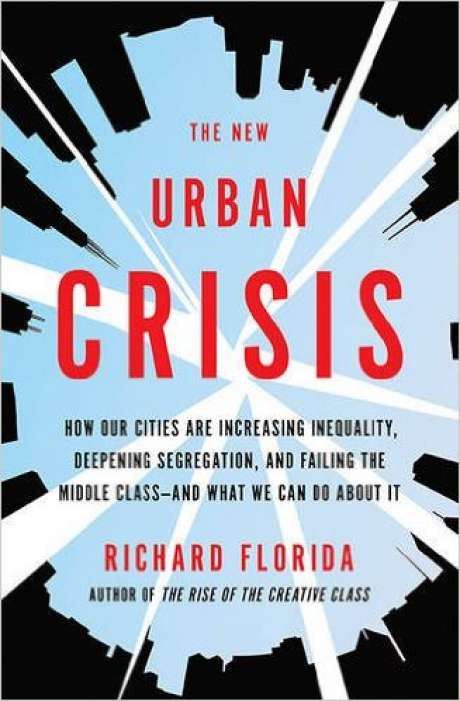
    When people ask what went wrong, and how did Vancouver get to this crisis point of inequality and unaffordability — I’ve often pointed to the Richard Florida mantra of the creative class / creative cities: a school of urbanism that has dominated our city’s politics and planning for the last decade.

    Florida’s premise: that economic and urban renewal could result from wooing the “creative class”, that things like hip coffee shops, bike infrastructure, and social engineering with a progressive veneer would fuel urban transformations.

    Then, as now, critics pointed out that this revitalization would bring wider income disparity; and that in its desirability, the creative class city would quickly run dry of affordable housing. Well, it happened, and its happening: our city is reaping what the creative class thought leaders have sown.

    That is why it’s so incredible, fifteen years on, to hear Florida now pull away from the very theory that made him a star in urbanist circles — and candidly admit that there is a very dark side to the urban creative revolution: inequality. The creative class divide.

    His new theories now talk about “inclusive urbanism”, about investing in residents’ skills rather than yuppifying communities. It echoes a lot of the work I’m doing now, where urbanist and developer-speak about “placemaking” are countered with the need for place-based strategies: namely, urban revitalization that includes the people who are already here.

    Florida also takes aim at: “the tribe of urban libertarians who advocate loosening development restrictions to boost housing construction and bring down prices, as if affordability were simply a matter of supply and demand”

    So for once, I’m actually looking forward to the hearing something Richard Florida has to say. The book is expected next spring.

    Read review of the “The New Urban Crisis” here

  • License to Shill: Why aren’t there restrictions on licensing of realtors in Vancouver?

    License to Shill: Why aren’t there restrictions on licensing of realtors in Vancouver?

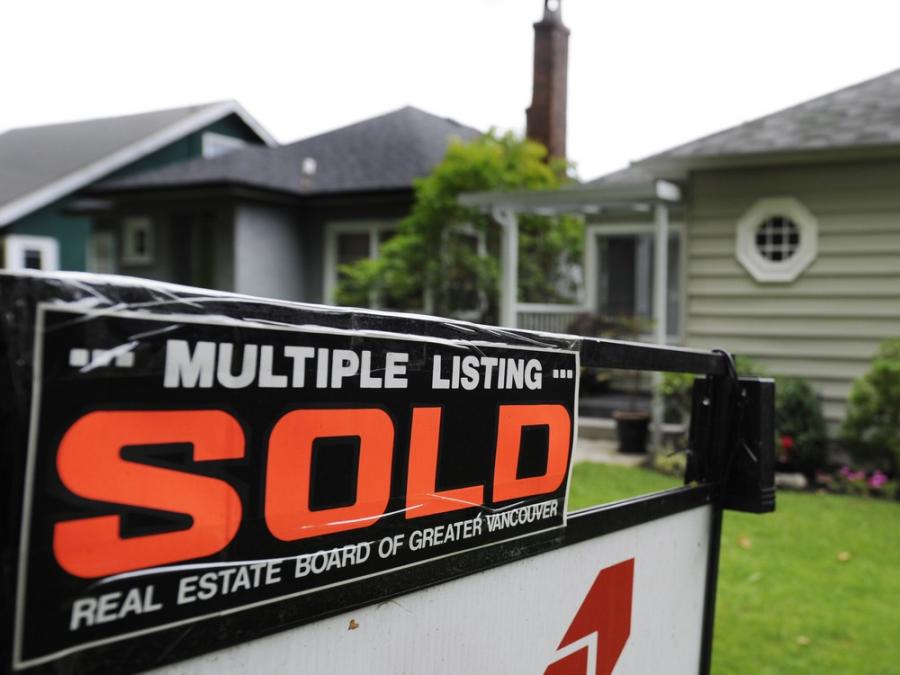
    The litany of lost opportunities to meaningfully address the housing crisis in our city is depressingly long, and given the role that the real estate industry can play in that equation — you might be surprised to learn that the City of Vancouver have absolutely no rules or regulations to govern the licensing of realtors doing business in the City of Vancouver.

    Wednesday morning (July 13) the Independent Advisory Group on Real Estate Licensee Conduct, in a presentation to City Hall reported on Conduct and Practices in the Real Estate Industry in British Columbia. The Advisory Group, mandated by the Real Estate Council of BC was there ostensibly to reassure City Councillors that something was being done on a provincial level about corruption and conduct in that industry.

    The practices of certain bad player realtors in our city have come under increasing scrutiny in recent months: from shady practices like shadow flipping and double ending, to serious allegations about ethics, transparency and discipline within the Real Estate Board of Greater Vancouver and even some realtors failing to comply with federal (FINTRAC) money laundering rules — but so far, City Council hasn’t taken any action.

    Three term Vision Vancouver Councillor Kerry Jang even had the temerity / lack of self-awareness to ask “what took you so long?” of the industry regulators’ failure to address the housing crisis, jokingly asking if they “were having too good a time making too much money” (I think somewhere in the audience I heard the echo of a sad trombone).

    Some might argue that the licensing of realtors is already mandated and regulated by the provincial government, and that’s true. In the wake of reports of egregious and unfettered realtor practices, the provincial government recently acted decisively (if not belatedly) to end the controversial practice of real estate industry self regulation. But the recently streamlined process for acquiring a license to do business in the City of Vancouver doesn’t now, nor has it ever placed any restrictions or regulation on realtors operating in our city.

    Provincial and federal legislation and jurisdictional overlaps aren’t otherwise precluded from existing City of Vancouver licensing though. In fact, the City has a number of business licensing bylaws that overlap with pre-existent senior government legislation, addressing specific industry sectors under a mandate that includes “protecting vulnerable populations”. It’s not a stretch to suggest the housing crisis in our city has created a significantly vulnerable population — so why is the city failing to enact suitable protection methods?

    A review of City’s License Bylaw (4450), details a number of definitions, conditions, prescriptions, and restrictions to getting a business license. Want to open a cheque-cashing business? Despite robust federal legislation and industry self-regulation, there’s a bylaw for that. Want to open a business that serves alcohol? Despite readily enforcable provincial laws, there are dozens of conditions outlined in the bylaw including “responsible serving practices… [per] provincial operating regulations”. Open a compassion club? There are over thirty different articulated conditions, despite pre-existing federal law and industry self-regulation.

    Contractors, recyclers, bowling alleys, dating services, pet stores, bike couriers, vapour-lounges: each have conditions and restrictions on doing business in our city — but there is nothing for realtors. At Wednesday’s presentation a number of city councillors expressed concerns about residents, seniors in particular being duped by unsolicited high pressure realtor sales tactics — while city business licensing bylaws prohibit contractors and peddlers from such practices, there is no bylaw for realtors.

    The realtor business is booming: the Real Estate Board of Greater Vancouver reports an all time high with 12,200 registered realtors. Licensing couldn’t be easier: $1300 and an online course is all it takes, companies like New Coast Realty will generously offer pre-training and a bursary to cover the cost. It should be noted that New Coast are also notorious for ethically dubious training, along with a lack of FINTRAC compliance, double-ending and shadow flipping.

    Given the impact of housing unaffordability, it is not enough that the city rely on industry self-regulation, toothless legislation, and as yet undelivered provincial oversight. Under their mandate to regulate the licensing of business, trade, professions, and other occupations with the City of Vancouver – licensing should at the very least be regulating the practices of realtors in our city, it’s shamefully long overdue.

  • International Day of Disabled Persons

    International Day of Disabled Persons

    Today, December 3rd marks the International Day of Disabled Persons (first declared by the United Nations in 1992). On that note – it seems appropriate to talk about disabilities and accessibility in B.C.

    It’s impossible to talk about accessibility barriers in this province without first talking about disability rates. There are two different qualifications: Persons With Disability (PWD) and Persons with Persistent and Multiple Barriers to employment (PPMB). PWD is a semi-permanent designation, and a single PWD can receive up to $906.42/month. A single PPMB can receive a maximum of $657.92 and must reapply every two years. There are potential additional supplements available for nutritional, diet, transportation, and crisis needs at the Ministry’s discretion. Both benefits are inclusive of a maximum shelter expenditure of $375/month.

    Of course, in Vancouver-Mount Pleasant, where the average rent for a bachelor apartment is $889/month, a $375 shelter maximum seems perversely inappropriate — and thus we find disability-collecting citizens living in slum hotels with no heat or hot water, or shut-in by broken elevators. Coupled with ongoing cuts to health services (I recently wrote about Vancouver Coastal Health laying off 89 home care workers for disabled and elderly) our province is condemning many of society’s most vulnerable to absolute misery.

    It’s clear that we must raise the rates of social assistance. Leading advocates in the field including Disability Alliance of BC’s Disability Without Poverty Network call for increasing the PWD benefit to $1200/month. There’s no indication that either the BC Government or Opposition seem interested in raising assistance rates though — the Liberals haven’t raised the basic welfare rate ($610) since 2007, and the NDP’s paltry $20/month increase proposed in their most recent platform indicate neither are listening to experts.

    Of course, not all disabled people collect assistance – indeed many are productively and well-employed, and they rightly deserve to be viewed as capable. But capability is predicated by accessibility, and accessibility in B.C. is not a constant or standardized notion. That’s why advocates are calling for a B.C. Persons with Disabilities Act.

    The Act would deliver a consolidated and planned approach to accessibility and inclusion, with a wider scope than the current collection of individual legislations. As Stephen, a blind constituent, explained to me, an act would help mitigate inconsistencies in standardization for visually impaired accessibility: everything from bank machines to prescription bottles to taxi meters. Such acts exist on a national level in the United States, and provincially in Ontario and Manitoba. The research and framework for a disabilities act exists, and we can learn from the successes and problems of other acts

    To their credit, the government have promised improvements by way of their Accessibilty 2024 program, but the timeline pushes the delivery beyond the timeframe of their legislative mandate and lacks the cohesiveness of an actual Disabilities Act.

    On the verge of the Trans Pacific Partnership Trade Agreement, one possible benefit of a provincial act would be to enshrine and protect accessibility (Canada has yet to enact a national act). Under the TPP’s Intellectual Property chapter, industry is seeking to monetize and ultimately diminish accessibility within recently-released, not-widely-understood, not-yet-ratified, 6,000 page agreement.

    I recently spoke to concerns about how the TPP might affect Vancouver in terms of land use, local procurement and the city’s green brand. Also present that day were local internet democracy advocates OpenMedia who described the TPP as a digital policy failure that would kill local tech and innovation. They cited one specific example with serious implications for accessibility, the prohibition on circumventing Digital Rights Management. This would undermine unauthorized “hacks” like closed captioning or increasing font legibility. You can read more about the UN’s Marrakesh Treaty for accessibility and how industry is using TPP to thwart those efforts at the Electronic Frontier Foundation.

    In speaking to the CNIB’s Rob Sleathe recently, we discussed what a remarkable age we live in, with so many technology-driven improvements to accessibility. We’ve come a long way as a society too, with advancements in providing equal rights for British Columbians of all abilities— but there is still much more to be done.

    Postscript: The graphic I selected for this post was one I came across a few years ago — it’s the wheelchair symbol used in New York City, and I think conveys a powerful message about how we view people with disabilities. From the article How A Guerrilla Art Project Gave Birth To NYC’s New Wheelchair Symbol “Maybe we need to start thinking about where our preconceived opinions of people with disabilities come from, and target that,” http://www.fastcodesign.com/1672754/how-a-guerrilla-art-project-gave-bir…

  • Everybody’s talking about foreign investment; let’s talk about renter tax credits

    Everybody’s talking about foreign investment; let’s talk about renter tax credits

    Housing affordability: If it’s bad for buyers, it’s worse for renters.

    Early last week I attended the SFU Community Summit’s Housing in the City: Beyond the Headlines panel discussion on issues relating to housing in B.C. and efforts to move us closer to the goal of affordable, suitable, and secure housing for all.

    Each offering a different expertise, the speakers’ presentations ranged from First Nations housing; to community groups leveraging land assets to build affordable housing; to the economics of building more rentals. Christine McLaren from Happy City described urban design and social geometry for happier harmonious living (who knew—the ideal front yard for genial neighbourliness is exactly 10.6 feet deep). Marla Zucht from the Whistler Housing Authority explained how that resort municipality extracts housing from new developments to provide affordable rental and home-ownership for the people who work there. 

    There was a lot of anticipation as UBC geography professor David Ley rose to speak about foreign investment (or more specifically, as he distinguishes it: non-local capital).

    Earlier that day, urban planner and researcher Andy Yan had released a new report suggesting that almost three-quarters of detached home sales on the west side were to Mainland Chinese buyers. Yan was in the audience, and told me he was taking a lot of heat for his research, including accusations of racism from real-estate industry types and even the mayor

    In Yan’s defense, it is precisely the lack of data that he feels has the potential to incite racism, because in the absence of facts rumours and half-truths can flourish. I’m inclined to agree, and as I’ve previously proposed: we should better track and analyze the effects of non-local capital on our unaffordable housing, and adjust our available taxation tools to protect local residents by investing that revenue in affordable housing and work to prevent reported tax fraud. It’s important to note the majority of our regional real estate market is driven by and for locals (speculators or otherwise), but we still need to analyze the role of non-local capital, while repudiating xenophobia and racism.

    Even the B.C. New Democrats have done a full reversal on the issue of foreign capital. It was the NDP government who originally stopped collecting data on foreign and corporate real estate purchases, ironically out of a fear that foreign money might leave the region. Last month, speaking to her record as Vancouver-Mount Pleasant MLA, now-MP Jenny Kwan clarified her previous position protecting the privacy of investors hiding foreign assets with the goal of better collecting data about foreign ownership of local housing. 

    There doesn’t look to be any forthcoming meaningful action from the B.C. Liberals though. In case you missed the news release during the federal election, the governmenthas no intention of targeting non-local investors or house-flippers, although they are considering measures to further protect first-time buyers.

    Even if we did have decisive leadership and direction to mitigate and extract value from speculators, luxury properties and foreign and corporate investors—it’s a bit like closing the barn doors after the horses have gone. The Vancouver housing bubble is quite unlikely to contract in the near term, and those high prices that shut so many out of the market are here to stay for the foreseeable future. 

    But if it’s bad for buyers, it’s worse for renters.

    Those ever-inflating house prices aren’t just thwarting first-time-buyers, they are putting pressure on rentals. The latest CMHC data puts vacancy rates in Vancouver at below one percent. If you have multiple bedroom needs or pets, it’s even worse and it certainly isn’t affordable. The average rent in Vancouver rose 4.6 percent in 2015, twice the national average, making it the most expensive of any major metropolitan area in the country. Meanwhile our median income is among the lowest.

    The lack of affordable rental is a growing crisis which most analysts are predicting will get even worse as buyer potential is diminished. Savvy investors have anticipated this—between high demand and local governments’ willingness to bonus rental developments—they see real opportunity to make profit in the rental market.

    Arguably, increasing supply might temper our low vacancy rate, but there has very little market or government initiative to ensure those rentals are actually affordable. We can only hope that our new federal government’s promise of funding and incentives for new affordable housing will help to create more supply, which otherwise cannot be left to the market alone.

    Rent control is another obvious solution, but in a free enterprise housing market—where renovictions are a thing, and the provincial Residential Tenancy Act is in desperate need of overhaul—there is potential for pushback from industry. Arguably rent control could be seen as a disincentive for new rental builds, although cities like New York have managed to make renter protection a condition of rezonings

    But there is a tool that hasn’t been subject to much discussion in our province, one that might bring some relief to beleaguered British Columbians: a renter’s tax credit.

    The idea is simple enough: a provincial tax credit, means-tested and income adjusted, that could offset the burden of renting in unaffordable markets. 

    Renter tax credits are not a new idea—for millions of Canadians, renter tax credits are already available and working to alleviate their rent burden: in Quebec as the Solidarity Tax Credit, and in Ontario as part of the Ontario Trillium Benefit, where it is also tied to relieving the cost of energy use in remote communities. In the United States, after years of tax and lending policies directed to encourage homeownership, renter tax credits are being considered as a tool to promote equity and alleviate household poverty.

    Why not here in B.C? B.C. Housing does collect data on housing costs relative to income: the Housing Income Limits, published annually, track the income required to pay the average market rents in planning areas throughout the province. Here in Vancouver-Mount Pleasant, almost three-quarters of the population rent, half of those renters pay more than 30 percent of their income on rent, and a growing number of that cohort spend more than 50 percent. 

    There are many practical justifications for a tax credit, starting with housing equity and poverty relief. Our province consistently ranks above the national average for rates of child poverty. Food must often take a second place to rent and utilities: hunger and food insecurity in turn diminish productivity and health, ultimately costing our system in other ways. Those credits in turn are likely to return to our local economy either directly or indirectly. The indirect economic impact is most notably the ability for business to attract and retain employees. Experts predict that without meaningful intervention, housing unaffordability could trigger a labour crisis in parts of our province.

    There is need for further study. One unintended consequence of a renter tax credit might be to put pressure on landlords to declare their rental income and comply with local construction and residential by-laws. While at first glance this might seem like a fair and equitable consideration—in our city, with its sky-high property prices—mortgage helpers often take the form of undeclared suites and rentals; they make up an important part of the rental continuum, and we can’t afford to jeopardize them.

    Do the benefits of a renters tax credit outweigh the risks? Let’s urge some immediate provincial action to study the idea. 

    One thing is for sure, inaction is no longer an option and we need relief for renters, now.

    Special thanks to Grant Diamond at UBC School of Community and Regional Planning for his research help on this.

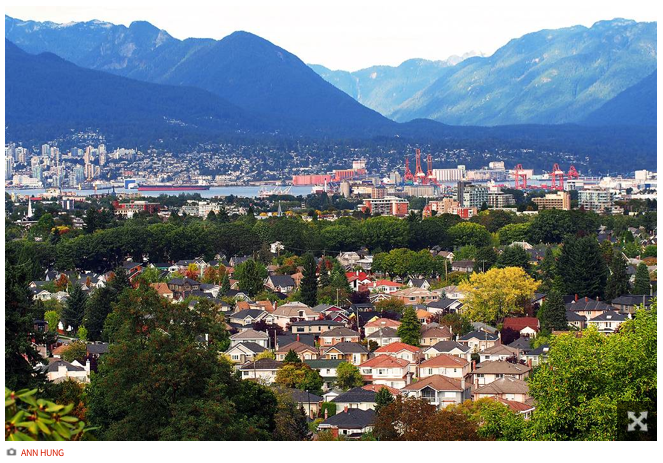
    Originally published in the Georgia Straight, Photo Ann Hung

  • Tackling the roots of Vancouver’s housing affordability crisis

    Tackling the roots of Vancouver’s housing affordability crisis

    The affordability crisis in Vancouver certainly isn’t news—it was a central theme of our most recent civic election, and the two preceding it—but in recent weeks, calls for senior government intervention have landed on the premier’s desk in the form of a petition seeking restrictions on foreign ownership of property.

    Readers might be confused by Premier Christy Clark’s warning that implementing taxes on foreign real estate investors would cause housing prices to drop, while Housing Minister Rich Coleman insists the provincial government has no intention of even collecting data on foreign ownership, nor has it come up as an issue for his ministry.

    Are the growing number of Vancouverites’ concerns warranted? Is the unfettered flow of global capital into our local market affecting our housing affordability? It would be hard to argue that it does not.

    To describe the notion of external capital affecting a local market, I need look no farther than my own backyard. Over the last decade and a half in my Strathcona neighbourhood, long-time family homes would turnover as the elderly tenants would pass on, or could no longer afford the upkeep. One notable speculator, the scion of a wealthy B.C. industrialist family, began amassing a real estate portfolio by buying these homes as they came on the market, in cash, and with no conditions. Of the estimated 340 detached single family homes in Strathcona, the Point Grey speculator may have snatched up a dozen, less than five percent of the available stock, but enough to change the market economics. The result was that many local residents—neighbours of more modest means—could not afford to buy into their community, and that house prices rose incrementally with each bidding-war for the limited stock available.

    What this tells us of course is that speculator investors certainly aren’t all foreign, but that externalities like non-local capital can price locals out of the market and inflate the median market value. Today, the median home price in the city of Vancouver is more than 11 times the median income. Even with the conservative estimate of five percent foreign investment, the premier is correct in her assertion that foreign capital buoys our domestic real estate market to the benefit of resident and non-resident speculators alike.

    While no level of government has yet to amass real data on speculation, there’s been no shortage of musing on the subject. South China Morning Post’s Ian Young has written extensively on the subject of foreign capital; urban planner and researcher Andy Yan has compiled records of utility usage to develop data on empty condos; the website Beautiful Empty Homes of Vancouver has itemized scores of empty million-dollar houses; in their 2008 campaign platform, Vision Vancouver called for “unlocking vacant condo units as rental housing”.

    Real estate and development professionals caution against demand side intervention as they may yield unintended consequences and risk cooling off Vancouver’s white hot real estate market. At the same time, the world’s top money manager is advising global investors to “Forget gold, buy a Vancouver condo if you want to stash your wealth”.

    For many, life in Vancouver—the most livable city in the world in the best place on Earth—is a gilded cage. Almost half of Vancouverites pay more than 30 percent of their income on rent, and half of that number pay more than 50 percent. According to the 2011 National Household Survey, over 50 percent of Vancouverites are renters, in my riding of Vancouver-Mount Pleasant that number is closer to 75 percent, in the DTES it’s 90 percent.

    When we talk about foreign investment—there is an important distinction which often gets lost in this conversation—foreign investors are by definition not immigrants or necessarily even residents: by law they cannot spend more than six month a year in Canada, and by circumstance, they do not pay into our “social contract” by way of income tax, nor do they pay capital gains tax on the sale of their property.

    Real estate investors do pay the same property tax that all Vancouverites (either directly or indirectly) pay, which helps cover costs of things like road maintenance, schools, and garbage. As senior governments play less and less of a role in providing housing, city governments are bearing the brunt of the affordability crisis, with developer cost levies—used to fund things like public amenities and community centres—increasingly being used to provide social housing but at a rate that can’t keep up with the market growth.

    There’s a sad irony in the notion that a “yes” for the transit-plebiscite proposed increase in sales tax will result in transit-oriented development that could create investment vehicles for people who might never pay sales tax at all (that said, I personally think the sales tax increase is money well spent for improved transit infrastructure).

    China, Hong Kong, Australia, and the U.K. all apply special taxes on foreign investors. Closer to home, Alberta, Saskatchewan, and Prince Edward Island restrict foreign ownership of real estate—ditto resort destinations like Mexico. Last year the B.C. Chamber of Commerce released a report calling for the provincial government to address foreign investment and asserting that affordable housing is good for our economy. With one million new residents projected for Metro Vancouver over the next 30 years, we can expect the demand to remain buoyant.

    Over the last five years, Hong Kong in particular has successfully reduced property speculation and simultaneously redirected dividends to the provide public benefit through a three-tiered stamp duty. Hong Kong’s “3D” taxation scheme effectively targets corporate and non-resident buyers, quick resales (or “flippers”), and luxury property buyers; providing billions of dollars worth of social housing investment and cooling the market all without any long-term damage to housing values.

    Foreign investment is good for B.C.—ultimately it creates jobs and benefits for our economy—and it certainly is not the only cause of our affordability crisis, but to deny its role is irresponsible. Let’s look to solutions like a non-resident tax premium that could be remitted back to the municipalities to encourage more foreign investment or build social housing as local demand dictates. Let’s look to solutions like fixing our homeowners’ grant so that it recognizes the importance of investor-owned rental properties, rewarding “good” landlords and discouraging empty apartments. Let’s look at ways of closing corporate tax loopholes that allow bare trust holdings to avoid paying the property transfer tax. Let’s look at ways to use the property transfer tax to discourage speculative flipping for quick profit.

    Affordability will remain in focus on Friday (May 22) with Bob Rennie addressing the Urban Development Institute, where he’s expected to advocate for more supply; while the #DontHave1Million rally will see middle-income Millenials calling for senior government intervention; and I’ll be at the B.C. Green Party AGM to discuss this very issue.

    The time is now. It wasn’t too long ago that climate change deniers were refusing to act until they were presented with conclusive, definitive proof of anthropogenic change—and as a result we wasted valuable time. By that same notion, we cannot continue to ignore the roots of our affordability crisis and our obligation to act on it for the benefit of all British Columbians.Postscript: Originally published on the Georgia Straight’s Straight.com