Tag: in the media

  • Byelection Battle: Meet Candidates Vying for Vancouver Mount-Pleasant

    Byelection Battle: Meet Candidates Vying for Vancouver Mount-Pleasant

    BY ANDREW MACLEOD, THE TYEE

    — NDP’s Mark dreams of minister role, while Greens’ Fry keen to surprise in long-orange riding.

    Active in civic politics, Fry won 47,000 votes when he ran for city council in 2014. Not quite enough to win a seat, but he noted he was the top vote-getter in the Strathcona, Mount Pleasant and Britannia neighbourhoods, all of which are within Vancouver-Mount Pleasant. “I know I have solid support in this riding,” he said. 

    Even the wealthier residents are progressive, but not necessarily NDP supporters, he said, adding it’s time for a change from the province’s bipartisan politics.

    Many of the issues facing the constituency relate to the price of housing and poverty, he said. “There’s a huge amount of pressure on this part of town.”

    The failure of senior levels of government to intervene in the housing market is a big issue, he said. The property transfer tax could be used to address speculation and more could be done to answer questions about the impact that non-local buyers may be having. “Let’s get the data. Let’s develop the tools.”

    Some 75 per cent of residents are renters, but short-term vacation rentals like those facilitated through Airbnb are taking long-term rentals out of the market. “That’s a huge problem.”

    And social assistance rates haven’t kept pace with expenses, he said. Frozen since 2007, welfare will provide $375 a month for rent, while Fry said the average price for a bachelor apartment is $900 a month. Even SROs don’t rent for what welfare provides, he said. “Clearly we need to address the shelter rate.”

    More support is needed for the many people living in poverty on the Downtown Eastside, he said. “There’s a hell of a lot of people down here who got hurt or traumatized in some way, through no fault of their own.” 

    The area also attracts predators, he said, whether they are drug dealers, people looking to exploit women, or grocery store owners who charge $3 for a box of Kraft Dinner that can be found for one-third of the price elsewhere. “There’s a lot of predation and exploitation,” he said. 

    Finally, with an NDP premier in Alberta promoting pipelines and the Liberals running someone who worked for Kinder Morgan in the riding, the Greens are the only ones to be trusted to oppose the Trans Mountain proposal, he said.

    Read Full Article: http://thetyee.ca/News/2016/01/18/Byelection-Vancouver-Mount-Pleasant/

  • B.C. Greens will scrap unfair MSP Premiums

    B.C. Greens will scrap unfair MSP Premiums

    Vancouver, B.C.– Pete Fry, B.C. Green Party Candidate For Vancouver–Mount Pleasant, announced today that a B.C. Green Party government will eliminate the regressive monthly MSP premiums.

    Currently, MSP premiums are charged to anyone who lives in B.C. for six months or longer and requires them to pay monthly premiums for health care coverage. If you earn $30,000 a year in British Columbia, you are paying the same rate for MSP Premiums as someone who is earning $3,000,000 a year, making MSP premiums a regressive tax on British Columbians.

    “The issue of MSP premiums is symptomatic of a larger problem facing a growing number of B.C. households,” said Fry. “The growing unaffordability and inequality in our province is only getting worse — with almost one in five British Columbians living in poverty. Clearly politics as usual are not working.”

    Instead of charging MSP premiums, a B.C. Green government would introduce a progressive system in which rates are determined by one’s earnings. A net administrative savings to taxpayers would arise in rolling MSP premiums into the existing income tax system.

    “On the doorstep here in my riding of Vancouver–Mount Pleasant, I’m hearing from more and more regular working families who are truly struggling to get by,” said Fry. “The recent increase in property assessments, which has increased up to 30% for some households, has certainly magnified that anxiety. Eliminating MSP premiums in favour of a progressive income-based solution is an important step towards a much-needed poverty reduction strategy for B.C.”

    Back in 2000, the MSP premium for a single individual was $36/month. Today, that same individual pays more than twice as much, now up to $75/month. Since 2010 alone there has been a 40% increase. For a family of three, the new rate as of January 1st 2016 is $150/month, up from $142/month.

    The B.C. Green Party is pledging to follow the path taken by Ontario in 2004 when they introduced their version of medical service premiums, making them part of the progressive income tax system.

  • Two hats in the ring, so when’s the byelection in Vancouver-Mount Pleasant? Greens, NDP ready to contest riding vacated by Jenny Kwan

    Two hats in the ring, so when’s the byelection in Vancouver-Mount Pleasant? Greens, NDP ready to contest riding vacated by Jenny Kwan

    Longtime social activist and Strathcona resident Pete Fry is officially running for the Green Party in the upcoming provincial byelection in Vancouver-Mount Pleasant.

    Premier Christy Clark has until early January to call the byelection, necessitated by the resignation of longtime NDP MLA Jenny Kwan.

    Kwan ran successfully for the NDP in the recent federal election in Vancouver East, a riding held by the NDP’s Libby Davies since 1997.

    In the last municipal election Fry failed to get elected as a councillor, but he said of the 47,000 people who voted for him, many were from the Strathcona area.

    “All my strong spots were in this riding,” he said. “I’m well known here as a community activist.”

    The son of longtime Liberal MP Hedy Fry, he had an open house Sunday at his campaign office on the corner of Main and Keefer streets.

    With the storefront campaign office in the heart of Chinatown, Fry said he is ready to go once the date of the byelection is announced.

    “We thought they were going to have the election before Christmas,” said Fry, 46, a graphic artist and web designer.

    In the area, which compromises diverse areas such as Gastown and the Downtown Eastside, Fry said affordable housing is on everyone’s mind. The last data available is from 2011 and it shows the riding has 51,330 residents. About 75 per cent of the people that live in the area are renters, Fry said.

    “Housing is a critical issue here,” he said. “It is putting a lot of pressure on families.”

    Melanie Mark, 40, the NDP candidate in Vancouver-Mount Pleasant, also is wondering why Clark has yet to announce a byelection.

    “I don’t know what the holdup is,” said Mark, who has been a longtime advocate for the First Nations community and worked eight years in the Office of the Representative for Children and Youth.

    She agrees that the major issue in the riding is housing.

    “That is the top issue everyone is bringing to my attention. It is housing affordability.

    “I am a huge proponent for social housing. We haven’t seen that initiative grow in two decades. There are not enough spaces.”

    If Mark is elected, she would be the first First Nations woman member of the legislature.

    Despite the looming byelection, the Liberals have yet to name a candidate.

    A byelection also needs to be held in the Coquitlam Burke Mountain riding after Liberal MLA Doug Horne resigned, ran for the federal Conservatives and lost. The only candidate yet nominated in that riding is Joe Keithley for the Green Party.

    John Colebourn, The Province — November 2015
    http://www.theprovince.com/life/hats+ring+when+byelection+vancouver+moun…

  • With Jenny Kwan off to Ottawa, Vancouver-Mount Pleasant waits for new MLA

    With Jenny Kwan off to Ottawa, Vancouver-Mount Pleasant waits for new MLA

    “We haven’t had an MLA since July, and that’s certainly one of the things that’s resonating with people on the doorstep,” Fry told the Straight in a recent phone interview.

    Last August, Gail Yvonne Sparrow ruminated about taking another stab at Vancouver-Mount Pleasant.

    In 2001, the former Musqueam Nation chief ran for the B.C. Liberals in this provincial constituency, and delivered a decent challenge to Jenny Kwan of the B.C. NDP.

    Kwan stepped down as MLA on July 8 this year so she could run for the federal NDP in Vancouver East in the October 19 election, which she won.

    So back in August, Sparrow told the Straight by phone that she’s thinking of representing the B.C. Liberal party again: “I did come in close, and I know I could do a good job.”

    This month, she was asked about her plans, and it turns out that she’s going to take a pass.

    According to Sparrow, she gave it a thought and decided it’s not a good proposition to take on the NDP stronghold.

    “It’s going to take a miracle to win it,” Sparrow told the Straightin a new phone interview.

    B.C. Liberal Premier Christy Clark has until January 2016 to call a by-election in Vancouver-Mount Pleasant.

    In April this year, provincial Greens nominated Pete Fry as their candidate in Vancouver-Mount Pleasant. About three months later, B.C. New Democrats picked Melanie Mark.

    “We haven’t had an MLA since July, and that’s certainly one of the things that’s resonating with people on the doorstep,” Fry told the Straight in a recent phone interview.

    Fry hasn’t heard about who the B.C. Liberals will run.

    Meantime, the long-time Mount Pleasant resident continues to reach out to voters. Fry said: “I’ve been speaking to a lot of people and getting a lot of support, definitely feeling that there’s a keen interest in my campaign. And my track record in working in the community has been reflected in that sort of response.”

    read more at: http://www.straight.com/news/579081/jenny-kwan-ottawa-vancouver-mount-pl…

  • Everybody’s talking about foreign investment; let’s talk about renter tax credits

    Everybody’s talking about foreign investment; let’s talk about renter tax credits

    Housing affordability: If it’s bad for buyers, it’s worse for renters.

    Early last week I attended the SFU Community Summit’s Housing in the City: Beyond the Headlines panel discussion on issues relating to housing in B.C. and efforts to move us closer to the goal of affordable, suitable, and secure housing for all.

    Each offering a different expertise, the speakers’ presentations ranged from First Nations housing; to community groups leveraging land assets to build affordable housing; to the economics of building more rentals. Christine McLaren from Happy City described urban design and social geometry for happier harmonious living (who knew—the ideal front yard for genial neighbourliness is exactly 10.6 feet deep). Marla Zucht from the Whistler Housing Authority explained how that resort municipality extracts housing from new developments to provide affordable rental and home-ownership for the people who work there. 

    There was a lot of anticipation as UBC geography professor David Ley rose to speak about foreign investment (or more specifically, as he distinguishes it: non-local capital).

    Earlier that day, urban planner and researcher Andy Yan had released a new report suggesting that almost three-quarters of detached home sales on the west side were to Mainland Chinese buyers. Yan was in the audience, and told me he was taking a lot of heat for his research, including accusations of racism from real-estate industry types and even the mayor. 

    In Yan’s defense, it is precisely the lack of data that he feels has the potential to incite racism, because in the absence of facts rumours and half-truths can flourish. I’m inclined to agree, and as I’ve previously proposed: we should better track and analyze the effects of non-local capital on our unaffordable housing, and adjust our available taxation tools to protect local residents by investing that revenue in affordable housing and work to prevent reported tax fraud. It’s important to note the majority of our regional real estate market is driven by and for locals (speculators or otherwise), but we still need to analyze the role of non-local capital, while repudiating xenophobia and racism.

    Even the B.C. New Democrats have done a full reversal on the issue of foreign capital. It was the NDP government who originally stopped collecting data on foreign and corporate real estate purchases, ironically out of a fear that foreign money might leave the region. Last month, speaking to her record as Vancouver-Mount Pleasant MLA, now-MP Jenny Kwan clarified her previous position protecting the privacy of investors hiding foreign assets with the goal of better collecting data about foreign ownership of local housing. 

    There doesn’t look to be any forthcoming meaningful action from the B.C. Liberals though. In case you missed the news release during the federal election, the governmenthas no intention of targeting non-local investors or house-flippers, although they are considering measures to further protect first-time buyers.

    Even if we did have decisive leadership and direction to mitigate and extract value from speculators, luxury properties and foreign and corporate investors—it’s a bit like closing the barn doors after the horses have gone. The Vancouver housing bubble is quite unlikely to contract in the near term, and those high prices that shut so many out of the market are here to stay for the foreseeable future. 

    But if it’s bad for buyers, it’s worse for renters.

    Those ever-inflating house prices aren’t just thwarting first-time-buyers, they are putting pressure on rentals. The latest CMHC data puts vacancy rates in Vancouver at below one percent. If you have multiple bedroom needs or pets, it’s even worse and it certainly isn’t affordable. The average rent in Vancouver rose 4.6 percent in 2015, twice the national average, making it the most expensive of any major metropolitan area in the country. Meanwhile our median income is among the lowest.

    The lack of affordable rental is a growing crisis which most analysts are predicting will get even worse as buyer potential is diminished. Savvy investors have anticipated this—between high demand and local governments’ willingness to bonus rental developments—they see real opportunity to make profit in the rental market.

    Arguably, increasing supply might temper our low vacancy rate, but there has very little market or government initiative to ensure those rentals are actually affordable. We can only hope that our new federal government’s promise of funding and incentives for new affordable housing will help to create more supply, which otherwise cannot be left to the market alone.

    Rent control is another obvious solution, but in a free enterprise housing market—where renovictions are a thing, and the provincial Residential Tenancy Act is in desperate need of overhaul—there is potential for pushback from industry. Arguably rent control could be seen as a disincentive for new rental builds, although cities like New York have managed to make renter protection a condition of rezonings. 

    But there is a tool that hasn’t been subject to much discussion in our province, one that might bring some relief to beleaguered British Columbians: a renter’s tax credit.

    The idea is simple enough: a provincial tax credit, means-tested and income adjusted, that could offset the burden of renting in unaffordable markets. 

    Renter tax credits are not a new idea—for millions of Canadians, renter tax credits are already available and working to alleviate their rent burden: in Quebec as the Solidarity Tax Credit, and in Ontario as part of the Ontario Trillium Benefit, where it is also tied to relieving the cost of energy use in remote communities. In the United States, after years of tax and lending policies directed to encourage homeownership, renter tax credits are being considered as a tool to promote equity and alleviate household poverty.

    Why not here in B.C? B.C. Housing does collect data on housing costs relative to income: the Housing Income Limits, published annually, track the income required to pay the average market rents in planning areas throughout the province. Here in Vancouver-Mount Pleasant, almost three-quarters of the population rent, half of those renters pay more than 30 percent of their income on rent, and a growing number of that cohort spend more than 50 percent. 

    There are many practical justifications for a tax credit, starting with housing equity and poverty relief. Our province consistently ranks above the national average for rates of child poverty. Food must often take a second place to rent and utilities: hunger and food insecurity in turn diminish productivity and health, ultimately costing our system in other ways. Those credits in turn are likely to return to our local economy either directly or indirectly. The indirect economic impact is most notably the ability for business to attract and retain employees. Experts predict that without meaningful intervention, housing unaffordability could trigger a labour crisis in parts of our province.

    There is need for further study. One unintended consequence of a renter tax credit might be to put pressure on landlords to declare their rental income and comply with local construction and residential by-laws. While at first glance this might seem like a fair and equitable consideration—in our city, with its sky-high property prices—mortgage helpers often take the form of undeclared suites and rentals; they make up an important part of the rental continuum, and we can’t afford to jeopardize them.

    Do the benefits of a renters tax credit outweigh the risks? Let’s urge some immediate provincial action to study the idea. 

    One thing is for sure, inaction is no longer an option and we need relief for renters, now.

    Special thanks to Grant Diamond at UBC School of Community and Regional Planning for his research help on this.

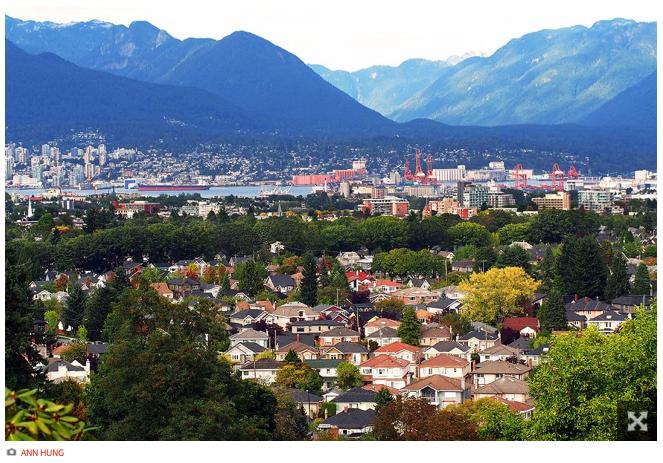
    Originally published in the Georgia Straight, Photo Ann Hung