Tag: URBANISM

  • Molson Brewery site allows plenty of development opportunities

    Molson Brewery site allows plenty of development opportunities

    Love ‘em or hate ‘em, Concord Pacific has had a pretty profound impact on our city. In just thirty years, the Li-Ka Shing founded company has gone on to develop large scale master planned communities across the country, but their (ongoing) development of the old Expo 86 site on north False Creek has been nothing short of transformative for our city and region.

    That’s why the incredulity that greeted last week’s announcement that residential-build-focused Concord paid over three times the assessed value for the protected industrially-zoned Molson Brewery site at the southeast end of the Burrard Bridge needs a bit of circumspection. You don’t get to be one of BC’s largest new home developers by making cavalier and reckless business moves, so at the request of Vancouver Green councillor Adriane Carr, I looked a little deeper.

    First, let’s get the idea of influence-for-donations out of the way. Yes, as Alan Garr reports Concord have donated a lot to the ruling Vision Vancouver council over successive elections (over $100,000 if you consider the donations of Concord Pacific and subsidiaries over the last two campaign periods). But Concord’s purchase is not predicated by some notion of nefarious influence peddling that will guarantee a rezoning, in fact their investment is quite sound, based on existing but obscure planning policies already on the books.

    When Vision councillor Geoff Meggs suggests the Concord proposal “is a big hill to climb and I am skeptical that council will climb that hill with them.” I would counter that hill is the proverbial molehill not a mountain, though it likely won’t be a climb made during this term. Indeed, as councillor Meggs is still stickhandling the removal of the Viaducts and negotiations with residents and senior government to actualize the last of Concord’s vision for North East False Creek, I’m guessing the idea of a new big and potentially controversial Concord project would be as welcome as a root canal.

    The notion that the Molson site is protected as industrial land references local zoning, but also Metro Vancouver’s 2013 Regional Context Statement. The Regional Context strategy aims to preserve Metro’s dwindling supply of industrial land, and would require a ⅔ vote of GVRD directors to amend, as most commentary on this deal have aleady alluded. Page 28 of the statement, item 6 specifically references the exclusion of residential development in industrial zones, but with ONE exception — a specific planning district, referenced in the City’s Burrard Slopes IC District Rezoning Policy (2010).

    The Burrard Slopes District, unsurprisingly includes the Molson property and Seaforth Armory — it’s that area just east of Burrard and north of Fourth. The policy precludes stand-alone residential development or any residential within 25’ of the bridge ramps, but allows mixed use development including things like artist live-work and residential development on top of light industrial. Interestingly, the policy specifically precludes non-market housing as a requirement (though will offer bonus density for non-market development). The policy further mandates that floor space for residential use must equal industrial use.

    The idea of building on top of industrial isn’t too far fetched, in fact it was one of 12 More Affordable Housing Ideas presented at a recent SFU lecture by planner/developer Michael Geller. Throughout North America, increased urbanization is seeing the confluence of mixed use residential-commercial-industrial development. Now, with high-tech as Vancouver’s fastest-growing industry, the city is grappling with the question of what industrial zoning is on a fundamental level. Light industry is increasingly the hum of the computers not the din of the factory floor, and manufacturing software or games is eclipsing the tool and die makers of yesterday.Referencing the 2015 City of Vancouver’s Zoning Map, we can see that Concord’s recent three hectare purchase is zoned for M-2 industrial (it might be helpful to understand the prefixes used: M- is industrial, and I-, IC- is light industrial). Most experts agree the reality is that no major M-2 zoned industrial operation would feasibly take over a site which no longer has access to the CPR rail line (recently sold to the City as part of the Arbutus Corridor deal) in a central-city site in a city plagued with housing affordability issues. The rezoning of the M- industrial site to a light industrial IC- site would be a Vancouver City Council decision and wouldn’t have to trigger a GVRD vote as it still falls within the Regional Context outlined permissions and protections for “a wide range of industrial uses (from light to heavy industrial) and associated accessory uses”.

    The current lease agreement with Concord Pacific will see Molson continue operations on the site until 2018, so any decision on the future of the site likely won’t be presented before city council until after the next civic election. Concord have issued a statement indicating they are planning a mixed-use development and intend to work with the community, city and region on their plans for the site. There’s a tremendous opportunity with this particular site to build a vibrant and green mixed use community supportive of industry, the arts, and affordable housing — so let’s start thinking about what we want to see now, and ensure the conversation about that future is transparent and accurate.
  • Tis the season to shop local

    Tis the season to shop local

    The holiday season is well upon us, and this weekend marks “Super Saturday”—the busiest shopping day of the year and the last Saturday (December 19) before Christmas.

    If you’re like me and leave gift shopping to the last minute, the thought of a crowded mall on the weekend before Christmas is enough to make your skin crawl. Thankfully, I don’t even have to leave East Van, let alone venture into a mall (okay, maybe Kingsgate Mall), and my last-minute shopping is way more impactful because I buy local.

    The early shopping I did manage this year was thanks to a variety of art and craft markets; the East Side Culture Crawl, pop-up events at Britannia and Strathcona Community Centres, a craft market/pub at the Lido on Broadway, and the annual Western Front fundraiser and craft fair TOQUE.

    Even if you missed the fairs, here in the East End, we have an abundance of shopping high streets with bricks-and-mortar opportunities to put shop local into practice. Between Gastown, Chinatown, the Drive, and Mount Pleasant, you’re sure to find something for somebody at one of many locally owned independent businesses. Then there are the emerging micro-shopping districts along Fraser Street, Kingsway, and the 600-800 blocks of East Hastings anchored by the Heatley Block. With two brothers in town, I’ll no doubt be doing a lot of my shopping in our local “Yeast Van” brewery district. 

    Buying local is about more than just convenience and mall-o-phobia though. Small business in B.C. accounts for 33 percent of the province’s GDP, and we lead the nation in small businesses per capita. Province-wide, small businesses employ over one million British Columbians—more than half of all private-sector jobs.

    Best of all, buying local recirculates your money into the regional economy and helps to build strong communities. According to LOCO BC, every $100 you spend at a local business returns $46 to the local economy; more than two-and-a-half times the positive community impact as buying from a chain store.

    This holiday season, the average Canadian consumer will spend about $1,500 on food, alcohol, gifts, and travel—shifting even one percent of that purchasing power to local independent businesses multiplies community wealth and jobs. Big picture province-wide: a one percent increase in annual B.C. consumer spending would create 3,100 jobs and $94 million in annual wages. 

    That community economic development extends beyond the cash register as it often supports other local suppliers and businesses like legal, financial, and marketing services. (Full disclosure: I’m a local small business-owner, and for the better part of 30 years my bread and butter has been providing design and marketing services to local arts groups, non-profits, and businesses including some of East Van’s best-loved brands.)

    Local businesses are often incubators for innovation, as Vancouver’s many successful tech, retail, and food startups will attest. From catering and beer production to goods manufacturing to farmers’ markets, not only does your local purchase strengthen community through good jobs, support for local charities, and contributing to our tax base, but buying local also means reduced transportation costs, reducing our carbon footprint and helping Vancouver lead the way as the Greenest City.

    So this Christmas, I’ll be supporting my neighbours by buying local gifts and hopefully enjoying a little down time with a good B.C. book, and maybe an East Van distilled spirit with my locally roasted coffee. 

    Happy and safe holidays to all.

    Originally published in the Georgia Straight

  • Pete Fry: A better city together — One community at a time and with a little help from our neighbours to the south

    Pete Fry: A better city together — One community at a time and with a little help from our neighbours to the south

    What is community engagement? Let’s start with what it is not. It’s not random selections of citizens taking direction from the top; it’s not sticky notes and roundtables to record and ignore. Community engagement is an opportunity to involve citizens meaningfully in the decisions that affect their lives.

    See more at:
    http://www.straight.com/news/761236/pete-fry-better-city-together

  • Viaducts removal and Vancouver’s eastern expansion

    Viaducts removal and Vancouver’s eastern expansion

    Thursday October 27, a milestone in a several year personal and community struggle was achieved.

    Vancouver City Council approved an amended staff report to remove the viaducts in principal, with the inclusion of a serious commitment to immediate downgrading of Prior Street and a new east-west arterial, as well as meaningfully honouring of Hogan’s Alley and the black community displaced from there. — Still there is more work to be done, in particular regarding development and affordable housing, delivery of Creekside Park and the management of traffic in NE False Creek.

    Earlier, I wrote the following op-ed:

    This week, Vancouver City Council is expected to vote on removing the Georgia and Dunsmuir viaducts—although as many City Hall watchers suggest: It is already a done deal. The proposal to remove the viaducts has been an ongoing issue for several years now; one that has piqued concern and activism in neighbouring communities.

    As many of us have been advocating for years: if we are going to remove the viaducts, let’s do it right.

    (*Full disclosure: my political genesis was viaducts removal. After losing a close friend and neighbour to unsafe Prior Street traffic conditions, I’ve been advocating for safety improvements east of Main to be included in the viaducts planning.)

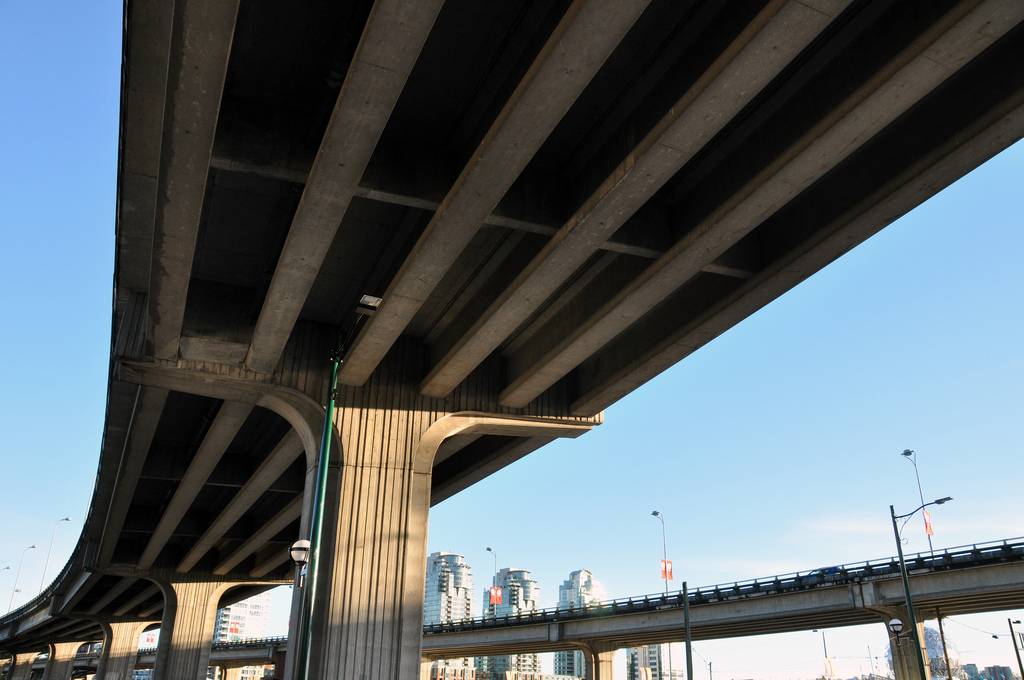
    The removal of the viaducts is supposed to open up some 2.5 million square feet of residential and commercial development, provide new green space, and add thousands of new residents. More importantly, the development of Northeast False Creek is key to the eastward migration of Downtown Vancouver—an inevitability that urbanists and realtors have been describing for decades. 

    At his 2015 Urban Development Institute address, Vancouver’s pre-eminent real estate marketer Bob Rennie described “big game changers” that will trigger the movement of the city centre east. Bold moves like the relocation of St. Paul’s Hospital to the False Creek Flats, and the removal of the viaducts are two of those game changers. But in any game changer, there are winners and losers. 

    The winners, of course, will be the developers and landowners who stand to immediately benefit from viaducts removal. Concord Pacific who own and will develop much of that land; the Crown Corporation PavCo and the City itself have significant holdings that will open up; and Ian Gillespie’s district energy company has inked a deal with the City to provide heat for all new development in the area. 

    Optimistically, Vancouverites could be big winners if this project is done right—but the losers might well be the most vulnerable in our population, particularly as development puts the squeeze on housing affordability and new road networks bring more traffic.

    Here are some caveats I outlined before council at first reading of the city staff report on October 21.

    First, the City must commit to traffic management east of Main Street as part of the viaducts’ removal.

    One of the biggest concerns expressed by commuters and businesses is that viaducts removal will exacerbate congestion. According to the report, however, the proposed viaducts replacement road—a new at-grade “grand boulevard”—will accommodate viaducts and existing Pacific and Expo traffic streams, while actually increasing road capacity.

    The City’s report offers no commitment to address that traffic flow beyond Northeast False Creek, however. To the east: the communities of Strathcona, Grandview–Woodland, the Downtown Eastside, and Chinatown lack the road infrastructure to accommodate the traffic from the new post-viaducts street network and millions of square feet of new development. 

    As the plan currently outlines, the new Pacific Boulevard will connect to Prior Street. Prior, a narrow neighbourhood street without the setbacks and width expected of an arterial road, is the unfortunate legacy of the proposed freeway system that citizens managed to stop in the 1970s.

    An In-Service Road Safety Review of Prior and Venables (prepared for the City in September by Urban Systems and Morr Transportation Consulting) concedes: “the collisions occurring along Prior Street are involving a higher number of vulnerable road users than other comparable corridors and are potentially more severe.” 

    Of course, locals recognize the inherent danger for vulnerable road users outlined in the road safety review, and seemingly everyone knows someone who has been touched by reckless commuters racing through our neighbourhood. In Strathcona, parents won’t allow children to cross the busy street to the park as unsafe speeds and the running of red lights are all too common; in Grandview–Woodland, the same sort of situation manifests itself along Victoria Drive north of First.

    The report before council does acknowledge the need to secure a new east-west arterial route, but defers that to an indeterminate plan to be considered in 2016 and contingent on securing senior government funding. In the meantime, uncertainty over the how or where of a new arterial is cause for concern among residents and businesses. We ask that the wording of the report reflect that those details be established before the viaducts are removed. 

    Second, delivery of affordable and social housing must be guaranteed. 

    Proponents of viaducts removal point to this as a great opportunity to build affordable housing, and indeed it could be—but the delivery of social housing relies on a complicated shell game.

    Concord’s land development is contingent on former landowners (the province of B.C.) removing contaminated soil. In turn, if the City of Vancouver awards significant and sufficient densities to developers Concord, some degree of profit will be shared with the Province, which the City hopes will be directed to social housing.

    If you aren’t confused yet, consider that profits will have to factor in the Developer Cost Levies and Community Amenity Contributions (CACs); the latter, paid by the developers, is negotiated behind closed doors and will be expected to help cover the cost of viaducts removal, parks, seawall, and a new road network.

    At a recent SFU City Conversations on the subject, noted urban planner Lance Berelowitz questioned whether the math could work to deliver all the promises via CACs. One thing is for sure: if we are to extract maximum public benefit, these as-yet-to-happen negotiations need to be transparent.

    Among the parcels for redevelopment, city-owned land is being considered for sale in order to finance viaducts removal and housing. The city has previously shown leadership in advocating for a housing land trust—and these locations would be a wonderful opportunity to build leasehold public housing on city-owned land.

    On the blocks flanking Main Street in particular, the City could further honour the black community of Hogan’s Alley who were displaced to make way for the viaducts, by embracing the idea of retaining public ownership of the land rather than selling it to the highest bidder. 

    The future of the viaducts land, St. Paul’s Hospital, and the Flats, together with development in Chinatown and the Downtown Eastside, are putting extraordinary pressure on housing. We need to advocate at all three levels of government to ensure that we are protecting residents from displacement and be much more proactive in the building of affordable and social housing. 

    The city knows they cannot build this housing alone, and the staff report details the negotiations that must happen with senior governments. However, the City must ensure that their plan includes real and achievable targets in writing, along with a meaningful commitment to delivering affordable housing, lest we end up with more Olympic Village-style broken promises. 

    If we do it right: with comprehensive traffic management for the East End and a commitment to social and affordable housing; honouring the displacement of the black community at Hogan’s Alley and the diversity and struggle of the area’s low income community; and delivering existing residents their overdue and long-promised Creekside Park; viaducts removal could be a great opportunity for our City. 

    If we do it right.

    Originally published in the Georgia Straight

    Photo by Stephen Hui

  • We must save Vancouver Community College and public adult education

    We must save Vancouver Community College and public adult education

    Like many Vancouverites, I owe a sincere debt of gratitude to VCC.

    I wrote my first lines of HTML code in a VCC classroom, allowing me to upgrade from print-focused graphics to remain successfully self-employed and engaged in newly emerging world of web design. During my lean years, the meat and baked goods shops at the downtown campus—serving deep discounted butchery and bakery student works—kept me well fed when I couldn’t afford much else. My wife successfully transitioned into a productive career thanks to the affordable and specialized skills upgrading she received at VCC almost twenty years ago.

    I have dozens, probably dozens of dozens of friends who have built careers and lives thanks to job-ready instruction in everything from auto mechanics to hair styling, culinary arts to music production, and health sciences to graphic design. Of course there are also the core, less specialized offerings: high school equivalency programs and English as a second language that have helped to integrate new Canadians, and prepare people for advanced training and schooling. For many years, the downtown VCC campus was one of the first points of contact for new Canadians struggling with language and poverty barriers in the DTES.

    With over one hundred degree, certificate, and diploma courses and some 22,000 students annually, VCC boasts an astonishing success rate: 93 percent of students are employed on graduation. For fifty years, VCC have been providing affordable services and education right here in East Vancouver and the Downtown Eastside.

    Despite the value VCC provides though, quietly the B.C. Liberal government have been laying off staff, making drastic cuts to core funding, replacing the board of governors, and removing 70 percent of VCC’s ESL seats. We’ve already lost the free ESL and adult upgrading courses that have allowed many of our city’s most vulnerable populations to improve their lives and employment prospects.

    It’s no secret that under our current provincial government, public education is under attack. Nowhere is that more apparent than here in East Van—where provincial ministry enrollment demands threaten to close primary and secondary schools, and a strangled budget has already led to clawbacks and closures of VSB adult education and ESL programs.

    Provincially-funded VCC is the only community college in East Vancouver and between its downtown and Broadway campuses, 25 percent of their students are upgrading their language skills to better integrate with our labour market. The majority of VCC students are new Canadians, and fully three quarters are women.

    At one point VCC ran the largest ESL program in Western Canada—so perhaps it’s no coincidence that the growth of the lucrative and under-regulated private language school market has coincided with the reduction in funding for these same yet considerably more affordable or formerly free programs at VCC.

    The bleeding of VCC over the last year has included staff lay-offs, cuts to the operating budget, review of programs with a mind to cuts or closure, a freeze in capital budget programs, and rumours of selling off and redevelopment the Downtown Eastside location. On September 16, the Save Our VCC coalition launched an off-campus community outreach to inform Vancouverites of exactly what’s at stake for affordable and public adult education in East Van: the quiet death of a thousand cuts.

    It is critical that we provide surety and confidence for present and future students of this vital and venerable institution. Let’s move the conversation out of the backrooms and have a full open and transparent conversation about the future of Vancouver Community College.

    — Originally Published in The Georgia Straight