Tag: HOUSING

  • From Grenfell to Balmoral: The case for public housing

    From Grenfell to Balmoral: The case for public housing

    Twitter: @PtFryFacebookGoogle+LinkedInEmail Me

    From Grenfell to Balmoral: The case for public housing

    June 14, 2017

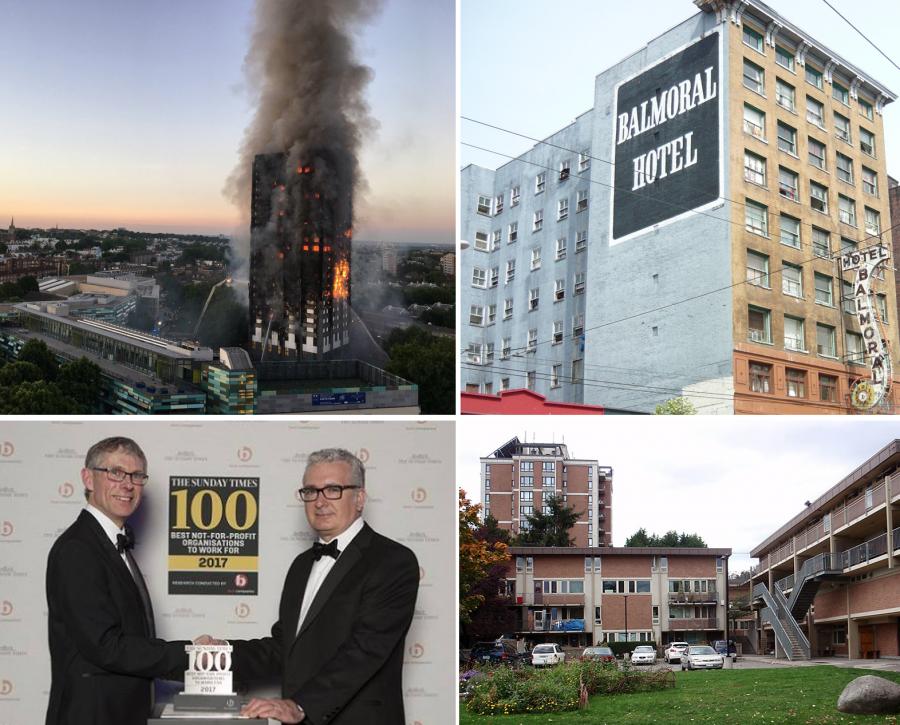
    As I post this, authorities are still determining the loss of life from the smouldering remnants of the 24-story Grenfell Tower in West London. Videos and images of the early morning towering inferno leave little doubt that the final tally of casualties and loss of life will be grim. Gut-wrenching stories of trapped residents, parents desperately trying to save their babies by dropping them from upper floors to rescuers below. This, the stuff of absolute nightmares.

    It’s too soon to guess the cause of the fire at Grenfell, but what we do know is that the residents of the building had been complaining for years about the appalling state of disrepair and dereliction of duty toward safety. Ultimately though, the cause of this tragedy is privatization of public housing.

    In November 2016, the residents’ led Grenfell Action Group wrote of dangerous living conditions and neglect of health and safety, warning ”that only a catastrophic event will expose the ineptitude and incompetence of our landlord, the KCTMO”. These resident complaints go back years, with another post from 2013 describing alarming evidence of serious negligence over several years… part of a history of negligence that in all likelihood stretches back to 2004 and beyond.”

    In the UK, Tenant Management Organizations (in this case the Kensington Chelsea TMO, an “arms-length” organization) are non-profit non-governmental groups tasked with managing public housing stock. These public private partnership arrangements are effectively managed like corporations and criticized as a neoliberal scheme to privatize public housing. In the case of Grenfell, tenants described KCTMO as an ”evil, unprincipled, mini-mafia” who routinely cut corners on safety in order to save money.

    The trend towards privatization of public housing should sound familiar — these kind of neoliberal housing schemes are happening throughout the industrialized world. Here in Vancouver in 2014 we saw the privatization of two significant BC Housing projects: the Nicholson Towers (West End) and Stamps Place (Strathcona) under what’s referred to as the “Asset Transfer Program”. These substantially large tax-payer built housing projects are now owned by not-for profit organizations, underwritten by the province, and purchased at bargain prices. Rents are paid to the new owners with subsidies and social services, and those revenues help underwrite the non-profits’ operations. The scheme conveniently avoids any rent controls though, and being dependent on subsidies these units can eventually shift from social housing to (more expensive) affordable market housing, at the whim of government austerity measures.

    In a similar vein, we have SROs like the Balmoral. Privately owned and managed, rent on these SROs are also paid by provincially-funded subsidies and social services. In many cases, land owners’ profit comes at the expense of safety, cleanliness, livability and basic amenities (like elevators, garbage-free stairwells, and functioning bathrooms). As we have seen from the recent Balmoral debacle (which captured Vancouverites attention when it was evacuated, at the point of collapse after years of neglect) for over a decade the city turned a blind eye to legally mandated Standards of Maintenance. The city sanctioned SRO (single room occupant) designation allows for small size units without bathroom or kitchen. SRO designation is not tied to any specific amount of rent, so if the $375 per month social assistance housing allowance is no longer profitable, the buildings are sold and renovated into budget “micro-lofts”.

    The Grenfell fire is a tragic reminder that in too many cases of badly neglected low income and public housing —it’s not a matter of if, but of when— the building will become a risk to life and security of person. As groups like DTES SRO Collaborative have been warning, the Balmoral is not especially unique among the coterie of privately-owned, decrepit and unsafe SRO buildings. The policy-driven drift toward further privatization of public housing in BC should be cause for concern.

    With some notable exceptions (like Vienna, Austria) the industrialized world’s trend toward privatization of public housing has been been steady increasing since the 1990’s. Public Housing is being sold off. The foundational idea that housing is a fundamental human right and a responsibility of the state has been supplanted by the the need to cream profits for insatiable corporate greed —the essence of neoliberalism.

    This tragedy is not just happening 7500 kilometers away, the seeds of this kind of public housing dereliction are planted and growing here too. We see it in the legions of homeless on our streets, or the appalling photos of structural neglect in the Balmoral. As the horrific reality of the Grenfell fire unfolds and grief turns to outrage, let it spur us to action. Write your MLA and MP.

    Call upon the new BCNDP-Green supported government to make good on their promise and expedite the building of new social housing.


    Call on federal government to make building public housing part of their new Poverty Reduction plan.


    Call on city government to unlock land potential for new housing and to strengthen inclusionary zoning on new developments to include truly affordable housing.

    Call on all three levels of government to keep public housing in the public’s hands.
    For our neighbours. For the Balmoral. For Grenfell.
  • Will the winds of political change bring a breath of fresh air for Chinatown?

    Will the winds of political change bring a breath of fresh air for Chinatown?

    As news broke Monday of the historic NDP-Green deal to form a progressive government for our province, I was waiting at City Hall, one of hundreds of speakers over four days testifying before city council in defense of Chinatown.

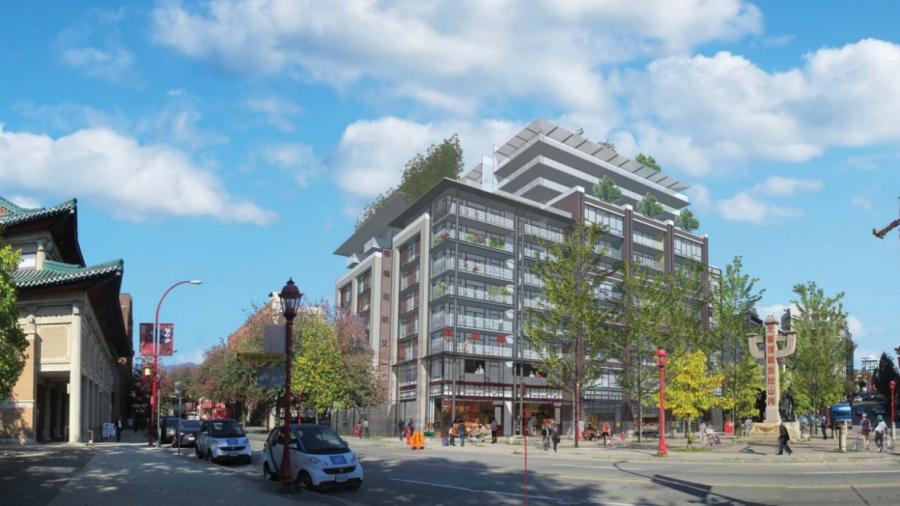
    I had managed to steal away from work to attend and speak on the final day of public hearings over the proposed 12 story, 150′ frontage Beedie condo development at 105 Keefer. I’m glad I attended in person, the mood was electrifying and inspiring; the gallery and chambers packed with advocates and activists.

    At issue: the re-zoning proposal for a new large scale condo development in the fragile heritage neighbourhood. This latest in a series of rejected applications by Beedie Developments for the block next to the Chinese Classical Gardens and Cultural Centre has been met by resistance every step of the way.

    Chinatown advocates are right to be concerned; after years of neglect, recent big block condo developments in the name of renewal have radically transformed the neighbourhood.

    So far, similar large scale new developments may have succeeded in bringing new businesses, residents, and short term vacation rentals to the area, but at a cost: the displacement of low income seniors, affordable residences and businesses, and the continued erosion of Chinatown’s character and heritage.

    On day one of the public hearings, respected neighbourhood activist Shirley Chan lamented that over the last several years, the development decisions by council were not –as purported– saving Chinatown, but in fact they were replacing Chinatown.

    There is a real irony then, that those same development decisions replacing Chinatown may have succeeded in saving Chinatown after all. Opposition to the project has succeeded in rekindling that most intangible aspect of heritage: it has built real community.

    A Chinatown Renaissance

    The opposition to this development proposal has managed to bring together young people, old people; heritage advocates and housing activists; small businesses and historic clan associations; multi-generational Canadians with deep roots and recent immigrants contextualizing their own sense of belonging in our city. The opposition to this project has brought about something of Chinatown renaissance, and ignited a passion to save the neighbourhood.

    A new generation of bright, articulate, and inspired Chinese-Canadian youth and allies have taken up the mantle of the 1970’s freeway fighters: organizing and advocating, working with Chinatown seniors and quite literally breathing new life into the neighbourhood. The same neighbourhood that the city council majority and real estate interests had decided was in need of replacement, underperforming and moribund.

    If there were any grounds of justification for council to still approve this rezoning it wouldn’t be for revitalization, but for public benefits. The provision of truly affordable housing as a public benefit condition of the various recent big block condo developments in Chinatown so far has been pretty minimal: in the low double digits as far as actual numbers of units.

    This most recent application for rezoning to accommodate the Beedie Group’s new 12 story condo building at 105 Keefer offered little by way of public benefits: 25 units of senior’s rental housing; only 8 of which would be at pension rate, and paid for by BC taxpayers. The proposal was also to include a cultural amenity space at “below market rate” (which by definition is not necessarily affordable or accessible).

    As most of the opponents agreed, the public benefits fell well short of what the community needs; and the building came at a significant cost to the neighbourhood, it’s too big, and in the wrong place.

    Big Commitments, Big Changes

    On Monday, as we waited to speak before council, the breaking news that a Green-NDP deal had been struck just moments earlier presented a literal last minute game-changer. Among other things, both parties have committed to increase the supply of affordable housing.

    That new provincial mandate will likely mean that begging for developers’ table scraps will no longer be the only route to securing housing for our society’s most vulnerable. Selling out Chinatown in exchange for barely-there public benefits would be tough to justify especially for city councillors going into a 2018 municipal election, and especially those who might be reliant on campaign financing from big developers.

    Thanks to the NDP-Green commitment to ban big money political contributions, the premise of developer donor influence will likely have waned by the next municipal election. As critics have pointed out: over the 11 months of the 2014 civic election reporting period, Beedie Group and their VP Rafii Houta are listed at having contributed at least $65,000 to council majority Vision Vancouver. A number of the proponents who spoke in favor of this development were also high profile Vision donors and fundraisers.

    City Council will make a decision on the 105 Keefer on June 13. Those extraordinary record-breaking four days of public hearings have bought councillors a little extra time to see not only the extent of public opposition to this project in support of Chinatown, but also how the political landscape is changing.

  • New Seattle Tiny Home Project: affordable homelessness solutions?

    New Seattle Tiny Home Project: affordable homelessness solutions?

    I don’t want to knock the City of Vancouver’s recent work to build modular mobile housing for people at risk of homelessness — but this article illustrates how we might have missed the mark with that particular project.

    Vancouver’s units —proper mobile homes, prebuilt in the Okanagan— to be assembled at Main and Terminal and opened in a few months each cost $87,500 (40 units at $3.5m. In Seattle, these tiny house villages are being built at a cost of $2,200 each, employing volunteer labour and goodwill.

    Seattle’s is a model similar to Portland’s Dignity Village, which I visited in 2014 and advocated for as a possible solution here. Volunteer labour and faith based groups played a huge role in helping to build these temporary intentional communities, and the results were profound: once they had temporary housing, the average resident was able to find stable permanent housing within 6 months.

    I still feel strongly that this is a solution that we can make work here, we have the people and resources, and an amazing tiny house building community that could help steward such a process.

    Another great example from Seattle!

    http://www.capitolhillseattle.com/2016/12/as-seattle-plans-new-tiny-house-encampments-village-marks-first-year-in-the-central-district/

  • Progressive forward-thinking transit oriented development.

    Progressive forward-thinking transit oriented development.

    Here in Greater Vancouver, transit oriented development is not seen as a driver of building of affordable housing, in fact it’s been quite the opposite: In Burnaby we are seeing wholesale demovictions of communities with affordable housing bulldozed to make room for new less affordable towers, In Vancouver, where T.O.D has been employed (Marine Drive and Oakridge) proposed developments offer an abysmal portion of affordable housing, but tremendous condo sales and presales.

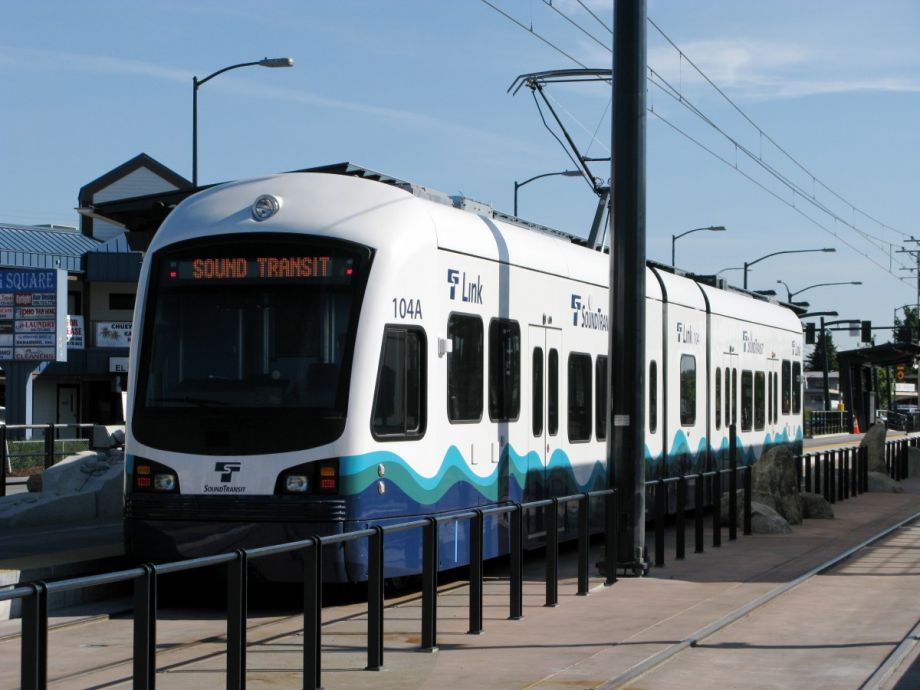
    Recognizing that lower incomed residents are most likely to benefit from access to rapid transit, Seattle is taking a different approach to T.O.D.: the Regional Equitable Development Initiative (REDI) Fund, providing low cost early financing to “pre-buy” lots in areas of proposed T.O.D., before the developers swarm in to build luxury. Here, of course this could be applied proactively to the Broadway corridor and Jericho Lands (though it is probably too late for Boradway/Commercial) — however, it would really require some zoning will on the part of the city. In the Seattle example any properties acquired using REDI funds will be required to provide minimum 25% housing for people below 50% of the median income as well as other targets.

    Of course, Seattle has a ward system, and strict campaign finance limits: so the influence of big developer money is not ingrained as it is here. There may not be the political will, and in our case may require some amending of the Vancouver Charter, but it’s something that should happen here.

    Original Article: https://nextcity.org/daily/entry/seattle-equitable-transit-oriented-development-loan-fund

  • License to Shill: Why aren’t there restrictions on licensing of realtors in Vancouver?

    License to Shill: Why aren’t there restrictions on licensing of realtors in Vancouver?

    The litany of lost opportunities to meaningfully address the housing crisis in our city is depressingly long, and given the role that the real estate industry can play in that equation — you might be surprised to learn that the City of Vancouver have absolutely no rules or regulations to govern the licensing of realtors doing business in the City of Vancouver.

    Wednesday morning (July 13) the Independent Advisory Group on Real Estate Licensee Conduct, in a presentation to City Hall reported on Conduct and Practices in the Real Estate Industry in British Columbia. The Advisory Group, mandated by the Real Estate Council of BC was there ostensibly to reassure City Councillors that something was being done on a provincial level about corruption and conduct in that industry.

    The practices of certain bad player realtors in our city have come under increasing scrutiny in recent months: from shady practices like shadow flipping and double ending, to serious allegations about ethics, transparency and discipline within the Real Estate Board of Greater Vancouver and even some realtors failing to comply with federal (FINTRAC) money laundering rules — but so far, City Council hasn’t taken any action.

    Three term Vision Vancouver Councillor Kerry Jang even had the temerity / lack of self-awareness to ask “what took you so long?” of the industry regulators’ failure to address the housing crisis, jokingly asking if they “were having too good a time making too much money” (I think somewhere in the audience I heard the echo of a sad trombone).

    Some might argue that the licensing of realtors is already mandated and regulated by the provincial government, and that’s true. In the wake of reports of egregious and unfettered realtor practices, the provincial government recently acted decisively (if not belatedly) to end the controversial practice of real estate industry self regulation. But the recently streamlined process for acquiring a license to do business in the City of Vancouver doesn’t now, nor has it ever placed any restrictions or regulation on realtors operating in our city.

    Provincial and federal legislation and jurisdictional overlaps aren’t otherwise precluded from existing City of Vancouver licensing though. In fact, the City has a number of business licensing bylaws that overlap with pre-existent senior government legislation, addressing specific industry sectors under a mandate that includes “protecting vulnerable populations”. It’s not a stretch to suggest the housing crisis in our city has created a significantly vulnerable population — so why is the city failing to enact suitable protection methods?

    A review of City’s License Bylaw (4450), details a number of definitions, conditions, prescriptions, and restrictions to getting a business license. Want to open a cheque-cashing business? Despite robust federal legislation and industry self-regulation, there’s a bylaw for that. Want to open a business that serves alcohol? Despite readily enforcable provincial laws, there are dozens of conditions outlined in the bylaw including “responsible serving practices… [per] provincial operating regulations”. Open a compassion club? There are over thirty different articulated conditions, despite pre-existing federal law and industry self-regulation.

    Contractors, recyclers, bowling alleys, dating services, pet stores, bike couriers, vapour-lounges: each have conditions and restrictions on doing business in our city — but there is nothing for realtors. At Wednesday’s presentation a number of city councillors expressed concerns about residents, seniors in particular being duped by unsolicited high pressure realtor sales tactics — while city business licensing bylaws prohibit contractors and peddlers from such practices, there is no bylaw for realtors.

    The realtor business is booming: the Real Estate Board of Greater Vancouver reports an all time high with 12,200 registered realtors. Licensing couldn’t be easier: $1300 and an online course is all it takes, companies like New Coast Realty will generously offer pre-training and a bursary to cover the cost. It should be noted that New Coast are also notorious for ethically dubious training, along with a lack of FINTRAC compliance, double-ending and shadow flipping.

    Given the impact of housing unaffordability, it is not enough that the city rely on industry self-regulation, toothless legislation, and as yet undelivered provincial oversight. Under their mandate to regulate the licensing of business, trade, professions, and other occupations with the City of Vancouver – licensing should at the very least be regulating the practices of realtors in our city, it’s shamefully long overdue.