Tag: URBANISM

  • No Tower on the Drive? More fallout on the BOFFO-Kettle deal

    No Tower on the Drive? More fallout on the BOFFO-Kettle deal

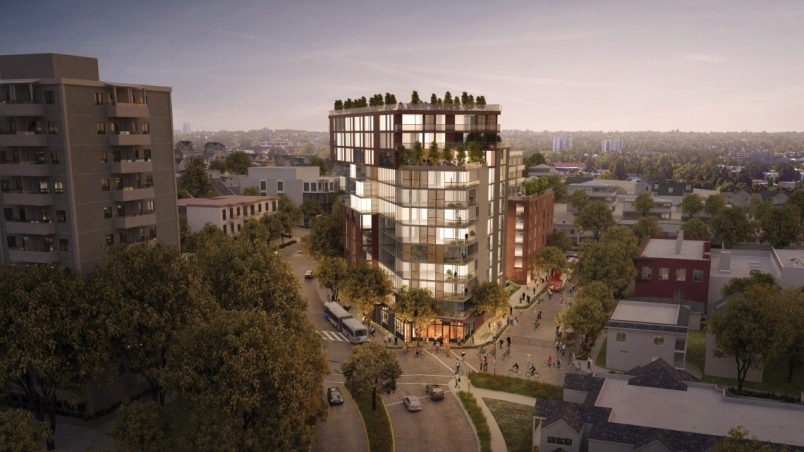
    Fallout over the BOFFO-Kettle deal that would have seen a new drop-in and supportive housing along with close to 200 market condos built atop an assembled parcel of private and public owned land and Commercial and Venables.

    As I commented to the Sun reporter yesterday and on Twitter as the story broke – it’s impossible to have an informed opinion on this issue because there is absolutely no transparency. Indeed, as close to half the property in question here is owned by the taxpayers, there should be an onus for even MORE clarity when it comes to negotiating Community Amenity Contributions. There isn’t.

    CACs are negotiated ad hoc, on a case-by-case basis between staff and developers. There is no public scrutiny, nor is there any predictability – this builds an air of frustration and distrust for both developers and the public. Where millions of dollars of public benefits are at stake, and where over the course of ten years of unfettered majority rule, Vision Vancouver have net millions of dollars in developer donations (just as the NPA did before them) it’s high time we took a closer look at how these benefits are calculated and for whom.

    In the case of the BOFFO-Kettle project, a conflux of issues: neighbourhood opposition to the height, scale and context of the project, with the developer on one side claiming the city has demanded too much public benefit to make the project viable, on the other side the city claiming the developer hasn’t even submitted an application and their asks are quite reasonable.

    Was the city being reasonable? Did BOFFO bail because of neighbourhood resistance, sunk costs, a softening speculative and offshore condo market, greener pastures and smoother sailing next door in Burnaby? — of course, we the public will never know what is really going on because the details of the CAC ask aren’t public.

    Mayoral candidate and UBC urban planning prof Patrick Condon once called CACs and spot zoning the soft spot for corruption. He’s right: let’s open it up and have honest good faith negotiations, we have a (moral) right to know what we are trading in public benefits for private profits.

    Postscript:  Interview and story here: http://vancouversun.com/news/local-news/scrutiny-over-how-development-fe…

  • On transparency and the Kettle Boffo deal.

    On transparency and the Kettle Boffo deal.

    Some years ago I met w/ Daniel Boffo, over n’hood resistance to height/density and perception that inclusion of city land in project called to question net public benefits, notwithstanding Kettle contributions.

    I suggested that the best solution might be to open the books, show people the pro formas ie. the numbers that make the project work vis a vis public land and public benefits involved.

    He was incredulous (paraphrase) “Why would I let people see my profits?”

    And therein lies problem.
    Transparency must factor in negotiated public benefits. Community Amenity Contributions (CACs) are negotiated in secret between developers and city staff (though some allege political/campaign finance influence too).
    We need to reform CAC process.

    Meanwhile:
    Boffo/Kettle claims CAC ask is too high. City claims there’s a $12m grant on the table yet a rezoning application hasn’t even been filed. In absence of transparency one can only guess real story:
    CACs? Spec-tax softened condo market? Sunk costs? Political change?

    Postscript: Originally published on Twitter

  • On Zoning.

    On Zoning.

    During this recent by-election, I really focused on what the city can actually do — within their mandated and legal role.

    Zoning and land-use decisions are the big tools at the city’s disposal. The outrageous land valuation increase detailed in this article is a direct result of the city’s changes to permissible building height and scale — and it’s what is driving a rush on speculation as well as replacement and displacement of actually affordable housing in the West End.

    Until we’ve forced a conversation with the province about reforming BC Assessment, land value tax reform, and new ideas like progressive property taxation and split assessments: considerate and nuanced zoning is the ONLY real tool the city has at its disposal, so we need to do it right.

    In the specific case of the First Baptist: public service and charitable work notwithstanding, they had been operating a commercial parking lot under a residential classification up until now. In fairness, for them to qualify for assessment averaging they should also pay retroactive commercial taxes on their for-pay parking lot. The other option available to them should be some form of tax deferral, that can be paid by the significant revenues expected for Ian Gillespie’s Westbank luxury condo tower approved for that site.

    Hard to guess why previous cases were voted against without seeing records — but the property tax assessment structure is pretty wonky, so until the various deficiencies are addressed at a provincial (read Vancouver Charter) level, the “law is the law”.. there’s a good explanatory graphic attached here (from the mentioned report). I would suggest the obvious route of appeal here should actually be with BC Assessment and the sudden change in tax class.

    Though in this particular case if they have been getting a tax holiday with taxes applied on a residential class on what should have been a commercial classed operation, so unless First Baptist were willing to pay back all the taxes they had dodged on their commercial parking lot I would agree hands are tied as far as tax redress.

    Postscript: 

    Commenting on Original Article
    http://vancouversun.com/news/local-news/fumano-churchs-3100-per-cent-tax-hike-highlights-absurdity-of-vancouver-system-expert-says

  • Voting Vision is more of the same and voting NPA could block key budget votes

    Voting Vision is more of the same and voting NPA could block key budget votes

    The best part of political campaigns is meeting people and reconnecting with our city’s neighbourhoods.

    But it’s bittersweet.

    I grew up here, I love Vancouver. But I feel sad and ashamed at what our city is becoming. Too many folk are being pushed out. People are living on the street. Increasingly our city is becoming more about speculative investment and less about people who live and work here.

    This Saturday’s by-election gives Vancouver voters the choice between several different candidates, but it’s also setting the stage for the coming general election in 2018 to elect a whole new mayor and council. Electing me as a second Green councillor means we can broaden the conversation at Vancouver City Hall, introduce motions, and force public debate in this crucial run up to the 2018 election.

    Greens are the only elected party that don’t take donations from the developer industry. Where the primary function of city council is to determine land use, we consider it unethical to take financial contributions from the very people who benefit the most from those decisions. The decisions we make about land use and their bearing on affordability are too important to allow the market to direct. Transparency, good governance, and public interest must be at the forefront of the response to our housing crisis.

    I’ll fight for our city, using the tools available to our city council. I’ve made it a priority in this election to focus on actions our city council—not senior government—can take to more aggressively address housing affordability in our city. We’ve had 10 years of promises that always seem to rely on senior levels of government. We need to focus on what city council can achieve, while also advocating for the policies our city needs to see from senior government to solve our housing crisis.

    I’ve mapped out five quick-starts our city council can take right away to address our city’s housing crisis: fixing the definition of “affordable housing” to local incomes; a moratorium on demolition of purpose built rentals; easing the red tape on legalizing and protecting affordable secondary suites; a dedicated renter’s office and strengthening of the tenant relocation and protection bylaw; and kick-starting a co-creative city plan to determine how and where we can add affordable density for the people who live and work here.

    In 2014, as a community advocate and organizer, I ran for city council because I was frustrated by Vancouver’s top-down approach to city building that disempowered the people who live and work here. I was frustrated by issues around homelessness and housing affordability, good governance and transparency, and the struggles of our small business and arts communities. Although I came close but didn’t get elected to council—I’ve kept at it, working on those same issues with my community and neighbours in the East End and citywide.

    Today in 2017, those same issues I championed in 2014 are even more crucial. Additionally, Adriane Carr has put the call out to have me join her on city council, because increasingly, as the lone Green and non-developer-backed city councillor, she faces challenges in having many of her motions seconded. A number of her motions, on matters like tying the definition of affordability to actual local incomes rather than the market, are watered down, changed, or ultimately scuttled by other parties before they can even see the light of day.

    Electing me to join her as a second Green means I can second her motions and she can second mine. This way we can bring important policy ideas out into the open and move council to address the challenges we face in a way that puts public interest, not private interests, first.

    Electing Vision is more of the same. Electing the NPA risks having them block key budget votes and increasingly polarize council in advance of our upcoming general civic election next year. Other candidates, while well-intentioned, may be getting lots of attention but are promising policies that under our legal jurisdiction can only be delivered by senior governments.

    The most strategic choice and most effective vote in this by-election to to elect me to join Adriane Carr to bring real transparency and accountability to city hall. This is the best move for our city both in the immediate term and in preparation for the general civic election in October 2018.

    This Saturday, please vote for me to join Green Councillor Adriane Carr for a real alternative at Vancouver City Hall.

    Pete Fry is the Green candidate in the Vancouver council by-election on Saturday (October 14).

    https://www.straight.com/news/980971/pete-fry-voting-vision-more-same-an…

  • One-bedroom apartment listings in Vancouver now firmly stand at $2,000 a month

    One-bedroom apartment listings in Vancouver now firmly stand at $2,000 a month

    “The biggest issue is what, as a city, we can do for renters,” said Pete Fry…

    “When I say, ‘increase supply’, I know it immediately triggers that Vision Vancouver, NPA kind-of rhetoric,” he said. Fry clarified he’s not arguing in favour of a blank cheque for condo developers to build anything they want.

    “What we need to do is actually slow the kind of supply that we don’t need and really incentivising the kind of supply that we do need,” he explained. “That is a power that we have at the city level, through the approval and rejection of discretionary rezonings and that sort of thing.”

    Read full article: https://www.straight.com/news/977871/one-bedroom-apartment-listings-vanc…