Tag: URBANISM

  • Thoughts on VAHA’s new micro-suite development

    Thoughts on VAHA’s new micro-suite development

    Thoughts on new micro-suite development on 100 block West Pender by Vancouver’s Affordable Housing Agency.

    The conditions of this rezoning are consistent with how Vision Vancouver redefined “social housing” in their 2014 DTES Plan. For this proposed social housing project, only 30 of the 90 micro-suites will rent for under $1000/mo.

    I was on the citizen committee when we rejected the DTES Plan in 2014, primarily because in it was unlocking massive development potential in the area but wouldn’t deliver the necessary housing for the existing low income population (nor does inclusionary zoning elsewhere in the city).

    The 90 tiny units in the 10 story building will include 1/3 at shelter rate ($375-$605) one third at “just below market” (<$1650) and 1/3 at HILs (a BC Housing measure based average income and a federal affordability index, in this case about $1000*).

    When we (community) were working on the DTES Area Plan, we asked for more transparency about “proformas” —basically, the developer budget, cost to build, and profitability.

    At the time, that notion of more transparency around rezonings in the DTES was dismissed because developers didn’t want to daylight their business practices and profits.

    The Vancouver Affordable Housing Agency is an agent of the city, and accountable to the people of Vancouver. We should expect and demand more transparency of this development: show us the math, who are the developer partners, what are the costs here, what are the profits here?

    For what it’s worth though, I like the building scale and design. Its smart density, even the micro-suites (tiny as they are) are well designed and windowed. Twenty-five years ago I was living next door to this site and it was vacant then — so this development is LONG overdue, but is it the best we can do?

    * reference 2017 BC Housing HILs rates
    https://www.bchousing.org/publications/2017-Housing-Income-Limits-HILs.pdf
    ** reference Market Apartment rental rates 2017; bachelor min. $1650
    https://www.rentboard.ca/rentals/rental_rates.aspx?locid=1040

    original story: https://www.straight.com/news/932896/micro-suites-planned-city-vancouver…

  • Pete Fry: B.C. election could transform development picture, starting with 105 Keefer rezoning

    Pete Fry: B.C. election could transform development picture, starting with 105 Keefer rezoning

    Will the winds of political change bring a breath of fresh air for Chinatown?
    As news broke Monday of the historic NDP-Green deal to form a progressive government for our province, I was waiting at city hall, one of hundreds of speakers over four days testifying before city council in defence of Chinatown.

    I had managed to steal away from work to attend and speak on the final day of public hearings over the proposed Beedie condo development at 105 Keefer Street. I’m glad I attended in-person. The mood was electrifying and inspiring, the gallery and chambers packed with advocates and activists.

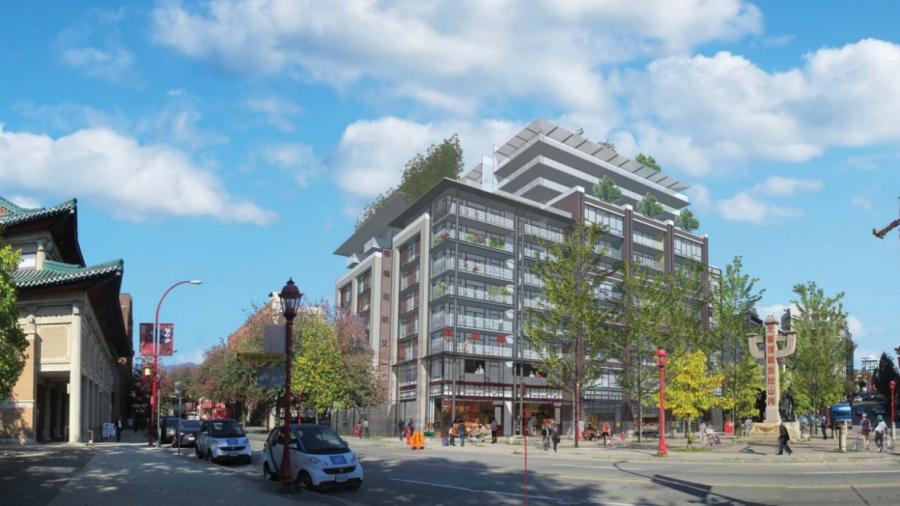
    At issue: the rezoning proposal for a new large-scale condo development in the fragile heritage neighbourhood. This latest in a series of rejected applications by Beedie Developments for the block next to the Chinese Classical Gardens and Cultural Centre has been met by resistance every step of the way.

    Chinatown advocates are right to be concerned; after years of neglect, recent big block condo developments in the name of renewal have radically transformed the neighbourhood.

    So far, similar large-scale new developments may have succeeded in bringing new businesses, residents, and short-term vacation rentals to the area, but at a cost: the displacement of low-income seniors, affordable residences and businesses, and the continued erosion of Chinatown’s character and heritage.

    On day one of the public hearings, respected neighbourhood activist Shirley Chan lamented that over the last several years, the development decisions by council were not—as purported—saving Chinatown, but in fact they were replacing Chinatown.

    There is a real irony then, that those same development decisions replacing Chinatown may have succeeded in saving Chinatown after all. Opposition to the project has succeeded in rekindling that most intangible aspect of heritage: it has built real community.

    A huge number of speakers appeared before city council to offer comments on an application for a 12-storey building at 105 Keefer Street.
    A huge number of speakers appeared before city council to offer comments on an application for a 12-storey building at 105 Keefer Street.
    The opposition to this development proposal has managed to bring together young people, old people, heritage advocates and housing activists, small businesses and historic clan associations, multigenerational Canadians with deep roots and recent immigrants contextualizing their own sense of belonging in our city. The opposition to this project has brought about something of a Chinatown renaissance, and ignited a passion to save the neighbourhood.

    A new generation of bright, articulate, and inspired Chinese-Canadian youth and allies have taken up the mantle of the 1970s freeway fighters—organizing and advocating, working with Chinatown seniors, and quite literally breathing new life into the neighbourhood. The same neighbourhood that the city council majority and real estate interests had decided was in need of replacement, underperforming and moribund.

    If there were any grounds of justification for council to still approve this rezoning it wouldn’t be for revitalization, but for public benefits. The provision of truly affordable housing as a public-benefit condition of the various recent big block condo developments in Chinatown so far has been pretty minimal: in the low double digits as far as actual numbers of units.

    This most recent application for rezoning to accommodate the Beedie Group’s new 12-story condo building at 105 Keefer Street offered little by way of public benefits: 25 units of seniors rental housing, only eight of which would be at pension rate, and paid for by B.C. taxpayers. The proposal was also to include a cultural amenity space at “below market rate” (which by definition is not necessarily affordable or accessible).

    As most of the opponents agreed, the public benefits fell well short of what the community needs, and the building came at a significant cost to the neighbourhood. It’s too big, and in the wrong place.

    As I went to speak before council Monday, the news that a Green-NDP deal had been struck just moments earlier presented a literal last minute game-changer. Among other things, both parties have committed to increase the supply of affordable housing.

    That will likely mean that begging for developers’ table scraps will no longer be the only route to securing housing for our society’s most vulnerable.

    With a new provincial mandate, the veritable knife through the heart of Chinatown in exchange for barely-there public benefits will seem a lot less attractive to city councillors going into a 2018 municipal election. Looking forward, any suggestion of developer-donor influence should be put to bed by the NDP-Green commitment to ban big money political contributions (over the 11 months of the 2014 civic election reporting period, Beedie Group and their VP Rafii Houta are listed at having contributed at least $65,000 to Vision Vancouver).

    City council will make a decision on the 105 Keefer application on June 13. Those extraordinary record-breaking four days of public hearings have bought councillors a little extra time to see not only the extent of public opposition to this project in support of Chinatown, but also how the political landscape is changing.

  • From Grenfell to Balmoral: The case for public housing

    From Grenfell to Balmoral: The case for public housing

    Twitter: @PtFryFacebookGoogle+LinkedInEmail Me

    From Grenfell to Balmoral: The case for public housing

    June 14, 2017

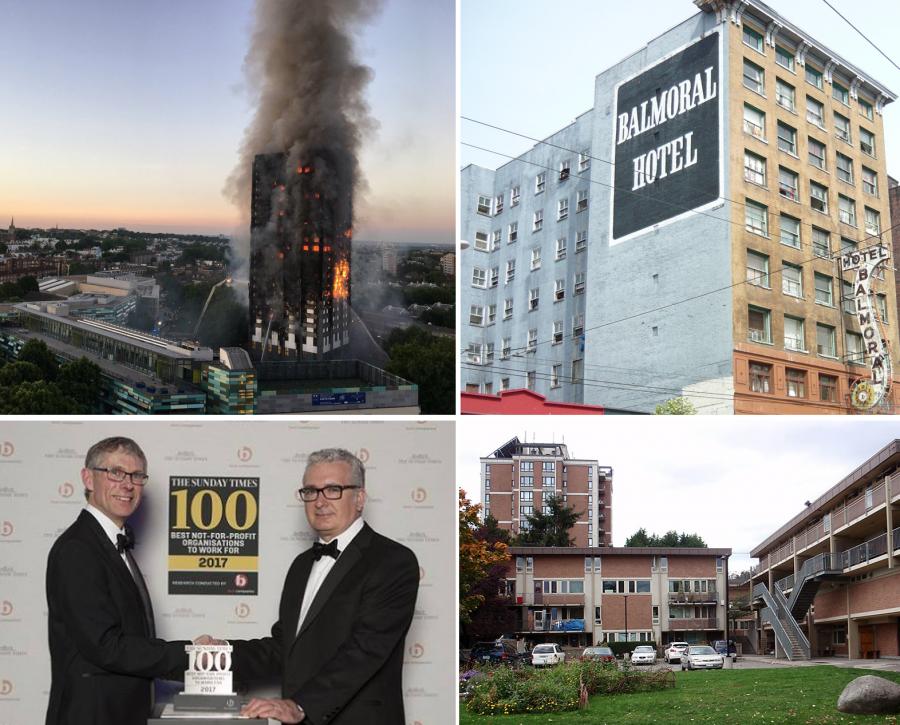
    As I post this, authorities are still determining the loss of life from the smouldering remnants of the 24-story Grenfell Tower in West London. Videos and images of the early morning towering inferno leave little doubt that the final tally of casualties and loss of life will be grim. Gut-wrenching stories of trapped residents, parents desperately trying to save their babies by dropping them from upper floors to rescuers below. This, the stuff of absolute nightmares.

    It’s too soon to guess the cause of the fire at Grenfell, but what we do know is that the residents of the building had been complaining for years about the appalling state of disrepair and dereliction of duty toward safety. Ultimately though, the cause of this tragedy is privatization of public housing.

    In November 2016, the residents’ led Grenfell Action Group wrote of dangerous living conditions and neglect of health and safety, warning ”that only a catastrophic event will expose the ineptitude and incompetence of our landlord, the KCTMO”. These resident complaints go back years, with another post from 2013 describing alarming evidence of serious negligence over several years… part of a history of negligence that in all likelihood stretches back to 2004 and beyond.”

    In the UK, Tenant Management Organizations (in this case the Kensington Chelsea TMO, an “arms-length” organization) are non-profit non-governmental groups tasked with managing public housing stock. These public private partnership arrangements are effectively managed like corporations and criticized as a neoliberal scheme to privatize public housing. In the case of Grenfell, tenants described KCTMO as an ”evil, unprincipled, mini-mafia” who routinely cut corners on safety in order to save money.

    The trend towards privatization of public housing should sound familiar — these kind of neoliberal housing schemes are happening throughout the industrialized world. Here in Vancouver in 2014 we saw the privatization of two significant BC Housing projects: the Nicholson Towers (West End) and Stamps Place (Strathcona) under what’s referred to as the “Asset Transfer Program”. These substantially large tax-payer built housing projects are now owned by not-for profit organizations, underwritten by the province, and purchased at bargain prices. Rents are paid to the new owners with subsidies and social services, and those revenues help underwrite the non-profits’ operations. The scheme conveniently avoids any rent controls though, and being dependent on subsidies these units can eventually shift from social housing to (more expensive) affordable market housing, at the whim of government austerity measures.

    In a similar vein, we have SROs like the Balmoral. Privately owned and managed, rent on these SROs are also paid by provincially-funded subsidies and social services. In many cases, land owners’ profit comes at the expense of safety, cleanliness, livability and basic amenities (like elevators, garbage-free stairwells, and functioning bathrooms). As we have seen from the recent Balmoral debacle (which captured Vancouverites attention when it was evacuated, at the point of collapse after years of neglect) for over a decade the city turned a blind eye to legally mandated Standards of Maintenance. The city sanctioned SRO (single room occupant) designation allows for small size units without bathroom or kitchen. SRO designation is not tied to any specific amount of rent, so if the $375 per month social assistance housing allowance is no longer profitable, the buildings are sold and renovated into budget “micro-lofts”.

    The Grenfell fire is a tragic reminder that in too many cases of badly neglected low income and public housing —it’s not a matter of if, but of when— the building will become a risk to life and security of person. As groups like DTES SRO Collaborative have been warning, the Balmoral is not especially unique among the coterie of privately-owned, decrepit and unsafe SRO buildings. The policy-driven drift toward further privatization of public housing in BC should be cause for concern.

    With some notable exceptions (like Vienna, Austria) the industrialized world’s trend toward privatization of public housing has been been steady increasing since the 1990’s. Public Housing is being sold off. The foundational idea that housing is a fundamental human right and a responsibility of the state has been supplanted by the the need to cream profits for insatiable corporate greed —the essence of neoliberalism.

    This tragedy is not just happening 7500 kilometers away, the seeds of this kind of public housing dereliction are planted and growing here too. We see it in the legions of homeless on our streets, or the appalling photos of structural neglect in the Balmoral. As the horrific reality of the Grenfell fire unfolds and grief turns to outrage, let it spur us to action. Write your MLA and MP.

    Call upon the new BCNDP-Green supported government to make good on their promise and expedite the building of new social housing.


    Call on federal government to make building public housing part of their new Poverty Reduction plan.


    Call on city government to unlock land potential for new housing and to strengthen inclusionary zoning on new developments to include truly affordable housing.

    Call on all three levels of government to keep public housing in the public’s hands.
    For our neighbours. For the Balmoral. For Grenfell.

  • Will the winds of political change bring a breath of fresh air for Chinatown?

    Will the winds of political change bring a breath of fresh air for Chinatown?

    As news broke Monday of the historic NDP-Green deal to form a progressive government for our province, I was waiting at City Hall, one of hundreds of speakers over four days testifying before city council in defense of Chinatown.

    I had managed to steal away from work to attend and speak on the final day of public hearings over the proposed 12 story, 150′ frontage Beedie condo development at 105 Keefer. I’m glad I attended in person, the mood was electrifying and inspiring; the gallery and chambers packed with advocates and activists.

    At issue: the re-zoning proposal for a new large scale condo development in the fragile heritage neighbourhood. This latest in a series of rejected applications by Beedie Developments for the block next to the Chinese Classical Gardens and Cultural Centre has been met by resistance every step of the way.

    Chinatown advocates are right to be concerned; after years of neglect, recent big block condo developments in the name of renewal have radically transformed the neighbourhood.

    So far, similar large scale new developments may have succeeded in bringing new businesses, residents, and short term vacation rentals to the area, but at a cost: the displacement of low income seniors, affordable residences and businesses, and the continued erosion of Chinatown’s character and heritage.

    On day one of the public hearings, respected neighbourhood activist Shirley Chan lamented that over the last several years, the development decisions by council were not –as purported– saving Chinatown, but in fact they were replacing Chinatown.

    There is a real irony then, that those same development decisions replacing Chinatown may have succeeded in saving Chinatown after all. Opposition to the project has succeeded in rekindling that most intangible aspect of heritage: it has built real community.

    A Chinatown Renaissance

    The opposition to this development proposal has managed to bring together young people, old people; heritage advocates and housing activists; small businesses and historic clan associations; multi-generational Canadians with deep roots and recent immigrants contextualizing their own sense of belonging in our city. The opposition to this project has brought about something of Chinatown renaissance, and ignited a passion to save the neighbourhood.

    A new generation of bright, articulate, and inspired Chinese-Canadian youth and allies have taken up the mantle of the 1970’s freeway fighters: organizing and advocating, working with Chinatown seniors and quite literally breathing new life into the neighbourhood. The same neighbourhood that the city council majority and real estate interests had decided was in need of replacement, underperforming and moribund.

    If there were any grounds of justification for council to still approve this rezoning it wouldn’t be for revitalization, but for public benefits. The provision of truly affordable housing as a public benefit condition of the various recent big block condo developments in Chinatown so far has been pretty minimal: in the low double digits as far as actual numbers of units.

    This most recent application for rezoning to accommodate the Beedie Group’s new 12 story condo building at 105 Keefer offered little by way of public benefits: 25 units of senior’s rental housing; only 8 of which would be at pension rate, and paid for by BC taxpayers. The proposal was also to include a cultural amenity space at “below market rate” (which by definition is not necessarily affordable or accessible).

    As most of the opponents agreed, the public benefits fell well short of what the community needs; and the building came at a significant cost to the neighbourhood, it’s too big, and in the wrong place.

    Big Commitments, Big Changes

    On Monday, as we waited to speak before council, the breaking news that a Green-NDP deal had been struck just moments earlier presented a literal last minute game-changer. Among other things, both parties have committed to increase the supply of affordable housing.

    That new provincial mandate will likely mean that begging for developers’ table scraps will no longer be the only route to securing housing for our society’s most vulnerable. Selling out Chinatown in exchange for barely-there public benefits would be tough to justify especially for city councillors going into a 2018 municipal election, and especially those who might be reliant on campaign financing from big developers.

    Thanks to the NDP-Green commitment to ban big money political contributions, the premise of developer donor influence will likely have waned by the next municipal election. As critics have pointed out: over the 11 months of the 2014 civic election reporting period, Beedie Group and their VP Rafii Houta are listed at having contributed at least $65,000 to council majority Vision Vancouver. A number of the proponents who spoke in favor of this development were also high profile Vision donors and fundraisers.

    City Council will make a decision on the 105 Keefer on June 13. Those extraordinary record-breaking four days of public hearings have bought councillors a little extra time to see not only the extent of public opposition to this project in support of Chinatown, but also how the political landscape is changing.

  • Last Call for Chinatown

    Last Call for Chinatown

    Tomorrow, Friday March 31st is the public’s last opportunity to provide feedback on the City of Vancouver’s disastrous new planning policy for Chinatown before the proposal goes to City Council. The Chinatown Economic Revitalization Update and Development Policies being proposed by the planning department favour big developers and development in the fragile heritage neighbourhood and will cause permanent and irreversible damage to historic Chinatown.

    There are a lot of concerns with the new planning policy, but the literal and figurative big one is large lot assembly. Typical Chinatown lot sizes are 25 feet wide, the new plan would allow assemblies of up to eight lots, for 200 foot frontages.

    Vision Vancouver councillors defend this plan as a tool to deliver social housing although the targets and definition don’t address the actual need for affordable housing (in fact by the city’s own definition, “social housing” is not tied to any specific income, but rather refers to housing operated by a non-profit agency). Vision councillor Louie further defends the new policy by suggesting that fears of big developments and store frontages displacing small business are unfounded — despite evidence to the contrary like the decidedly small frontage Starbucks across the street from the new big frontage banks and high end grocery that populate the ground level of developer (and Vision donor) Ian Gillespie’s block busting condo behemoth spanning Main from Keefer to Georgia.

    Since the plan was first presented in Fall of 2016, there has been strong opposition from a wide variety of citizens: professional planners, historians, cultural advocates, poverty activists, businesses, residents and even some developers. If Chinatown matters to you, let the city know what you think of their proposed development policies — your opinion is important! Find the feedback form here.

    Here are my own comments I submitted earlier.

    Thank you for the opportunity to comment on the proposed development policies. I have attended a number of open houses and followed the changes in Chinatown with keen interest. I have lived in and around the immediate area for the better part of thirty years, some of my earliest childhood memories are of Chinatown. I choose to live where I live because of its proximity to Chinatown, and my deep appreciation for the culture, the context, the people, the presence, and that intangible urban fabric that defines the neighbourhood.

    I appreciate some of the direction in this policy document: improving public spaces, activating laneways, investing in cultural intitiatives, and protection for HA-1 streetscape. However, on a whole I reject this policy document.

    I do not think “Exploring designating Chinatown as a Heritage Conservation Area” is much of a commitment. Clarity around conservation and heritage protection needs to be a starting point for any conversation around new development policies, not an afterthought. We need a strong and meaningful commitment to preserving Chinatown as a heritage area. The notion that Chinatown is a racist anachronism rendered unnecessary by civil rights, equality, and Richmond shopping malls does a disservice to the legacy and the history of the Chinese pioneers who helped to build this province.

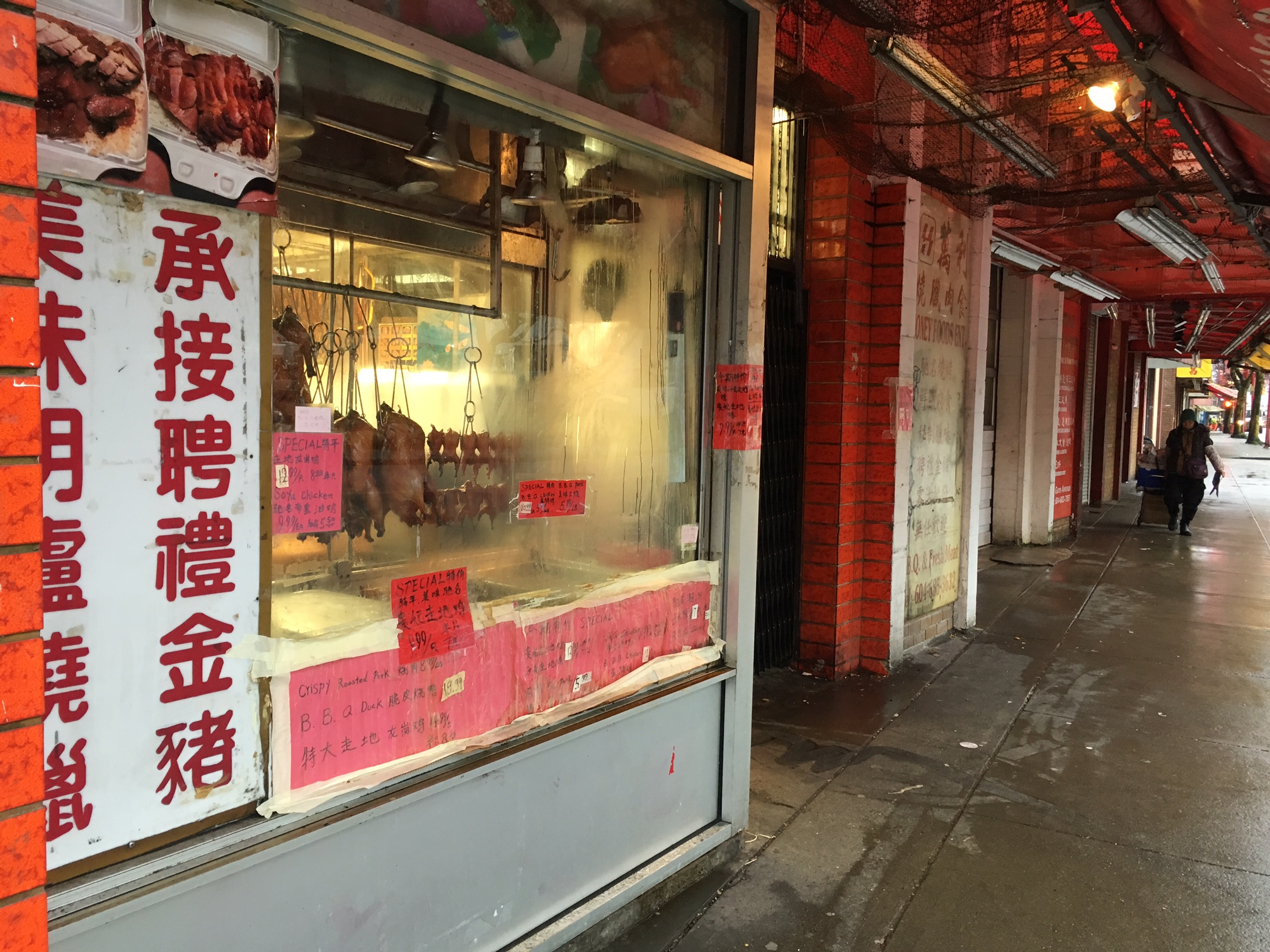
    While the idea of commercial mezzanines are charming and whimsically Chinatown, I think that their requirement creates a defacto “premium” retail space, and exacerbates retail gentrification, that is to say the pricing out of traditional and locally serving businesses — certainly mezzanine retail space is not suitable or appropriate for grocers or butchers (for example).

    I would like to see policies that recognize and incentivize local serving affordable retail as a public benefit.

    I think that the 50′ retail frontages being proposed in HA-1 should be conditional, not outright.

    Proposed 75′ site frontages for the rest of Chinatown are also too big. If the city is serious when they claim they will encourage traditional small lot development – then 75 should be conditional, not outright.

    Of course, the most egrigious of this proposal is the 200′ frontages in exchange for inclusionary zoning. These proposed big box developments have no place in such a small and fragile historic neighbourhood. This proposal serves developer interests, not public interests.

    As a matter of principal, inclusionary zoning should be an outright requirement for all new residential developments and should meaningfully identify an affordability benchmark.

    For the most part, I do not think the proposed policies will thwart speculation; rather, the opposite as lot assemblies and adjacent land use will and are contributing to more speculation, not less.

    Overall, I am quite disappointed that this policy document fails to meaningfully priortize housing affordability, urban form and fabric, retail gentrification, impacts and development pressure of new St Pauls and viaducts removal, and cultural and heritage preservation.